Thursday, August 20, 2015

Betrayal by Harold Pinter


Alison Bell as Emma
with the tablecloth from Venice
on the table at Jerry and Emma's flat


 Betrayal by Harold Pinter.  State Theatre Company of South Australia: Directed by Geordie Brookman.  Lighting and Set Designer, Geoff Cobham; Sound Designer, Jason Sweeney; Costume Designer and Associate Designer, Ailsa Paterson.  At Canberra Theatre Centre, The Playhouse, August 19-22, 2015.

Cast: Alison Bell – Emma; Nathan O’Keefe – Jerry; Mark Saturno – Robert; John Maurice – Waiter

Reviewed by Frank McKone
August 19

How would you handle this situation?  You meet up with someone, on their invitation, with whom you have had an intimate relationship in the past.  You might say How’re you going, then?  We haven’t seen each other for a while, eh? and the other person hesitates a little, and then says No. It’s OK, I’m alright.

What do you think?  Do they know something I don’t know?  Why did they call me to meet up again after all this time?  Do they mean they really are OK, or are they just saying that?  If they aren’t really OK, what does that mean?  Do they want to tell me something because they think I should know whatever it is?  Or because they think I can help in some way?  And if they are really OK, then why did they call me?  Do they want to start up with me again?  Do I want to start up with them again?  If I do, should I say something?  Or should I just wait and see?  They haven’t said anything else, but it seems a bit ordinary just to say something like “That’s good, then”, considering how we were together before.  I’d better say something, I guess.  How long can we sit here?  Are they looking at me, waiting for me to say something?  Or are they just needing a quiet time, and don’t really want me to say anything?

As you read all these possible thoughts, try timing how long it takes, remembering that there will be gaps of time between thoughts, probably with changes in your expression (eyebrows, forehead, where your eyes turn, how your head moves, how your body relaxes or tightens up).  My timing suggests at least a full minute – which is a long pause on stage.

This a Pinter pause.  Some are much longer, maybe even up to three minutes, which ought to kill a drama stone dead – except that it doesn’t in a Pinter play.  It might if the actors were not skilled enough to give us the expressions which they will derive from their study of the play, the relationships between their characters, the history of their relationships, and the possible future of their relationships.

Pinter’s skill is to provide his actors with a back story, all put together in very ordinary language – in fact using words which in themselves are so ordinary they are more or less meaningless (Oh, for example).  Two productions of Betrayal will end up revealing to us the same basic story, but the picture we may have of the quality of the triangular relationship between Robert, Jerry and Emma will be different in its impact on us Peeping Toms according to each director’s and actors’ decisions in rehearsal and skills in performance.

If you’d like a detailed analysis of the nature of betrayal in Betrayal you could hardly do better than read Hanna Scolnicov’s 2008 essay available at http://revel.unice.fr/cycnos/?id=1228 .

My concern here is the quality of this production as a theatrical experience.  I have no complaints about the top-class professionalism of the actors or Geordie Brookman’s directing of them. 

I did find, though, that people with different sightlines had different responses to the need to see the subtle facial and bodily expressions of characters’ thoughts and feelings in those pauses.  I placed Nathan O’Keefe as having a stronger impact than the other actors, but in talking with other audience members, realised that from my seat (E6 – close to the stage-left proscenium wall) I had more consistently seen Jerry front on through several of the nine scenes, while Alison Bell’s Emma more often showed me a side-on or even partially rear view of her face.  From a stage-right position my viewpoint would have been reversed.  But then a friend who sat in the upper circle had not responded to the pauses’ intensity or detail merely because of her extra distance and higher angle of vision.  Opera glasses would have been an advantage, even in the Playhouse.

Our discussion led to wondering if the play would be better performed in a smaller theatre, perhaps preferably in-the-round, such as in the Ensemble, Belvoir Upstairs or Wharf 1 in Sydney.  Though Brookman made a point of praising Canberra’s Playhouse as a better venue than some others – unnamed – I wonder if its conventional fourth-wall proscenium design might not serve this play well.

This thinking led me to consider the stage, lighting and sound design for this production.  It’s a matter of big or small scale.  The set surrounds the stage in a big way between the scenes.  As it grinds its way around to reveal the next scene, the sound is raucous, aggressive and industrial in the earlier transitions (which are later in historical time) and become a little gentler as we approach the end of the play (which is the beginning of the story).  But the set visually remains big.

Yet each scene is small, often with only two characters, sometimes only one, and rarely with three.  Each scene has a single focal point (a bar, a restaurant table, the table in Jerry and Emma’s flat, Robert and Emma’s bed), and especially in those great pauses the action is minimal.  Between scenes, mysteriously half-hidden behind the semi-see-through set, the action is busy as furniture is moved into and out of the centre and actors change out of and into clothes hung on the stage side of the set.

I found myself unsure of the designers’ intention in making the scene changes visually large and audibly loud, sometimes with very bright floodlights in our eyes, while the scenes were lit to make them seem to take up only a small space on the stage, except for the final scene with Jerry, Emma and Robert in the bedroom – but even then the action was mainly restricted to a small area around the bed.  Perhaps there was a kind of Brechtian intention – that is to force us out of the assumption that we were seeing naturalistic scenes being played out for us to emotionally/sentimentally engage in.  The big scene changes made it clear we were watching a highly theatrical presentation. 

From a practical point view, there was a need to separate each scene and help us accept that time was going backwards and (once) forwards, which was done by adding big projected titles of the year, the location and the season of the next scene as the set spun around.  The costumes took us back to the fashion of each year, so perhaps the projected information was not entirely necessary, at least for those of us who recognise what the London literati wore in those years from 1968 to1977.  But at the end of the day I suspect that less giant and gimmicky scene changes might have given us a softer focus of attention on the words, silences and feelings in each scene.  Rather than having the sound effects between scenes seem to illustrate too obviously the bitterness of betrayal, perhaps romantic music might have better made the contrast between the conventional expectation and the reality of love.

So it’s a play and a production which should not be missed: for Pinter’s work and the quality of the acting.  But for me, less might have proved to be more, in the set and sound department.


Nathan O'Keefe as Jerry, Alison Bell as Emma
Meeting at the bar


Nathan O'Keefe as Jerry, Mark Saturno as Robert
Lunch at the restaurant


Nathan O'Keefe as Jerry
Alison Bell as Emma


BETRAYAL

Betrayal by Harold Pinter

Directed by Geordie Brookman. State Theatre Company of South Australia. The Playhouse. Canberra Theatre Centre. August 19 - 22 2015.

Reviewed by Peter Wilkins


Alison Bell as Emma in Betrayal


“O, what a tangled web we weave when first we practise to deceive” Well, there is nothing tangled about playwright Harold Pinter’s succinct and pointedly realistic portrayal of characters caught in a web of betrayal or the State Theatre Company of South Australia’s dazzlingly clear and illuminating interpretation of Pinter’s “Betrayal” . To a twenty-first century audience, Pinter’s 1978 account of the triangular conduit of deception between art gallery owner, Emma, literary agent, Jerry and Emma’s philandering publisher husband, Robert may seem a little passé. It would be easy for a contemporary audience to view Pinter’s pared back account of betrayal as rather trite, presenting as it does a series of brief encounters in reverse chronological order. The ninety minutes without interval pass swiftly, leaving an audience longing for more, and possibly wondering what all the fuss was about.
Nahtan O'Keefe as Jerry and Alison Bell as Emma
 
This would indeed be a trite assessment of Pinter’s mastery of the direct statement disguising a dense and meaningful subtext. Director, Geordie Brookman uses the pauses to full effect to fill in the unuttered truth. It is to the credit of the three actors, a remarkably poised and composed Emma (Alison Bell), the emotional and slightly facile Jerry (Nathan O’Keefe) and the chauvinistic, acerbically arrogant Robert (Mark Saturna ) that the silence speaks volumes about the thoughts and feelings in the weighty moment of contemplation. Pregnant with meaning each pause is greeted by an expectant and absorbed audience and punctuated by Pinter’s consequent punchline.
It would also be facile to assume that the play was primarily concerned with adultery.  Pinter paints a far broader and more complex canvas of betrayal and each character’s private response to  the consequences of their infidelity. Through nine interconnected reverse scenes, commencing with a 1978 meeting between former lovers, Jerry and Emma, and concluding with the beginning of the affaire in Emma’s house in 1968, Pinter’s self-revelatory expose examines a complex web of betrayals. Most obvious is marital betrayal. Jerry betrays his unseen wife, Judith. Emma betrays Robert, Robert betrays Emma and Emma continues to betray Robert with an affaire with rising writer and Jerry’s client, Clancy. There is the betrayal of trust and the betrayal of male mateship. Jerry was best man at Robert and Emma’s wedding. Robert has not revealed that he has known about the affaire for years, and to add fuel to the distrust Emma has lied to Jerry about revealing their affaire to Robert. The true complexity of Pinter’s masterly construct of dialogue and situation, combined with his clever reversal of events accentuates the complex nature of character and situation. However each scene is crafted with succinct purpose and clarity, providing actors with a wealth of information and the freedom to create a character that lives out the complexity of a life tainted by betrayal.
Mark Saturna as Robert
 
Actors and director faithfully and believably observe the deep personal resonance in this work. The production resounds with the truth of human frailty, which one assumes is Pinter’s own observation of his own weaknesses after his affair with television presenter Joan Bakewell and the break-up of his marriage to Vivien Merchant. By his own admission, the play has nothing to do with his affaire with novelist Antonia Fraser, and he candidly states that the play is about a nine year relationship between two men. He traces the passage of friendship from the university days to the revelation of betrayal, exposing as he does so his own weaknesses and the entrenched attitudes of his time. Robert can quite frankly admit to bashing his wife when the occasion warrants it, with no retaliatory response from Jerry. It is an admission that draws an audible gasp from the audience while also pointedly exposing the male chauvinist attitudes of the time.  Audiences are voyeurs of an era now past, and yet transparently evident in our time.

Nathan O'Keefe as Jerry and Mark Saturna as Robert
What prevents Pinter’s play from being a soap drama of its time is perfectly displayed in State Theatre’s production. The stark reality of the scenes is heightened by the superb theatricality of Geoff Cobham’s lighting and set design of a moving revolve of Alisa Paterson’s selection of closet clothing that revolve to Jason Sweeney’s strident and tension-building  sound design. Within the kaleidoscope of revolving apparel, the actors and stage crew set the necessary furniture for the next minimalist scene. The reality of the scene is enveloped in a striking theatricality of design that captures an audience’s attention and imagination. Brookman’s direction complements the technical effects with precision, observing the musicality of Pinter’s sparse text and directing his actors with punctilious fidelity to the play’s relationships, superbly realized by his cast.


Alison Bell as Emma
It is praise enough to declare that we were left wanting more, contemplating the complexity of the human condition and confident in the belief that frailty thy name is humanity.  


BETRAYAL


Written by Harold Pinter
Directed by Geordie Brookman
State Theatre Company Of South Australia
The Playhouse, Canberra Theatre Centre to 22 August 2015

Reviewed by Len Power 19 August 2015

On the surface, Harold Pinter’s ‘Betrayal’ is one of his more accessible plays but it’s when you look at the emotions boiling under the surface that you realize how devilishly clever and complex this work is.

The story of a love triangle over a period of some ten years, presented in a series of scenes that move back and forth in time, we’re led through the characters’ motives and actions until we’re not absolutely sure with whom the betrayal actually lies.

Geordie Brookman’s powerful production owes a lot to its spectacular, towering setting, wonderfully designed and dramatically lit by Geoff Cobham.  Jason Sweeney’s sound design creates a tension of its own that keeps you on edge throughout the show.  Costumes by Ailsa Paterson successfully give a flavour of the fashions for both men and women during the specific ten year period from the late 60s.

Alison Bell as Emma gives a beautifully nuanced performance as a controlled woman seemingly unaffected by the drama surrounding her affair with Jerry and her relationship with her husband, Robert.  Mark Saturno gives an icy, edgy performance as the husband, Robert, who isn’t as ignorant of or complaisant about the affair as we first thought.  Nathan O’Keefe gives an excellent, multi-faceted performance as the lover, Jerry, showing his weakness, untrustworthiness and ultimately the damage the affair has brought to him.  John Maurice is memorable in a small role as an efficient and friendly restaurant waiter who unwittingly adds to the husband’s stress.

Director, Geordie Brookman, has given us a clear window into this emotionally-charged story.  In Pinter’s dialogue, the banalities of everyday speech and the pauses where characters seem momentarily lost in thought or struggling with emotions need a firm director’s hand.  Geordie Brookman’s work with his cast is especially evident in those moments.  His highly choreographed scene changes work very well, giving a clear indication of the passage of time between scenes.

When a Pinter play is as well done as in this production, it leaves you feeling strangely unsettled and stays with you long after you leave the theatre.

Len Power’s reviews are also broadcast in the ‘Artcetera’ program on Artsound FM 92.7 on Saturdays from 9am.

Saturday, August 15, 2015

BEST FESTIVAL EVER: HOW TO MANAGE A DISASTER


Boho Interactive + Applespiel in Association with The Street
Devised and presented by Nikki Kennedy, Nathan Harrison, David Shaw, Rachel Roberts, David Finnigan
Designed by Gary Campbell
The Street Theatre to 22nd August 2015

Review by Len Power 14 August 2015

If you enjoy those management course hypotheticals or just an evening with friends playing a board game, ‘Best Festival Ever: How To Manage A Disaster’ has all the elements of those experiences but on a larger, more theatrical scale.

Boho Interactive is a science-theatre ensemble from Canberra who produce interactive performances based on sciences including Game Theory, Complex Systems science and Network Theory.  For this production they are joined by members of Applespiel collective from Sydney.

At the show I participated in, there were 32 of us around a long table in the Street Theatre’s intimate Street Two space which had been dressed and lit to create a living room ambience complete with red curtains, bar and standard lamp.  The goal of the evening was for the group to experience what it takes to create a music festival and run it successfully.

Cleverly managed by facilitating performers, participants were quickly drawn into an entertaining scenario with the table top representing a farmland space with a river running through it where a music festival was scheduled to be presented.  We were required to choose the artists who would perform at the festival and build the necessary infrastructure while ensuring the environment was impacted as little as possible.  Little did we know that a potential disaster was waiting for us to manage as well!

A lot of imagination has gone into the design of the elements of the experience.  The series of games played as the scenario progresses were amusing and involving and managed in a way that no participant would feel intimidated.  We really had a great time while being educated about the sciences underlying the whole experience.

At the end of the game we were given a choice of drinks from the bar set up in the space and then Nicky Grigg from the CSIRO, who had also participated in the game, gave us a very interesting academic’s perspective on the sciences behind the experience.  The guest speaker will be different at every performance.

This was a highly entertaining and instructive experience.  You’ll learn a lot but you’ll also have a lot of fun.

Len Power’s reviews are also broadcast in the ‘Artcetera’ program on Artsound FM 92.7 on Saturdays from 9am.

Thursday, August 13, 2015

The Present by Andrew Upton, after Anton Chekhov


The Present by Andrew Upton, after Anton Chekhov’s Platanov.  Sydney Theatre Company, directed by John Crowley.  Designed by Alice Babidge; lighting by Nick Schlieper; composer and sound design by Stefan Gregory.  At Roslyn Packer Theatre, Sydney, August 8 - September 19, 2015

Reviewed by Frank McKone
August 12

The lengthy history of what appears to have been Chekhov’s first play, an extraordinary lengthy 300 pages which it seems he began drafting at the age of 18, is partly explained in Upton’s Message from the Artistic Director and fully developed in a five page essay in the Program.

However you really don’t need to read all this to appreciate a highly theatrical script and production, supported of course by top quality acting and direction.  The key roles of Anna and Mikhail are played by Cate Blanchett and Richard Roxburgh – and you get what you expect – but all of the other eleven actors never let the quality drop below the leads’ example.

So I won’t even begin to buy into the inevitable argument about whether we are watching Chekhov or Upton.  If Chekhov really did write this story of 40-year-olds riding the wild emotional surf of their second wave of sexuality, when he was still a teenager, he showed remarkable prescience if not precociousness.     This play is not Uncle Vanya or The Seagull  but the markers of their genetic history show up plainly here.

Perhaps to escape comparison, rather than setting The Present in its original period in the late 19th Century, Upton saw a parallel time in Russian history which also relates closely to what is still happening there and even here.  Australia and kangaroos get a token one liner.  Stalin died in 1953 and the reminiscences, interminable under the influence of being Russians constantly drinking vodka, make it clear that our present is 20 years later.  Glasnost is in, but characters who succeeded under Stalin still rule the roost.  They are the 60+ year-olds.

Even the environmental issues which showed up in Uncle Vanya poke their noses into concerns about profit-making in the new Russia from mines and gas fields.  Despite causing a small ripple of recognition as we think of NSW and Queensland, such concerns are entirely peripheral to what is largely a satirical comedy with surprising (and highly effective) explosions. 

Mikhail, obsessive womaniser, presages his death as the only solution to the impossible complexity of love and relationships.  However skilled Roxburgh is, though, it was difficult not to see his demise as not too dissimilar from that of Pyramus, though his several Thisbes surround him, or have left him, in anger or tears.

Watch especially for the four terrific set designs, and for the technique used in the transitions.  The opening set for Act 2 was especially evocative.  Mikhail himself wonders if he is seeing apparitions, in a set that had already made me wonder the same thing.

So, while the characters philosophise in the most annoying (and often very funny) ways, let’s not bother to do all that thinking.  Just let the theatricality of the moment become your present belief, and you’ll find yourself remembering those 40th Birthday parties in all their extremities of attraction and rejection (though you might wonder what you should be looking forward to, if you are still 18). 

There seems to be a theory behind the play – presumably in Chekhov’s imagination – that there is a sexual cycle which reaches some kind of pinnacle of excess every 20 years.  See The Present for a lifetime experience, and see what you think.

Nikolai and Anna
Toby Schmitz, Cate Blanchett

Nikolai, Mikhail, Sergei
Toby Schmitz, Richard Roxburgh, Chris Ryan

40th Birthday Party

My death is the only solution
Richard Roxburgh (Mikhail), Cate Blanchett (Anna)

Sergei and Sophia
Chris Ryan, Jacqueline McKenzie
 Complete Cast:
Anna Bamford - Maria                        Jacqueline McKenzie - Sophia
Cate Blanchett - Anna                         Marshall Napier - Ivan
Andrew Buchanan - Osip                    Susan Prior - Sasha
David Downer - Yegor                         Richard Roxburgh - Mikhail
Eamon Farren - Kirill                          Chris Ryan - Sergei
Martin Jacobs - Alexei                        Toby Schmitz - Nikolai
Brandon McClelland - Dimitri

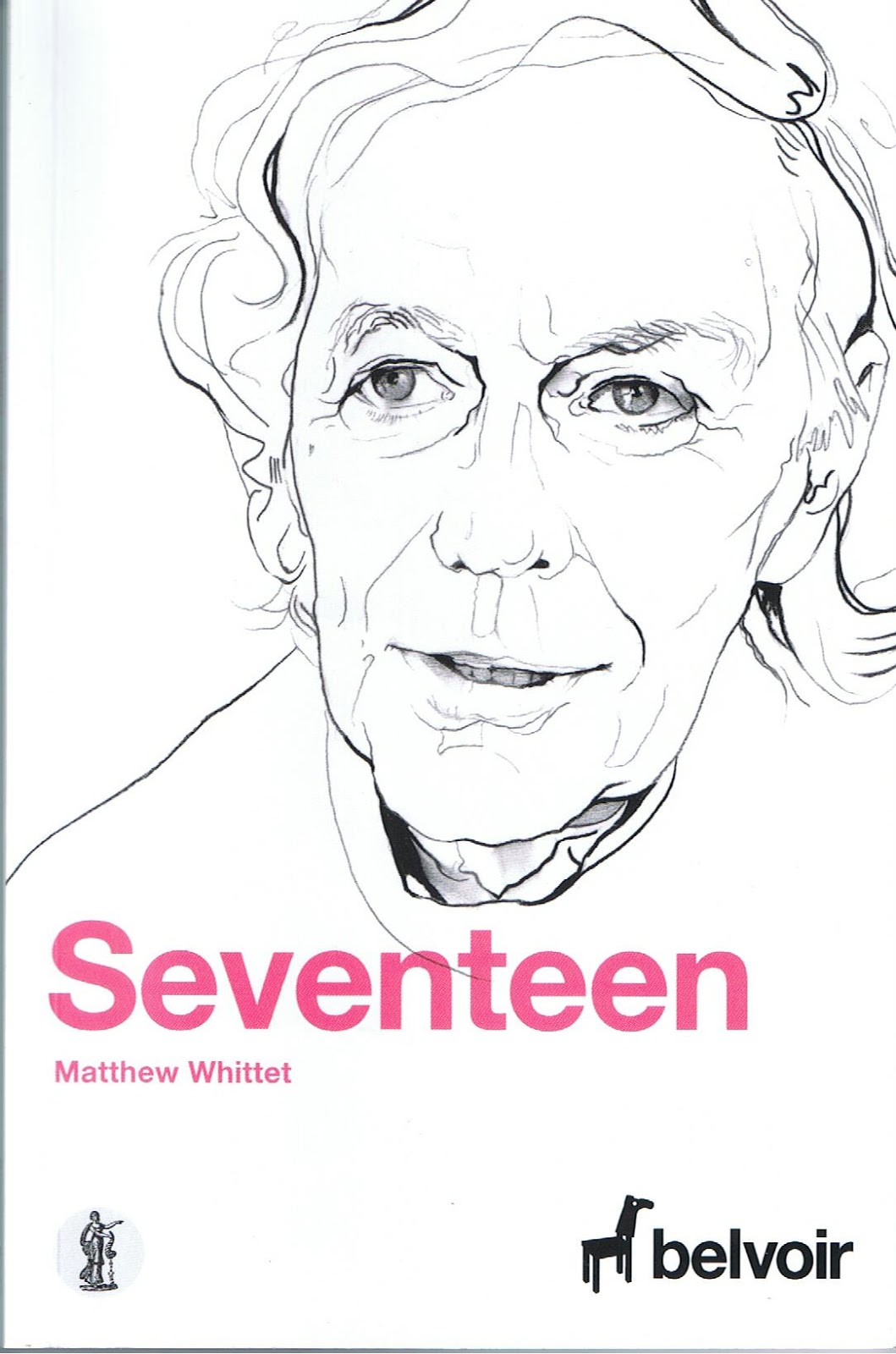
Seventeen by Matthew Whittet


Image by Julian Meagher

Seventeen by Matthew Whittet.  Presented by Belvoir.  Directed by Anne-Louise Sarks; designed by Robert Cousins; costumes by Mel Page; lighting by Paul Jackson; sound by Nate Edmondson; choreography by Sara Black; movement by Scott Witt.  At Belvoir Street Theatre, Sydney, August 5 - September 13, 2015.

Reviewed by Frank McKone
August 12

Actors:
Peter Carroll – Tom
Maggie Dence – Sue
John Gaden – Mike
Genevieve Lemon – Lizzy
Barry Otto – Ronny
Anna Volska – Edwina

It’s quite disturbing reviewing the work of a bunch of actors who are all around my age – 74½ – when they are playing 17-year-olds trying to celebrate their exit from high school.  The exception is Genevieve Lemon playing Mike’s 14-year-old sister.

Knowing my own physical incapacities I was amazed how well my confreres could still move in the wild ways that I can, just, remember from when I was 17.  It shows you what actor training can do for you.

The play is a hoot, as you might expect; but it’s not just a hoot.  Whittet has done his homework interviewing today’s 17-year-olds with these questions:

What matters to me right now is…
What or who do you want to be when you are older?
Can you imagine life at 70?  What might it be like?
The advice I would give to my older self would be…
What do you daydream about?
What does love mean to you?
Regrets – do you have any?  If you are happy to, can you share what these are?
The message I would send to the rest of the world right now is…


The value of the Program is that it includes the Writer’s and Director’s Notes and also the text of the play which has been a cooperative venture involving the author, the actors and director, the actor Judi Farr (who is not in the performance) and the dramaturg Anthea Williams.

This certainly is an original project, so what was Whittet hoping to achieve and has it worked?

Well the audience on this occasion certainly thought the show worked, responding in a very lively manner to every twist and turn in the relationships being played out at the all-night hang-out in the local children’s playground, the scene particularly of the first meeting of Mike and Tom when they were 11 and their friendship was established.  What happens as the night wears on turns from a naïve attempt at celebration into a bumping up against reality – both sad and encouraging for each character according to their personality, proclivities and social circumstances.  It’s not just a hoot to have no choice but face the prospect of growing suddenly into adulthood.

I still felt a bit uncomfortable with the author’s intention, though.  He has set the play now, not in 1956 when I finished Fifth Form, yet somehow it seemed to me that the characters were more childish than I remember being (though I’ll admit to some very weird behaviour), and more so than the many Year 12s I taught in the 1960s to the 1990s (many of whom turned 18 before finishing their sixth year of secondary schooling).

Whittet has written about the passion [that] is always there just under the surface.  Waiting to erupt like a volcano….So having said this, it’s been a very important decision to set the play now.  A now that is not concerning itself with the thorniness of Snapchat and Facebook, but more with the burning questions under the surface for these kids.  Questions that were asked yesterday, today and I think will be asked well into tomorrow.

At the same time he just seems to have been fascinated by the idea that I didn’t want these characters to be played by teenagers.  I wanted them to be played by actors in their 70s – theatre elders who would get a chance to do something that is rarely asked of them….[and] to get the chance to watch incredible actors like Peter Carroll, Maggie Dence, John Gaden, Barry Otto, Anna Volska and Genevieve Lemon … wrestle with the questions: What does it mean to be 17? How do I say goodbye to the people I love? How do I say goodbye to the person I was?How do I become the person I should be?…This to me is what makes it such a thrilling piece to be a part of.

I think these “incredible” actors did a highly creditable job of creating the characters that the dialogue and plot engendered for them to work on, and made a thoroughly enjoyable show, but in the end perhaps more time than 90 minutes is needed to invest all that depth of meaning into the drama.  And probably for a modern young adult audience more subtlety and emotional understanding would be achieved by young actors, many of whom are just about as “incredible” as their elders.

So I conclude that the show is a success and very worthwhile seeing for its original idea – and to see these actors at their credible best is wonderful – but to expect the deep and meaningful experience that the author wishes for is to expect more than the play actually offers.  In fact I suggest that Samson by Julia-Rose Lewis, even at only 75 minutes (reviewed on this blog on May 12, 2015), and played by young actors, more successfully satisfies this kind of expectation.

 All photos by Brett Boardman

Group Hug


Barry Otto as Ronny


Anna Volska as Edwina, Maggie Dence as Sue

John Gaden as Mike, Peter Carroll as Tom


Genevieve Lemon as Lizzie


Tom and Sue swing together
Peter Carroll and Maggie Dence


Wednesday, August 12, 2015

The Art of Shakespeare Exhibition


The Art of Shakespeare Exhibition of artworks in response to William Shakespeare’s dramatic works, presented by Bell Shakespeare.  Original concept: Gill Perkins.  Artists invited by John Bell.  Exhibition curated by Nick Vickers.

Previewed by Frank McKone
Utzon Room, Sydney Opera House
August 11, 2015.

Touring to
Melbourne
Sofitel Melbourne on Collins, September 2 – October 1
Canberra
Australian Parliament House, October 8 – 25
Sydney
Sydney Opera House, November 2 – 15

Artists:
 
Sophie Cape I Am In Blood Stepp’d In So Far (Olsen Irwin Gallery)
Lucy Culliton My Kingdom For A Horse (Reno) (The Hughes Gallery)
Tamara Dean A Midsummer Night’s Dreamscape (Olsen Irwin Gallery)
Ken Done A Woman Is A Dish For The Gods (Ken Done Gallery)
Joe Furlonger Unto These Yellow Sands (The Hughes Gallery)
Peter Godwin Where Be Your Gibes Now? (Defiance Gallery)
Nicholas Harding It’s The Same With Men (Wildflower, Cactus And Dogs) Olsen Irwin Gallery)
Alan Jones Leave The Rest To Me (Olsen Irwin Gallery)
Mathew Lynn Unmannerly Breech’d With Gore (Lady Macbeth) (Independent artist)
Euan Macleod Storm/King Lear Watters Gallery)
Luke Sciberras Bottom! (Olsen Irwin Gallery)
Wendy Sharpe The Witches (King Street Gallery on William)
Garry Shead Romeo And Juliet (Australian Galleries)
Ann Thomson La Sonnambula (Olsen Irwin Gallery)
©Wendy Sharpe The Witches


Art is about creation, intent, response and interpretation.  

As David Malouf writes in the Foreword to the exhibition catalogue What interests Shakespeare is the working of the mind, an inner state.  When, on the other hand, painters and illustrators turn to his characters, what they tend to present is their external attributes….  This exhibition presents artists working as Shakespeare himself does, in the realm of atmosphere and suggestion.

Each work is thus an original creation in its own right, in response to a moment – often just a line – chosen by the artist in answer to John Bell’s invitation.  As you would expect from artists of this quality, not one work is a simple illustration, even if some titles quote the quote.

As they create in response to Shakespeare, each with their own idea of his intent, and showing the viewer their interpretation, so I found myself facing their creations, wondering about their intentions, and interpreting the ideas and emotions I felt in response.

Nick Vickers has hung the works in such a way that some brashly stand out, others are more discreetly hidden for you to come upon them unexpectedly close up, while the three Lady Macbeths form a triptych which build from her personal horror in Lynn’s Unmannerly Breech’d, through the evil intent of Jones’ Leave The Rest To Me and culminating in an abstract explosion of feeling in Cape’s I Am In Blood Stepp’d In So Far.  And then you see Lady Macbeth’s final mental collapse in Thomson’s sleepwalking scene, La Sonnambula.

Then you realise that it is The Witches who you could not avoid as you entered the space.  The works begin to take on lives of their own, like characters in a bizarre drama.

It was at about this point that I thought I should test out my reactions, so I sought out the most expensive artist, Garry Shead, whose Romeo And Juliet I thought I understood.  Having explained that I saw the two families not just shocked by the sensuality of the kiss and bare breast, but that they simply were unable to understand, and certainly not accept, the natural sexuality of the attraction between Romeo and Juliet.

©Garry Shead Romeo And Juliet


Oh, no, explained the artist.  It was just the ballroom scene.  There’s only one family there, except for Romeo, and they are all horrified at his temerity at gatecrashing the ball, discovering Juliet and kissing her.  For Shead, it is a painting of one moment in one scene; I interpreted it as representing the core of the whole play.  We parted on highly amicable terms – that’s what art is all about.

I mentioned expense because all the works are for sale, with – through the goodwill of the artists and their respective galleries – a percentage being donated to Bell Shakespeare to support their outreach programs “looking for new ways to educate, collaborate and recreate”.

This exhibition, I believe, is an original approach, centred in artistic creation, to encourage philanthropy to support the arts.  It is also an Occasion – to mark the 25th Anniversary of the establishment by John Bell of the Bell Shakespeare Company, while it also could be said, to quote Malcolm concerning the traitorous Thane of Cawdor, that “Nothing in his [Bell Shakespeare] life became him like the leaving it”.

Whether that means we should see Peter Evans as an incarnation of Macbeth, who inherited the former thane’s title, I’ll leave to others’ interpretation.  As John Bell retires in the wake of directing the upcoming The Tempest (Sydney Opera House August 19 – September 18), maybe Prospero’s staff will receive more kindly treatment than in the play and be passed on to Evans without being broken.

The Art of Shakespeare will surely make a fitting farewell for the theatrical stalwart whose work I first saw in Henry V at the Adelaide Festival in 1964.  Though he may be leaving the tent – “just going outside and may be some time” – I suspect we’ll see more of John Bell before long, even if it’s only to present the next The Art of Shakespeare in a year’s time – I hope.

©Tamara Dean A Midsummer Night's Dreamscape

©Luke Sciberras Bottom!

©Nicholas Harding It's The Same With Men (Wildflower, Cactus And Dogs)