Friday, July 29, 2022

TERRAIN - Bangarra Dance Theatre


Choreographed by Frances Rings – Composed by David Page

Set Design by Jacob Nash – Costumes designed by Jennifer Irwin

Lighting designed by Karen Norris

Canberra Theatre 28th – 30th July 2022

Opening night performance on 28th July reviewed by Bill Stephens

Revisiting this beautiful work created by Frances Rings ten years ago to celebrate the handing over of the land rights for Kati Thanda – Lake Eyre to the Arabunna people who had been deeply connected to the lake over thousands of years, one was struck by the realisation of how successfully, despite the changes in personnel over the years, Bangarra Dance Theatre has retained its unique, instantly recognisable, choreographic style.

In a series of nine distinct sequences marked by changes of costume and scenic background, the work, according to the program notes sets out to “explore the fundamental connection between aboriginal people and the land – how we treat our land, how we understand its spirit, and how we regard its future”.

The sequences have titles such as Red Brick, Shields, Reborn, Spinifex, Salt, Scar, Landform, Reflect and Deluge, and while it is not always clear how the choreography represents these titles, the eye is continually pleasured by the succession of mysterious, beautiful and ever-changing choreographic groupings skilfully executed by the talented ensemble.

Among the more memorable sequences is one entitled “Spinifex”, in which the women perform gracefully in Jennifer Irwin’s remarkable textured costumes, topped by extraordinary headdresses fashioned from twigs burns itself into the psyche.


Another entitled “Shields” performed by the male ensemble is imaginative and strongly performed although how it represents the struggle for Land Rights and Recognition is left to each individual to interpret.

As always with Bangarra Dance Theatre presentations the production values and performances were impeccable with exceptional design and presentation. No doubt those audience members able to emerge themselves in the spirituality and significance of the various sequences will find additional pleasure in the performance, but for the rest “Terrain” remains a masterful choreographic homage to a unique and beautiful piece of Australia.


                                                              Images by Daniel Boud


        This review also published in AUSTRALIAN ARTS REVIEW. www.arttsreview.com.au

HAND TO GOD


Written by Robert Askins

Directed by Jarrad West

Everyman Theatre Production

ACT Hub Theatre, Kingston to 13 August


Reviewed by Len Power 28 July 2022


After sitting through so many worthy ‘issues’ plays recently in Canberra, it was a great relief to see a play that just entertains and makes you laugh.

‘Hand to God’ tosses in a few subtle issues, too, of course, like religious hypocrisy, family dysfunction, shockingly bad language, faith, bullying, morality, bereavement, horny teenager troublemaking and assorted sexual stuff, blasphemy, insanity, puppet addiction, obsessiveness, furniture smashing, virginal timidness, ear biting, frenzied behaviour, violence and so on – everything, in fact, that makes you want to go to the theatre.

Robert Askins’ play, first produced off-Broadway in 2011, takes place in the tiny, conservative town of Cypress, Texas.  Shy young Jason joins his mother’s Christian Puppet Ministry.  Struggling after the death of her husband, his mother tries to resist the amorous advances of both the town’s teenage trouble-maker and the creepy Preacher, while the young, attractive and refreshingly forward Jessica shows her feelings for Jason.  Tyrone, the puppet created by Jason, then declares that he is the Devil and leads everyone into sin.

Jarrad West and his cast have pulled all the stops out in this over-the-top farce.  It’s played at a furious speed and the cast all give terrific performances.  There are breath-taking moments including a performance of some of the famous Abbott and Costello routine, ‘Who’s On First’ by actor, Michael Cooper, with his puppet, Tyrone, a scene of frenzied sexual interaction by Steph Roberts as the mother, Margery, and Joshua Wiseman as the teenage troublemaker, Tim, that wrecks an entire room and another wild sex scene that leaves nothing to the imagination and has to be seen to be believed.

Holly Ross, Tyrone and Michael Cooper

Michael Cooper as the shy Jason battling with his possessed puppet, Tyrone, leads the company with a remarkable performance that is highly comic but still grounded in reality.  His extraordinary vocal skills really bring that puppet to malevolent life.  Steph Roberts as the mother, Margery, displays excellent comic timing while playing probably the most courageous role of her career.

Joshua Wiseman is very funny as the obnoxious, horny teenage troublemaker, Tim, and Arran McKenna is nicely oily in his portrayal of the Preacher.  Holly Ross also gives a very humorous, sly performance as the young girl attracted to Jason.  The entire cast have mastered believable Southern American accents as well.

This is a very funny, outrageous play which requires strong direction and skilful playing vocally and physically to succeed.  The director, Jarrad West, and his fabulous cast have achieved this and made it a hysterically funny experience.

If you enjoy this as much as I did, you’ll probably go to hell, too!

Len Power's reviews are also broadcast on Artsound FM 92.7 in the ‘Arts Cafe’ and ‘Arts About’ programs and published in his blog 'Just Power Writing' at https://justpowerwriting.blogspot.com/.


The One


The One by Vanessa Bates.  Ensemble Theatre, Sydney, July 22 – August 27, 2022.

Reviewed by Frank McKone
Opening Night July 28

Cast
Helen - Gabrielle Chan;  Mel - Angie Diaz;  Jess - Aileen Huynh
Cal - Damien Strouthos;  Eric - Shan-Ree Tan

Understudies: Sam O’sullivan, Monica Sayers & Gareth Yuen

Creatives
Director - Darren Yap
Assistant Director - Sophie Kelly;  Dramaturg - Sarah Odillo Maher
Set & Costume Designer - Nick Fry
Lighting Designer - Verity Hampson
Composer & Sound Designer - Michael Tan
Choreographer - Angie Diaz
Makeup Artist, Hair & Wig Stylist - Lindsey Chapman

Photos by Prudence Upton

In this new play by Vanessa Bates, the story of The One is complicated – in the right sense for comedy, but equally seriously for people coping with living between cultures, of different kinds.  Multiculturalism is not always so amusing when it’s all in one family.

Eric and Mel re-enact their childhood performance
Shan-Ree Tan and Angie Diaz
in The One by Vanessa Bates

In Act One the play is clearly written to be funny – and it is.  But you may sense there’s something odd about the brother, Eric, and his seemingly dominating sister, Mel; about Mel’s relationship with her boyfriend Cal – which began when they appeared together on a reality ‘Getting Married’ TV show; and about what they all think of Eric and Mel’s Malaysian mother, Helen.  

That’s all complicated enough until Jess, the Chinese waitress now running Jim’s Oriental Restaurant, blasts her way into the younger one’s attempt to take Helen down memory lane – not to celebrate her birthday but, as she says, to celebrate her survival.

Aileen Huynh as Jess

Aileen Huynh (Jess) and Gabrielle Chan as Helen
at the table set with the lazy susan

But then, if you felt just a bit tentative about why you were laughing in Act One, Act Two, focussed around the lazy susan of what might have been an Aussie Chinese restaurant celebration, jumps up to an unexpected – and terribly funny – level of absurdity until, equally unexpectedly, laughter at becomes empathy with each member, each one, of this complicated family.  In particular, what will Mel decide about her future with Cal, considering what happened about the children’s father?

Damien Strouthos and Angie Diaz
as Cal and Mel in The One

Vanessa Bates’ writing is highly original because she takes the risk of sitting on the knife-edge where the absurdity of reality is at the same time devastating and comic.  Director Darren Yap and his design team match the author’s originality in every way – in the use of video, props and stage furniture, choreography (when 9 and 12 the brother and sister had won an Australian Asian Ballroom Dancing competition!); not forgetting make-up, hair and costume (for Eric in particular) – and especially the creation in sound of the final central character, Fifi / Spike: Helen’s dog, who is The One who really matters.

The community feeling which is the mark of Ensemble Theatre becomes part of the play as we find ourselves being the characters’ audience as well as the actors’ audience – another risky but clever device by Vanessa Bates.  So even while Australians’ racism is exposed, the curtain call is a celebration of the real culturally-mixed cast of quite extraordinary performers.

Another Ensemble success not to be missed.

Angie Diaz and Shan-Ree Tan as sister and brother Mel and Eric
lighting joss sticks together
in The One by Vanessa Bates
Ensemble Theatre, Sydney 2022


Wednesday, July 27, 2022

ROMANTIC CLASSICS - ART SONG CANBERRA


Andrew Goodwin, tenor

John Martin, piano

Wesley Music Centre, July 24


Reviewed by Len Power


The list of classic romantic songs by Fauré, Hahn, Poulenc, Schumann, Strauss, Mahler and Rachmaninov and piano works by Chopin was attractive enough to attend Art Song Canberra’s latest concert at the Wesley Music Centre.  The combination of tenor, Andrew Goodwin, and pianist, John Martin, made it an event to remember.

Sydney-born, Andrew Goodwin, became the first Australian to study classical singing at St Petersburg State Conservatory in Russia.  He has gone on to a busy international career singing at some of the world’s greatest opera houses and concert halls.  He is a passionate champion of art song.

 In a colourful career of great variety, pianist, John Martin, has worked with many stars of the Australian and international concert and theatre scenes.

John Martin, piano and Andrew Goodwin, tenor

The concert commenced with the song, “After a Dream”, by Gabriel Fauré.  Andrew Goodwin sang it with great tenderness.  The clarity and control of his voice was remarkable and he made this wide-ranging song sound effortless.  He followed with “At the Water’s Edge” by Reynaldo Hahn and, again, it was sung extremely well.  His singing of the final sustained high note was hauntingly beautiful.

Andrew Goodwin

“To Chloris” by Reynaldo Hahn was next and it was striking how Goodwin could convey so much emotion through these songs with subtle vocal inflections.  He then showed his acting skills as well with an extroverted and colourful performance of ‘Paganini’ from Poulenc’s “Métamorphoses” song cycle.

Other highlights included “Morning!” by Richard Strauss, “Where the Splendid Trumpets Sound” by Gustav Mahler and “Lilacs” by Sergei Rachmaninov.

Every song was superbly accompanied by John Martin and the lively and humorous interaction of the two men between songs showed that their working relationship was an enjoyable one.

John Martin performed two solo works.  His playing of Chopin’s highly romantic Waltz in C# minor, Op. 64 No. 2 was sublime.  He followed it later in the concert with another work by Chopin, Impromptu No 1 in A flat, Op. 29.  Again, it was played superbly and with so much feeling.  The audience responded with enthusiastic applause.

This was a delightful concert of familiar and unfamiliar romantic classics by two highly skilful artists.


Photos: Peter Hislop


This review was first published in the Canberra CityNews digital edition of 25 July 2022.

Len Power's reviews are also broadcast on Artsound FM 92.7 in the ‘Arts Cafe’ and ‘Arts About’ programs and published in his blog 'Just Power Writing' at https://justpowerwriting.blogspot.com/.


Sunday, July 24, 2022

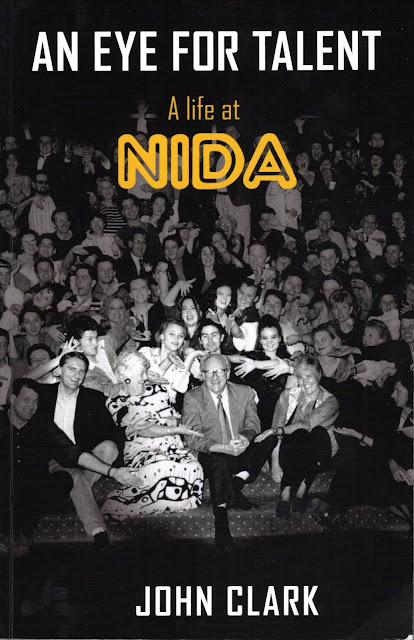
An Eye for Talent - A life at NIDA

Cover design: Katy Wall
 

An Eye for Talent – A life at NIDA by John Clark.  Coach House Books, Currency Press, Sydney, 2022.  
Foreword by editor Nick Parsons. www.currency.com.au  
Contact: enquiries@currency.com.au

Reviewed by Frank McKone

We critics indulge in our feelings in response to what actors do to entertain us, but how much do we understand about how great actors – so many of whom have been trained at NIDA – create our sense of satisfaction, gain our appreciation and our applause for their work?

John Clark served on the staff of the newly established National Institute of Dramatic Art from 1960 until 1969 when he was appointed director, a position he held until his retirement at the end of 2004.  This record of his forty-four year life at NIDA explains why the way actors are taught there has made NIDA recognised as arguably the best drama school in the world.  This is not boasting like Bottom in A Midsummer Night’s Dream.  It’s because NIDA actors are taught how to think their way into creating the feelings we respond to.

I never went to NIDA.  After all, surely my only sensible choice in 1958 was the prestigious University of Sydney; definitely not that upstart technical college now called the University of New South Wales.  Yet, by some kind of osmosis, my thoughts on drama turned out to be much more in tune with what Robert Quentin had in mind as the just-appointed director of a school for actors at UNSW, which became NIDA, than with the only drama activity at Sydney, where the Sydney University Drama Society (SUDS) were focussed on presenting melodramas.  There was no undergraduate course in drama, so I took up politics with the Labour Club instead.

My reviews since retiring from teaching, published here, show my long-abiding interest in George Bernard Shaw from my teenage days and my Masters thesis (1972).  Now John Clark reveals an amazing link to Shaw, Pygmalion and the My Fair Lady movie I saw in 1958, on Page 207-8.  Clark had earlier explained that his approach had long been opposed to the American Method actor training, where actors were to focus their characterisation work on their own experience of feelings.  He had them research their character, and that character’s social and even political world, and then to focus on thinking about how that character would behave – and in this way create that character’s feelings which are communicated to the audience.

This means that the actor-in-training, though learning skills of voice and movement, does not then ‘obey’ her teacher/director but through research and thinking becomes an independent creator of the character.  The teacher is successful when the student no longer needs direction.  Here is Clark’s example:


Acting remained the central course. It set out to teach young artists how to transform their voice, their body, their emotional life and their thinking according to the demands of the character they were playing and the play’s imaginary world – exactly what Professor Henry Higgins tries to achieve in George Bernard Shaw’s Pygmalion. Shaw knew what acting was all about; a performer himself, he also taught acting at the London Royal Academy of Dramatic Art and bequeathed the rights to his best-known play to his old school. The difference between the ending of the play and the ending of the musical adaptation is striking.


My Fair Lady ends with a blazing row between teacher and student.  Eliza storms out, but not for long. She returns to Professor Higgins and the implication is they will marry and live happily ever after. The play ends differently. Eliza says to Higgins, ‘You can’t take away the knowledge you gave me … ! I’ll go and be a teacher … what you taught me … phonetics’. Higgins is thrilled. This is exactly what he wanted to hear. ‘Five minutes ago, you were like a millstone around my neck.  Now you are a tower of strength.’


Throughout An Eye for Talent, as we find out about what happened to NIDA from its Tin Shed days to Clark’s retirement when “Astonishingly, less than 50 years from its inception, NIDA was included in the International Theatre Institute’s list of the ten best theatre schools in the world”, you will find stories and comments on the process of theatre work which will surely make connections for you – whether as performer, audience member, as teacher, or even as reviewer.

Two Canberra connections, for example, are Karen Vickery, very prominent currently at The Hub, and Ken Healey, one time reviewer for The Canberra Times.  Both were graduates who later taught Theatre History and General Studies at NIDA in John Clark’s time.  

Ken reviewed me – before he taught at NIDA.  He observed one of my group improvisation classes at Hawker College and gave me the title “The Invisible Man” because, once the action was set up and underway, I had disappeared behind the curtain to watch without interfering in the drama being created by the students.  For me, a Professor Henry Higgins moment.

Though I had not gone to NIDA I had been to World Education Fellowship summer schools in movement and improvisation with the indomitable Margaret Barr in my early years of teaching (English, of course, before Drama became a separate subject). Clark writes


Margaret Barr reminded me of Bertolt Brecht’s Mother Courage, charging through life with a single-minded, ruthless determination to survive…. What mattered to her was the human body and its capacity for supple, expressive and dynamically energetic movement.  She despised prettiness, elegance, lightness and grace. The body had weight and substance and, unlike in classical ballet, the floor was the actor’s best friend. Her morning exercises would have exhausted the Australian rugby football team. Miss Barr also taught Improvisation: acting exercises without a script that encouraged young actors to create directly from their own experience; to think, imagine and feel from the heart, rather than ‘having plays thrust upon them’, presumably by directors and teachers of Theatre History [ie John Clark at that time]. So much of what she taught was fundamental to good acting: truthfulness, honesty, simplicity and clarity. She detested pretence, emotional demonstration and generalized acting. Everything the actor did had to come from an inner impulse: what she called ‘the inward motivation of the outward gesture’.

Apart from personal lucky links of this kind, An Eye for Talent is hugely informative about the experiences, backgrounds and future lives of hundreds of the actors, production students and directors who ‘got into NIDA’ – so often against the wishes of their parents, as Clark recalls:

Perth-born Jason Chan wanted to become an actor after leaving school, but his parents were opposed, so he studied medicine and became a doctor like his father. Only then, having fulfilled his parents’ wishes, did he audition successfully for NIDA, paying his way by doing locums each weekend. His first acting job was in Spain with Playhouse Disney presenting children’s television programs for Asia. He then became the Green Power Ranger and now has his own film production company in Singapore.

Stories like this provide us with an understanding of the changing times not just in Australian theatre but in Australia, from White Australia to Multicultural Australia, and at last to the increasing acceptance and appreciation of Indigenous Australia.

The 14th Chapter is titled with a quote from Twelfth Night: Foolery Doth Walk About The Orb.  Like all good drama the through-line has to reach some kind of climactic point.  Clark had announced his intended departure as Director some years before 2004 to allow for finding a suitable replacement, but he remained a Member of the NIDA company.  What can only be called the NIDA Tragedy of Governance following his retirement is dramatic reading indeed.

Of course, the drama e non finita.  A takeover of the Board by business and academic interests, rather than experienced theatre practitioners operating as an arts-centred organisation, may be working to a dénoument after catastrophe, as NIDA reported on 4th May 2020:


NIDA has been ranked in the top 5 of The Hollywood Reporter’s world’s best drama schools for an undergraduate degree. The Reporter’s international ranking of acting schools places NIDA in the top echelons, along with Carnegie Mellon and New York’s Juilliard School.

The Hollywood Reporter canvassed alumni, instructors and top theatre and Hollywood pros to arrive at its list. The stringent ranking took into account management and staff, guest mentors and visiting artists, recent graduates’ notable film, TV and theatre credits, and buildings and facilities.

For The Hollywood Reporter, NIDA was proud to list its achievements. These include Director of Acting, John Bashford, the former Head of Acting and Vice Principal at London Academy of Music and Dramatic Art (LAMDA). Iconic Australian actor Sigrid Thornton and NIDA alumnus and Sydney Theatre Company Artistic Director, Kip Williams have been appointed to NIDA’s Board of Directors to help shape the future of the institute.


Hope is eternal, and so is my fascination with John Clark’s story not merely of having an eye for talent, but for giving NIDA the life it, and the theatre world, deserved.  It is important also to understand the remarkable professional relationship Clark had throughout with his General Manager, Elizabeth Butcher.  During the period of crisis a figure of doom stated that a company cannot be run by two bosses.  However true that may be for a private business, for an arts institution based on the educational principle of learning through group cooperation, because that kind of teamwork produces the best art, the cooperative leadership over four decades by Clark and Butcher is an outstanding example of good in the world.

And finally, Clark demonstrates this approach in the creation of the book itself, when he writes in Acknowledgements:

"Many thanks, too, to Nick Parsons [son of Currency Press founder, Katharine Brisbane, and NIDA Graduate] whose extensive edits were probably made in revenge for my bold cuts and re-arrangement of scenes in at least two of his plays. I have to admit, Nick’s advice has invariably been spot on."

An Eye for Talent – A life at NIDA is essential reading for any theatre critic – and isn’t that everyone?
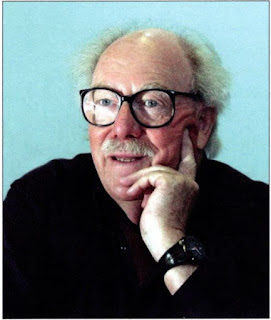


John Clark


Obituary: Vale Richard Hudson Keys, November 17, 1937 – July 8, 2022.


Richard Keys. Photo: Maddie McGuigan

  JANE FREEBURY remembers film identity Richard Keys who has died aged 84.

I first met Richard in the late 1990s, not long after I came to Canberra. He was a staff member at the National Film and Sound Archive at that time. I remember his distinctive, tall frame and welcoming smile, and as someone always ready to strike up a conversation on matters film.

Since he passed away in Canberra earlier this month, I have learned of the affection that many in the industry and its institutions had for this life-long, passionate supporter for Australian film.

In later life, Richard remained connected with the NFSA as a curator emeritus, was a long-standing member of the Australian Media Oral History Group and a driving force behind the Reel McCoy film society in Canberra. Early in his career he worked at Cinesound and as an animation cameraman at another Sydney studio, before he joined the Film Radio and Television Board of the Australia Council, and was subsequently on the staff of the Australian Film Commission.

There is on the AMOHG website a long list of tributes to his contribution to the Australian film industry that show how much he will be missed by a wide circle of friends and colleagues. Many filmmakers recall with affection his support for their projects, his kindness and also the breadth of his knowledge. Richard was a cinephile and a practitioner, who had once worked as an animation cameraman in Sydney.

It is so sad to hear that he is gone. I didn’t know Richard well, but we would meet for lunch every now and then to talk about the movies. No one who knew him will be surprised to hear these discussions were wide-ranging and enthusiastic. He was very knowledgeable, and an engaging lunch companion.  His wife Ruth would join us from time to time.

Richard and I were the Canberra contingent at the annual awards night in Sydney of the Film Critics Circle of Australia. An occasion at which he was often accompanied by his good friends, film historian and curator Graham Shirley and celebrated filmmaker Bruce Beresford, with whom he went to school in Sydney.

Bruce’s tribute to his old friend is here. It sums up the tributes of many who recall how Richard would champion their film projects and how his amiable, frank manner and sheer good nature earned the admiration of all who worked with him.

Condolences to wife Ruth and his family.


Saturday, July 23, 2022

THIS CHANGES EVERYTHING


Written By Joel Horwood

Directed by Jordan Best

Echo Youth Theatre production

The Q Theatre Queanbeyan to 30 July


Reviewed by Len Power 22 July 2022


‘This Changes Everything’ at the Q Theatre in Queanbeyan is the first production of Echo Youth Theatre, showcasing 18 young actors in the early stages of their theatrical experiences.

 The 2015 play by English playwright, Joel Horwood, looks at what happens when a group of idealistic teenagers, disillusioned with the world, leave and form their own community on an isolated island.  They try living by three codes: The Community is the individual and the individual is The Community; we all work to make this place; and there are no bad answers.  They soon find that idealism is not the answer they thought it would be and when three new teenagers arrive and ask to join, the problems increase.

This ‘Animal Farm’ meets ‘Lord Of The Flies’ scenario plays out predictably as the community find it’s not as easy to change the world as they initially thought.

Jade Breen

The show has been given an elaborate set design by director, Jordan Best, which nicely evokes this isolated world.  It also has an effective sound design that utilizes notable atmospheric original music by young cast member, William Best.

In line with the community ideas presented in the play, it seems as if the actors were allowed to create their roles basically as themselves.  The result is quite uneven and the group’s lack of basic stagecraft is clearly evident.

Stephanie Stephens, Kendra Robertson

Dialogue is either gabbled at high speed or delivered so quietly with no energy, much of the show is hard to follow.  There seems to be no thought behind the lines being spoken and the lack of eye contact during conversations between characters is quite disconcerting.

Youth theatre that gives young people an opportunity to engage with the world of theatre and learn elementary stagecraft is to be encouraged and Echo Youth Theatre is a fine initiative.

However, it was disappointing that this production showed little evidence of stage skills learned.


Photos: Photox - Canberra Photography Services

Len Power's reviews are also broadcast on Artsound FM 92.7 in the ‘Arts Cafe’ and ‘Arts About’ programs and published in his blog 'Just Power Writing' at https://justpowerwriting.blogspot.com/.