Thursday, May 22, 2025

IF WE GOT SOME MORE COCAINE I COULD SHOW HOW I LOVE YOU


If We Got Some More Cocaine I Could Show You How I Love You  by John O’Donovan.

Directed by Joel Horwood. Produced by Jarrad West and Nikki Fitzgerald.  Jarrad West & Nikki Fitzgerald.  Set design Isaac Reilly. Sound design Neville Pye. Lighting design Lachlan Houen. Costume design Winsome Ogilvie. May 14-24. 2025 Bookings: (02)62108748

Reviewed by Peter Wilkins

 
Joshua James as Casey and Robert Kjellgren as
Mikey in If We Got Some More Cocaine I Could
Show How I Love Yoi

John O’Donovan’s debut play If We Got Some More Cocaine I Could Show You How I Love You echoes with the authenticity of personal experience. This could be because of director Joel Horwood’s detailed attention to the moments of panic, humour, conflict and love that he has carefully and imaginatively elicited from O’Donovan‘s text. It may be because of the thoroughly credible performance of the two young actors Joshua James as Casey and Robert Kjellgren as Mikey, who give such riveting and convincing performances as the two burglars, facing capture on the one hand, personal truths and admission of their true love on the other. It may also be because playwright O’Donovan has diligently observed Aristotle’s Unities. The unity of time is a few hours late at night on Halloween. The unity of place is the roof of Casey’s house. The unity of action is the developing relationship between the two young men as they reveal their predicament and the confession of their feelings for one another.


 Aristotle’s Unities provide a gripping focus to the production. In the intimate setting of the ACT HUB theatre the audience is compellingly drawn into the ninety minute play without the distraction of changing scenes, subplots or an interval. From the scrambling fearful clambering onto the roof at the start the audience is conscious of immediate drama, leavened slightly by Casey’s clown mask to disguise his face. This is a quirky romantic drama. It is also a telling social documentary about dysfunctional families and the devastating impact on the lives and hopes and dreams of Irish youth.


Horwood’s casting of Joshua James as the young 18 year old whose house they have burgled after an earlier bungled theft of a petrol station and Robert Kjellgren as the older, more experienced delinquent is inspired. James and Kjellgren give thoroughly convincing performances sensitively and at times explosively orchestrated by Horwood. James and Kjellgren are two of the finest young actors I have seen on the Canberra stage and I urge you to see their performances before they are certain to pursue a bright career in the theatre. James plays a London youth feeling alienated in the small Irish village and battling the abuse of his mother’s drug- dealing lover. Casey is more sensitive than the larrikin Mikey, whose rebellious and defiant nature disguises a vulnerability and need for love. It is Mikey who eventually helps Casey to admit to Mikey and to himself his homosexuality. Horwood directs these tender moments with loving appreciation of the nature of true love.


O’Donovan’s play exhibits an honesty that makes the circumstance that Casey and Mikey find themselves in entirely believable. At times we laugh at their naivety and innocence. At other times we are moved to empathise with their plight and their compulsion to be true to their feelings. Everyman Theatre has once again produced a piece of theatre that invites us to witness the human condition and consider our own place in the world.

 I close with a confession. On opening night I had difficulty understanding the text, partly because of the accents and partly because of my inability to distinguish the words. Fortunately I resolved to return and had no such trouble apart from some difficulty at times with Kjellgren’s Irish brogue. Independent theatre struggles at time with short rehearsal periods and my return affirmed the fact that the actors’ clarity of text and familiarity of playing had evolved into a first rate performance of O’Donovan’s hilarious and tender account of youthful gay love. This is a production well worth a visit.

Photos by Ben Appleton - Photox


Wednesday, May 21, 2025

Stilleven

Visual Art Exhibition Review | Brian Rope

Stilleven I Rose-Mary Faulkner

ANCA Gallery I 14 May – 1 June 2025

A decal is “a plastic, cloth, paper, or ceramic substrate that has printed on it a pattern or image that can be moved to another surface upon contact, usually with the aid of heat or water.” Rose-Mary Faulkner transfers images onto kiln formed glass. She layers several related images before further manipulating the surface and form through multiple fusing or cold working. This expands the imagery beyond the original photograph as the transparency of glass enhances layering for the purpose of depth and overlapping. 

Rose-Mary Faulkner, Six oranges and a Saturday morning ritual, 2024,
kiln formed glass with decals, 30 x 20 x 1cm.

Stilleven exhibits works by glass artist Faulkner, considering connections to places and objects as both self-portraiture and representative of lived experience and narrative. Softly focused compositions of domestic settings form an avenue to explore dynamics of the absence and presence of people and bodies, connection to environments we embody and the way objects can exist as metaphors.

Domesticity, and artworks depicting inanimate objects found in domestic situations, are domains that have historically been disregarded. The Dutch-origin term "stilleven" means inanimate objects. However, disguised symbolism means domestic objects can be extremely significant revealing the narrative of people's lives, bearing witness to time and change. That is why many of us value, and display in our own homes, precious objects inherited from our forebears.

Sadly, many still consider domestic tasks a domain for women only. This exhibition examines the familiarity and femininity of these topics as ones that possess significance, story, and profound meaning. Faulkner illustrates what is simultaneously familiar, difficult, and valuable amidst the subtle rhythms of everyday.

One particularly delightful work, Snowdon (a study) is a diptych about a much-loved farm house which, I believe, has been in the artist’s family for many generations.

Rose-Mary Faulkner, Snowdon (a study), 2023, kiln formed glass with decals.

Faulkner is based in Australia’s national capital, Canberra. She graduated from the Australian National University School of Art & Design, Glass Workshop, with a Bachelor of Visual Arts in 2015 and then with first class honours in 2016. Since then, her work has been exhibited widely - in Australia, Berlin, America and Japan. It has been acquired for the Wagga Wagga National Art Glass Gallery collection. The artist works as an arts educator and creates art at Canberra Glassworks and in her home studio which she shares with her partner and glass artist, Rob Schwartz.

In 2018 Faulkner won the National Emerging Art Glass Prize (Wagga Wagga) and spent six weeks at Northlands Creative in Lybster, Scotland, taking part in intensive classes. The same year she held her first solo exhibition, with a body of work that developed from the processes and ideas she had explored in her honours year. In 2019, she was a finalist in the inaugural Klaus Moje Glass Award (Canberra Glassworks). 

For me the most interesting piece in the show is an artwork comprising 32 separate still life compositions gathered from women in her extended family and artists network of friends. Each contributor provided photographs of objects or spaces in their own homes which Faulkner has fused into glass. The images are from women who range in age from 20 to 89. They live in Australia, America and the United Kingdom. The catalogue describes the collection of pieces as a kind of still life portraiture. This fabulous artwork is a created composition revealing a great deal about women’s experiences despite (or because of) the contents being domestic.

Rose-Mary Faulkner, three of the 32 works in Tending (quiet testimonies from homes), 2025 – Kilnformed glass with decals, dimensions variable (installation images by Brian Rope)

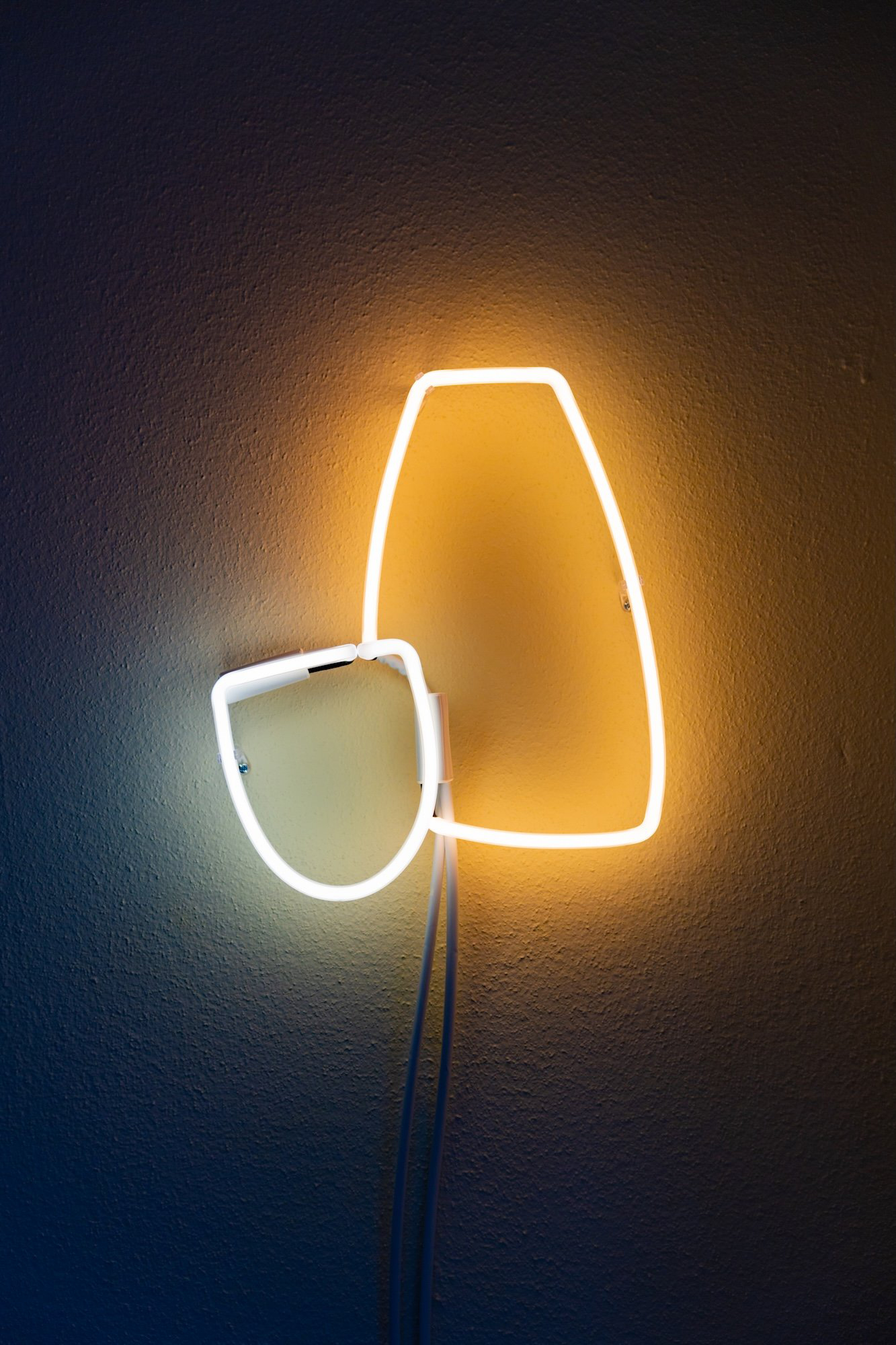
There are also a number of works featuring bent glass forms which, again, are about inanimate objects.

Rose-Mary Faulkner, Two vessels in light, 2024, hand bent neon with argon mercury gas, dimensions variable. 

The exhibition essay by Dr Jacqueline Bradley is a beautifully written piece, well worth reading in conjunction with a visit to the exhibition. Bradley speaks of Faulkner’s “deep consideration of the still life genre, shifting between the formal and symbolic, the private and personal.”

This review is also available on the author's blog here.

Sunday, May 18, 2025

RIVERSONG


The Resonants choir

Helen Swan, conductor

Gandel Atrium National Museum of Australia May 17


Reviewed by Len Power


The fate of rivers and the fate of people are inseparable. In a tribute to the spirit and strength of our rivers, Canberra choir, The Resonants, performed a program of songs that captured the story of our rivers.

Organised by the Australian River Restoration Centre, a charity restoring rivers and empowering others to do the same, this was a fund-raising concert for the long-term future of our rivers.

The Resonants choir, an independent, non-profit ensemble of young professionals and university students, was formed in 1990 by music director, Helen Swan. They have been crowned ABC Choir of the Year, recorded four CDs, participated in multiple Australian National Eisteddfods and the Canberra International Music Festival. Conductor, Helen Swan, is a well-known Canberra choral conductor, musician, music educator and opera singer.

Resonants choir

Introduced by award-winning ABC journalist, Alex Sloan, the evening commenced with a Welcome to Country by Aunty Violet Sheridan, a Ngunnawal Elder. She gave a passionate, sincere and down-to-earth welcome that was especially meaningful for the occasion.

The first act of the concert, sub-titled The Spirit Of The River, commenced with the choir singing The Spheres by Norwegian composer, Ola Gjelio. This haunting work evoked a sense of timelessness. The cavernous Gandel Atrium, with its resonant acoustic, was the perfect place to hear it.

Helen Swan, conductor

Six other works were presented in the first act including a dramatic This Is Our Home by Paul Stanhope, The River by Coco Love Alcorn in a beautiful arrangement by Rachel Hore, and a memorable arrangement by Ruth Kilpatrick of Waltzing Matilda which took the familiar melody and added rich harmonies with an Aboriginal-inspired chant.

The second act of the concert, subtitled Renewal and Resilience, commenced with the premiere of The Whisper of the Dying Stream, a new work by Sydney-based composer, Sophie Van Dijk. It was conducted by Kylie Van Dijk. It was a sombre, melodious and appealing work that was given a fine performance by the choir.

Other works presented included Weathermakers, composed in 2016 by Kirsten Duncan, a member of The Resonants choir, Hope There Is, a sublime setting by Clare MacLean of Oodgeroo Nunuccal’s poem, Hope, a haunting arrangement by James Erb of the American folk song, Shenandoah, and Steve Zegree’s arrangement of Henry Mancini’s Moon River. The concert concluded with Andy Beck’s Riversong.


This impressively skilful choir sang mostly a capella and were accompanied on various songs by pianist, Emily Luong, Ben O’Loughlin, double bass and Tom Chalker, percussionist.

The video projections that accompanied each song were particularly well-chosen and the atrium was illuminated with changing light patterns that added to the atmosphere of this fine concert given in aid of a worthy cause.


Photos by Dalice Trost

This review was first published by Canberra CityNews digital edition on 18 May 2025.

Len Power's reviews are also broadcast on Artsound FM 92.7 in the ‘Arts Cafe’ and ‘Arts About’ programs and published in his blog 'Just Power Writing' at https://justpowerwriting.blogspot.com/.


Saturday, May 17, 2025

THE DICTIONARY OF LOST WORDS


The Dictionary of Lost Words by Pip Williams. Adapted for the stage by Verity Laughton.

Directed by Jessica Arthur. Set designer Jonathon Oxlade. Costume designer Ailsa Paterson. Composer and sound designer Max Lyandvert.Lighting designer Trent Suidgeest. Assistant Director Shannon Rush. Cast: Kathryn Adams, Arkia Ashraf, Ksenja Logos, Brian Meegan, Johnny Nasser, Angela Nica Sullen, Shannen Alyce Quan and James Smith. The Playhouse. Canberra Theatre. May 15-24 2025. Bookings 62752700.

Reviewed by Peter Wilkins


 You do not need to have read Pip Williams’s enormously successful The Dictionary of Lost Words to fully appreciate and be rapt in Verity Laughton’s spellbinding adaptation. I sat absorbed in Williams’s story of the wonder of words and her ingenious concept to view the creation of the Oxford English Dictionary through the prism of the magic of words and their meanings as seen by the play’s protagonist Esme Nicoll. Esme is the daughter of Harry Nicoll, a lexicographer on Dr. James Murray’s team to record all the words of the English language. Widower Nicoll brings his daughter to the Scriptorium or "Scrippy", a transformed garden shed at the back of Murray’s residence in Oxford where Esme waits under a table while her father and the team of lexicographers and copyists undertake the enormous task of cataloguing and sorting the words on postcard sized paper under their alphabetical letters. One day a card falls to the floor and is quickly retrieved by Esme. Significantly the word is Bondmaid referring to slavery and a woman’s lot in life to serve until death. And so begins the curious four year old’s quest to discover and uncover words pertaining to women that have been lost, overlooked and discarded from the Oxford English Dictionary. What follows is Esme’s quest for identity and meaning through the words that she discovers and stores in a chest belonging to Murray’s maid Lizzie Lester.

Shannen Alyce Quan as Esme Nicholls
 Laughton has skilfully condensed Williams’s epic story into an engrossing and fascinating theatrical account, not only of the nature of language and its different meanings but of the woman’s place in that recording and the differences between men and women and how the words pertain to their experience. In adapting The Dictionary of Lost Words and realizing the book as a work for the theatre, Laughton and director Jessica Arthur have faithfully represented and embellished author Williams’s intent to place the woman’s experience at the very heart of her novel. In a male dominated society of the Victorian era in which the creation of the first English dictionary was defined by the older white males, the character of Esme is not only strikingly illuminating but vital to understand the differences and the similarities that exist between men and women and therefore the different ways in which the use of the language defines gender. We see Esme grow from an insatiably curious and highly intelligent four year old to a teenager experiencing the shock of a first period to a grown womn searching out a career in lexicography to a woman tasting her first experience of sexual intimacy and the painful experience of an unwanted pregnancy and the uniquely female experience of childbirth. We see her growing passion for female rights through involvement with suffragette activist Tilda Taylor (Angela Nica Sullen) and a woman’s helpless experience of loss and grief at wartime.
Esme and Tilda Taylor (Angela Nica Sullen)
As a male member of the audience I am acutely aware of  not only how language and words define who we are and how different meanings impact on our view of ourselves and the world but also of the significance of the unifying force of the word Love in contrast to the definition of Bondmaid. The co-production of The Dictionary of Lost Words by the State Theatre Company of South Australia with the Sydney Theatre Company touches the heart and opens the mind.  Jonathon Oxlade’s ingenious design of a wall of pigeon holes becomes a repository for words or a collection of curiosities or house lights in Trent Suidgeest’s clever lighting design. The changing scenes and timelines are evocatively underscored by Max Lyandvert’s beautifully composed score from the playful opening music to the soulful strains of The Bonnie Banks o' Loch Lomond. Dates and locations are displayed on a screen while Arthur directs a fluid and mesmerizing production that fascinates, enlightens, captivates and moves us to tears or elicits gales of laughter in the scene in Covered Market where Mabel (Ksenja Logan ) teaches Esme the meaning of c**t. 
Esme, Mabel, and Lizzie at Covered Market
 
A uniformly strong cast bring Laughton’s adaptation to life with verve and relish. The actors change roles with ease and absolute conviction. Only Johnny Nasser as Harry Nicoll, Brian Meegan as Sir. James Murray and Shannen Alyce Quan as Esme retain the one role. Quan gives an incandescent performance from the delightfully effervescent young child to the perplexed teenager, the lovestruck young woman, the feisty suffragette and the grief stricken war widow. Quan runs the gamut of emotion and experience in a performance that is uplifting, moving, powerful and affirmative. There is excellent support from Johnny Nasser as Esme’s father, Kathryn Adams as Lizzie Lester, Mrs. Smyth and Maria, Ksenja Logos as Mabel, Ditte and suffragettes Alice and Megan, Brian Meegan as Sir James Murray, Arkia Ashraf as Gareth Owen and Mr. Crane, James Smith as Bill Taylor and Frederick Sweatman and Angela Nica Sullen as Tilda Taylor, Sarah and Arthur Mayling.
Harry Nicoll (Johnny Nasser) and Esme (Shannen Alyce Quan)
 
It comes as no surprise that Pip Williams’s original story should have garnered so many awards and adulation. This production is a noble tribute to the book and a fascinating and heart-warming theatrical delight in its own right. Apparently the Canberra Season is unsurprisingly sold out. I still urge you to try however you may to get a ticket, This is a theatrical treat that you won’t want to miss.

THE DICTIONARY OF LOST WORDS


Adapted by Verity Laughton from the book by Pip Williams

Directed by Jessica Arthur

The Playhouse, Canberra Theatre Centre to May 24


Reviewed by Len Power 16 May 2025


Travelling through time, The Dictionary of Lost Words tells the story of the girl who stole the word ‘bondmaid’, which was found to be missing from the Oxford English Dictionary in 1901.

Young and motherless Esme Nicholls spends her childhood in the Scriptorium, a converted garden shed in Oxford, where her father and a team of lexicographers are gathering words for the first Oxford English Dictionary.

Hiding under the sorting table, she catches a word, ‘bondmaid’, on a card as it falls. Finding other words that have been neglected by the men, Esme begins a collection of her own - the Dictionary of Lost Words.

Growing up, Esme realizes that the recording by men of words and meanings related to women’s experiences have been given little importance. Through the power of the words she has gathered, she effectively gives voice to the many silenced people she has come to know over the years – the actresses, suffragettes, market traders and workers.

South Australian novelist Pip Williams’ internationally best-selling book, in a stage adaptation by Verity Laughton, has been given a sumptuous co-production by the State Theatre Company South Australia and the Sydney Theatre Company.

Directed with great imagination by Jessica Arthur, it has a superbly designed split-level set by Jonathon Oxlade that incorporates clever projections with a fine lighting design by Trent Suidgeest. It really is a feast for the eyes.

The cast of eight, some of whom play multiple roles, all give nicely etched characterizations. Shannen Alyce Quan plays the huge role of Esme Nicholls with great skill and charm, ageing from young girl to woman as the play progresses. Johnny Nasser gives a strong, appealing performance as her father. Both performers play their changes in age with notable subtlety, aided by the detailed costume designs of Alisa Paterson.

Johnny Nasser (Harry Nicholls) and Shannen Alyce Quan (young Esme Nicholls)

Amongst the performers playing multiple roles, Angela Nica Sullen is a standout as actress and suffragist, Tilda, giving her a formidable strength as well as warmth. Kathryn Adams is a delight as Lizzie, the maid in the Nicholls’ household, and Ksenja Logos is memorable as Mabel, a market worker who teaches Esme about certain words not heard in polite society.

Kathryn Adamas (Lizzie) and Shannen Alyce Quan (grownup Esme Nicholls)

The play is a subtle lesson in the power of words and how they can silence certain sectors of society, particularly women, as they struggle to be heard in a man’s world. Its message is effectively and beautifully told in this very enjoyable production.


Photos by Prudence Upton

This review was first published by Canberra CityNews digital edition on 17 May 2025.

Len Power's reviews are also broadcast on Artsound FM 92.7 in the ‘Arts Cafe’ and ‘Arts About’ programs and published in his blog 'Just Power Writing' at https://justpowerwriting.blogspot.com/.


Thursday, May 15, 2025

IF WE GOT SOME MORE COCAINE I COULD SHOW YOU HOW I LOVE YOU


Written by John O’Donovan

Directed by Joel Horwood

Everyman Theatre production, ACTHub Theatre, Kingston to May 24


Reviewed by Len Power 14 May 2025


It’s Halloween and Mikey and Casey are stuck on a roof after robbing a petrol station in a small town in the west of Ireland.

Mikey is a tough young Irishman. Always ready for a fight, he’s also at war with himself. He might be gay, but he’s not comfortable with other gay men of his age nor with the quietly homophobic society around him.

Casey is a younger gay Englishman living in Ireland. He is still closeted but has strong feelings for Mikey. He’s gentler and more sensitive than Mikey but better able to express affection.

As they wait for the Guards to stop circling the house, they have the time to confront a few truths about themselves, each other and the society they are part of.

Robert Kjellgren as Mikey gives a strong, energetic performance, prowling the roof like a caged animal.  As Casey, Joshua James brings an appealing warmth and sensitivity to the role. Both actors convincingly give their roles a sense that they probably don’t have much chance of happiness together or even much of a future.

Joshua James (Casey) and Robert Kjellgren (Mikey)

Director, Joel Horwood, keeps the action moving well in the limited playing area of the roof and has obtained deeply observed characterizations from the cast.

Unfortunately, a lot of dialogue on opening night was not clear or audible enough. With accents to contend with and the rapidity of the dialogue, it was a strain at times to pick up what was being said.

These young men were interesting characters, and the play had a lot to say about a society that can change laws but not the minds of the people. Maybe it was because of the difficulty in following the dialogue, but the ending of the play was not as moving as might have been expected.


Photos by Ben Appleton – Photox Canberra


This review was first published by Canberra CityNews digital edition on 15 May 2025.

Len Power's reviews are also broadcast on Artsound FM 92.7 in the ‘Arts Cafe’ and ‘Arts About’ programs and published in his blog 'Just Power Writing' at https://justpowerwriting.blogspot.com/.


Monday, May 12, 2025

The Wrong Gods - Belvoir


The Wrong Gods by S. Shakthidharan.  Belvoir Theatre co-produced with Melbourne Theatre Company, at Belvoir Theatre, Sydney, May 3 – June 1, 2025.
Supported by The Hive – Supporting emerging talent at Belvoir

Reviewed by Frank McKone
May 11


CAST
Nirmala: Nadie Kammallaweera    Isha: Radhika Mudaliyar
Devi: Manali Datar            Lakshmi: Vaishnavi Suryaprakesh


CREATIVES
Writer and Co-Director: S. Shakthidharan
Co-Director: Hannah Goodwin
Set and Costume Designer: Keerthi Subramanyam
Lighting Designer: Amelia Lever-Davidson
Sound Designer: Steve Francis
Associate Sound Designer: Madeleine Picard
Composer: Sabyasachi (Rahul) Bhattacharya
Tabla performed by Aman Pal

Indian soundscapes recorded by George Vlad (mindful-audio.com)
Movement & Fight Director, Intimacy Coordinator: Nigel Poulton
Vocal Coach: Laura Farrell
Stage Manager: Madelaine Osborn; Stage Manager: Steph Storr
Assistant Stage Manager: Mia Kanzaki; Assistant Stage Manager:
Grace Sackman

Digital Program at https://belvoir.com.au/wp-content/uploads/2025/05/TWG-Digital-Program_v5.pdf
Cover photography by Daniel Boud
Rehearsal photography by Brett Boardman

The four women at a light moment in rehearsal as
Isha, Nirmala, Devi and Lakshmi
The Wrong Gods by S. Shakthidharan, Belvoir 2025


We are putting our faith in the wrong ideas. The wrong systems. The wrong gods.  That woman, in the valley. Her gods and our gods are going to need to talk to each other. They are going to have to work together. It will take an openness on both sides. They are ready.
But are we?


This is the ending of the Author/Director’s program note.  It’s where we begin to appreciate his play, written he says, because of his experience more than a decade ago:

She's sitting on the banks of her river, deep in her valley, in the remote heart of India. She's staring at me. I'm brushing off her soil from my lenses, my tripod, my cables. I've just finished an interview with her. As I head back up the mountain, to where my Australian arts colleagues are waiting, she yells: 'make sure you get our story onto that TV!' It's not a request: it's an order. Her cow bellows his [her?] support. 'I'll try, aunty,' I feebly call back down the mountain.

Not on television, but powerfully on real-life stage, The Wrong Gods makes its point in a straightforward manner, in 90 minutes, no interval.

That woman in the valley, with her cow but no man left to work, is Nirmala, a traditional small farmer, needing her teenage daughter to leave school to keep the farm going.  Isha has been told by her teacher, Devi, that she is very bright.  Isha insists on going on to school in the city.

Both mother and daughter are very determined characters.  Though Nirmala is afraid of ‘modern’ influences, after a highly emotional argument, she finally gives in and lets Isha go.

But soon Lakshmi appears, a modern executive, in a program to explain to the villagers how her American company is being funded, including by the Indian government, to dam the valley to supply clean water to the millions living in the city.  This will drown 40,000 people's homes.  In the theatre world, there are echoes here going right back to Henrik Ibsen and An Enemy of the People.  

On the side, I had a picture in mind of the town of Adaminaby, drowned in the building of the 1940s-50s Snowy Mountains water supply scheme in Kosciuszko National Park, not far from Canberra, Australia, where I live.

When Isha returns she is educated in science and sees the necessity of modern development, the new Indian god, while her mother refuses to leave and would rather drown than deny the traditional gods and thousands of years of her indigenous way of life.

I thought then of the sincere acknowledgement of the Gadigal Eora people, original custodians of the land where Belvoir stands,  given by Radhika Mudaliyar just before moving into the role of Isha at the opening of the play.  In the end, as Isha, she reconciles with her mother Nirmala – but as S. Shakthidharan says, are we ready?

And then I thought – in 200 years modern progress has already brought us far worse than the damming of many valleys like Nirmala’s.  Even if we can limit the CO2 in the atmosphere with our net-zero plan by 2050, we are already past tipping-points according to most scientists – like Isha becomes in the play.  Can we ever be ready for a world-wide future so inhospitable as to be incapable of supporting human life?

The Wrong Gods pulls no punches.

Isha and her mother Nirmala
in rehearsal reacting to the inevitability of modern 'progress'
as Lakshmi and Devi explain.
The Wrong Gods by S. Shakthidharan, Belvoir 2025