Showing posts with label Gabrielle Hall-Lomax. Show all posts

Thursday, June 18, 2026

VIEW2026

XinShuo Zhuo, Among the Interstices, installation view, 2026.

Image: Gabrielle Hall-Lomax
 

As always when walking into this gallery, the works to the left are the first that visitors see. In this exhibition they are those of XinShuo Zhuo. The large cascading calligraphy scroll is the very successful feature piece amongst numerous small, distressed and toned prints decorating the surrounding wall spaces. The artist is seeking to explore the relationship between images, memory and environment. It draws on Zhuo’s personal life journey so far and encourages us to wonder about the future. Essayist Kung suggests this body of work awakens a tenderness, a fragility, creating an inward expanse that makes room for feeling.

Moving into the space to the right of the entrance, there are works by three more of the artists. On the left Dylan Marriott shows us two pieces from a forthcoming solo show he is to have in Melbourne. One shows youths we are barely able to see lounging along a river’s edge. It is an impressive and powerful work. This artist has said he is jealous of painting’s freedom of expression, yet here he has shown today’s photographers can also be similarly free.

Dylan Marriott, Wake, installation view, 2026.

Image courtesy the artist.

On the long opposite wall and the small end wall of this space there are fourteen pieces by Cass Li. The sole artwork on the end wall is vibrantly coloured capturing attention immediately, so much so that I examined it first before turning back to the other images by Li. Each piece looks at a different aspect of the last days of her grandfather’s life and the mourning period that followed. This documentary series is, for me, the highlight of the exhibition. Initially concluding that Together, There’s No Need to Cry, Li has most successfully pulled together how different generations of her family have dealt with their grief, whilst also tracing the family’s migration journey. Taoist rites, Chinese Timorese ancestry, belongings left behind, and much more are all part of this wonderfully creative and moving, yet documentary, project.

Cass Li, Fung Bao 2013-2024, installation view, 2026.

Image: Gabrielle Hall-Lomax

Cass Li, Popo in Kung Kung’s room, searching, 2024.

Image courtesy the artist.


Finally, in the back room, Elesa Stellios is exhibiting a three-screen video installation, employing an interactive program. And Toni Tait has two works, also involving video. One is described as “remediated video” - remediation being the process of adapting content from one medium to another. Tait’s other work has archival audio, field recording and a section of PVC pipe also contributing.
 
Elesa Stellios, this is how i must look, video still, 2026

Toni Tait, This is Fair Dinkum, video still detail, 2025

Once again, the annual VIEW project has delivered interesting and diverse artworks by another group of early-career artists. The accompanying publication refers to the project being “resolutely focused on the broadest definition” of photographic practice. That certainly is true of this exhibition. The question that cannot be answered at this time in 2026 is whether or not these, or other, artists will continue to explore the same types of work or will move into other areas. We will have to wait and see where each participant goes in their future practices. Given what Alex Robinson has referred to as limitless possibilities, each of these artists might take their practices anywhere!


This review is also available on the author's blog.

Thursday, March 6, 2025

BLAZE 2025

Exhibition Review: Visual Art | Brian Rope

BLAZE I Sophia Childs, Sophie Dumaresq, Gabrielle Hall-Lomax, Emeirely Nucifora-Ryan, Brennan O’Brien, Jessika Spencer

Canberra Contemporary I 8 February – 17 April 2025 

This exhibition is an emerging artists’ showcase. Now in its fifteenth iteration, BLAZE presents diverse voices at the beginnings of their art careers. It exhibits bold and thought-provoking artworks in several media. The artists were chosen based on contributions to the vitality of visual art in the ACT region and their exhibitions over the last eighteen months.

Sophia Childs is showing an assortment of delightful works for which she has sewn together irregular shaped pieces of fabric that she has painted on with acrylic. Most of the resultant works are spread out on the walls much as skins removed from a dead person’s or animal’s body might be. But these are not dead animal skins as the works are brightly multi-colourful and most fascinating to explore. Two of them are attached to recycled timber frames standing on cast plaster feet, further adding to their already substantial interest.

Installation view of work by Sophia Childs in BLAZE 2025 at Canberra Contemporary.
Photo by Brenton McGeachie

Sophie Dumaresq, whose works have been seen in a number of Canberra galleries recently is represented here with just one artwork, but it is rather special - a major mixed media performance piece with mechanical components. This anthropomorphic sculptural-performative shark is a major contribution to the artist’s self-appointed role as spokesperson for sympathy towards the Great White Shark. Those who have had an opportunity to watch whilst the artist is animating the shark would, no doubt, have thoroughly enjoyed the performance and, therefore, appreciated the piece and its message even more.

Gabrielle Hall-Lomax is showing eight framed prints, each having been made from scanned medium-format film. As displayed, they are separated into three groups by two piles of archival letters. Several images show us various immediate family members, including the artist herself, in differing and different poses. Roger’s head is obscured, posing a question as to why. Twins had me wondering whether or not the two figures were actually that or were the one person shown twice. Does the answer matter?

Gabrielle Hall-Lomax 'Roger' 2025, medium format film, scanned and printed on archival cotton rag, 60 x 60 cm. Photo by Brenton McGeachie
Gabrielle Hall-Lomax 'Twins' 2025, medium format film, scanned and printed on archival cotton rag, 60 x 60cm Photo courtesy of the artist

Each of these high-quality images is intriguing. Two of them, respectively titled Eyes and Ring, brought me to a stop as I walked around the space, forcing me to look even more closely and think longer about what they were telling me. The letter piles immediately made me want to rifle through them, closely reading and exploring their contents to discern the relationship to the prints. This is a fine storytelling body of work.

Emeirely Nucifora-Ryan is showing a set of six neon bent glass letter sculptures. They change colour (from warm red to icy argon-mercury blue) and shape as they are viewed from different positions in the gallery. A high voltage light beam dances in the complex forms. This is a further development from her previously exhibited and prize-winning glasswork. 

Brennan O’Brien’s four fastidious paintings explore softness and fluidity. They are works to stand before and enjoy as you absorb their content. His eyes, a blue million miles, painted with acrylic on primed plywood, is particularly surreal, a powerful study to stand before, look closely into, and simply enjoy.

Brennan O'Brien, 'His eyes, a blue million miles' 2024, oil on acrylic primed plywood,160 x 120cm. Photo courtesy of the artist

Wiradjuri woman Jessika Spencer has two works. One is constructed from natural and studio dyed raffia, hair, fishing line and a timber frame; the other from kangaroo bones, raffia and coolamon assemblage. Together they are a wonderful reimagining of country, “a utopia free of the effects of colonisation, capitalism and patriarchy.”

Visitors to this excellent show should read the detailed information about each artist’s works in the room sheet as they move around the gallery exploring and enjoying every exhibited piece.


This review is also available on the author's own blog here.

Saturday, March 25, 2023

VIEW 2023

Photomedia, Mixed media, Animation | Brian Rope

VIEW 2023 | SEVEN ARTISTS (Emily April O’Neill, Aidan Gageler, Harry Merriman, Gabriela Renee, Aaron Sun, April Widdup and Chenfei Xiao)

Photo access | 2 Mar - 15 Apr 2023

The 2023 edition of VIEW (an annual exhibition celebrating emerging talent) delves into the themes of cultural identity and the queer body. Showcasing seven emerging artists from the ACT region, it includes a diverse array of multimedia installations, traditional and non-traditional photo media, and animation.

Each artist presents a personal exploration of self, drawing upon shared experiences and perspectives in social, digital, and environmental realms. PhotoAccess Director Wouter Van de Voorde says "Their work highlights the strength and diversity of emerging artists in our region, and we are thrilled to provide a platform for their voices to be heard."

Multimedia artist Chenfei Xiao uses digital and augmented reality technologies. Here we see a discussion of a personal experience living as a queer Chinese Buddhist. The resultant three portraits fascinate us as we explore them, discovering features of that experience and delighting in Xiao’s various identities. I encourage you to spend time with these works before reading any explanatory material about them.

Chenfei Xiao, Guan Yin Help You (III), production still, 2022, augmented reality headset rendered images printed on gator boards, 59.4 x 84.1 x 0.5 cm

Aaron Sun is a new media and technology artist. Here he uses 3D modelling, virtual reality photogrammetry and more to create an excellent video work investigating racism in Australia. Watching it forces us to ask ourselves what we might do to remove our own biases. 

Aaron Sun, White Australia 1 (still from video, provided)

Abstract artist Aidan Gageler works on film, but never uses a camera as part of the production process. Happenstance played a major role in determining the end product. The collection of six works here takes us through various senses, emotions and colours (or lack of). Our responses to one work, Old Skin, will reflect how often we have each seen ageing skin in our long (or short) lives. 

Aidan Gageler, Old Skin, 2022, dye sublimation on aluminium

Interdisciplinary artist Emily April O’Neill has viewed how today’s modern technology has affected our lives. How are our public and private lives being modified? Are our personal behaviours, our confidential communications and even what defines us as individuals being permanently transformed beyond recognition? 
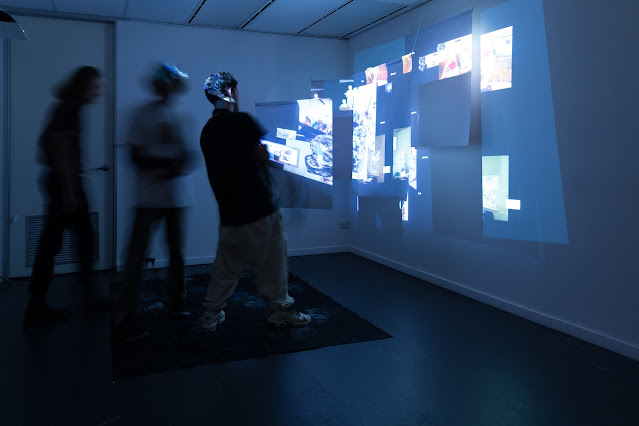
Emily April O'Neill, Between Bodies & Screens - interacting with installation image by Maria Koulouris

Harry Merriman’s video artwork Landscape of Light explores physical space and investigates how the alteration of our rural environment through human impact then affects our sense of self. It invites us to consider how various things change our views of the landscapes we are amongst.
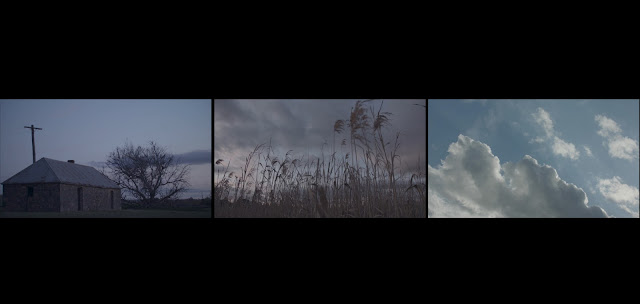
Harry Merriman, The Landscape of Light, 2019, Still from Video

Multidisciplinary artist April Widdup explores place and isolation from a queer perspective, focussing on their art’s potential to challenge. They are showing two pieces in memory of Queer lives lost to hate-crimes and suicide. These artworks use numerous materials, including recycled wood, mirrors, hot sculpted glass, LED lights, vinyl and laminated sheet glass.

April Widdup, You lived, and I will remember that (II) (detail), 2022, [In memory of Queer lives lost to hate-crimes and suicide], recycled wood, hot sculpted glass, monitor, mdf, laminated sheet glass, 94 x 141.5 x 163 cm.

Through their immersive installation pieces, Widdup and Gabriela Renee explore complex cultural and personal narratives and challenge critical thinking around identity, mobility, and place.
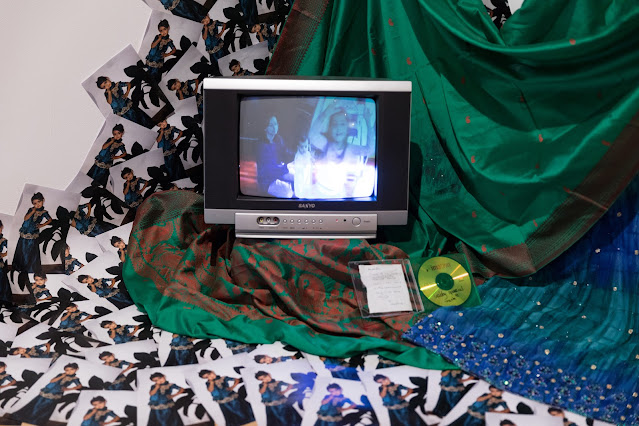
Gabriela Renee - Gedara Yanava Going Home - installation image by Maria Koulouris

There are points along our journey through this exhibition where we are invited to get down amongst the work, temporarily becoming part of it. Quite near the floor, I peered through a small hole and saw another face looking back at me surrounded by names, including Devanny Cardiel, a transsexual woman ambassador for the state of Guanajuato in Mexico, and Disaya Smith, the 36th Trans American killed in 2021.

Uncomfortably on my back, head inside a space, I immersed myself into Widdup’s everchanging scene. Looking at other visitors doing this, and doing it ourselves, adds an extra dimension to our experience.

This excellently curated (by Gabrielle Hall-Lomax) exhibition of diverse works, and accompanying publication, is challenging to think about. Leaving, I wondered how I’d review it. I needed some time to digest what I had viewed before writing this. The artists should be proud of their work and we should look forward to seeing each of them develop their art.

This review was first published by The Canberra Times on page 10 of Panorama and online on 25/03/23 here. It is also available on the author's blog here.

Monday, April 4, 2022

SELECTED SUBURBAN WORKS - WILLIAM BROADHURST - FANTASY COLLISION - GABRIELLE HALL-LOMAX, REVERBERATION TIME - JAMIE HLADKY

 Review of Photography, Mixed Media Exhibition | Brian Rope

At Photo Access, 10 March - 9 April 2022

These three solo shows have been described as each sharing a fascination with the strange. They are said to probe notions that have long intrigued photographers in numerous ways, demonstrating the diversity of contemporary photo-media.

One show, William Broadhurst's Selected Suburban Works, imbues everyday scenes with a sense of mystery through abstraction. He presents a series of fleeting encounters shot in south-west Sydney.

The majority of Broadhurst’s works convey a powerful sense of movement and, if you like, blur - causing the detail of the content to be strangely abstracted whilst, sometimes, revealing almost ghost-like shapes and figures.


William Broadhurst, Untitled#6, 2021

There are other works where particular content is more obvious - the moon is a clear presence in two works, in one seemingly hovering over a field of suburban lights.

Another work includes a person pushing a shopping trolley near the top of a hill. Others reveal a young person near a post and two youngsters alongside a soccer goal - doing precisely what is unclear in both images.


William Broadhurst, Untitled#5, 2021

Yet another work features a shirtless man (the artist?) working with a whipper snipper, although what it is cutting is out of the frame leaving us to imagine it. Perhaps the image I enjoyed most includes, it seems, a blurred reclining kangaroo surveying suburbia from a nearby hill.


William Broadhurst, Untitled#1, 2021

A second show, Gabrielle Hall-Lomax’s Fantasy Collision, integrates paint and digital manipulation techniques into layered photographic images. The works draw some attention to how human activity has transformed our Australian eco-systems. Expanding on environmental photography traditions - often used as a tool to raise awareness and educate us humans about the impact we cause on the environment - Hall-Lomax integrates paint and digital manipulation techniques into her works to reflect on the interconnectedness of nature - the body and the psyche are unified.

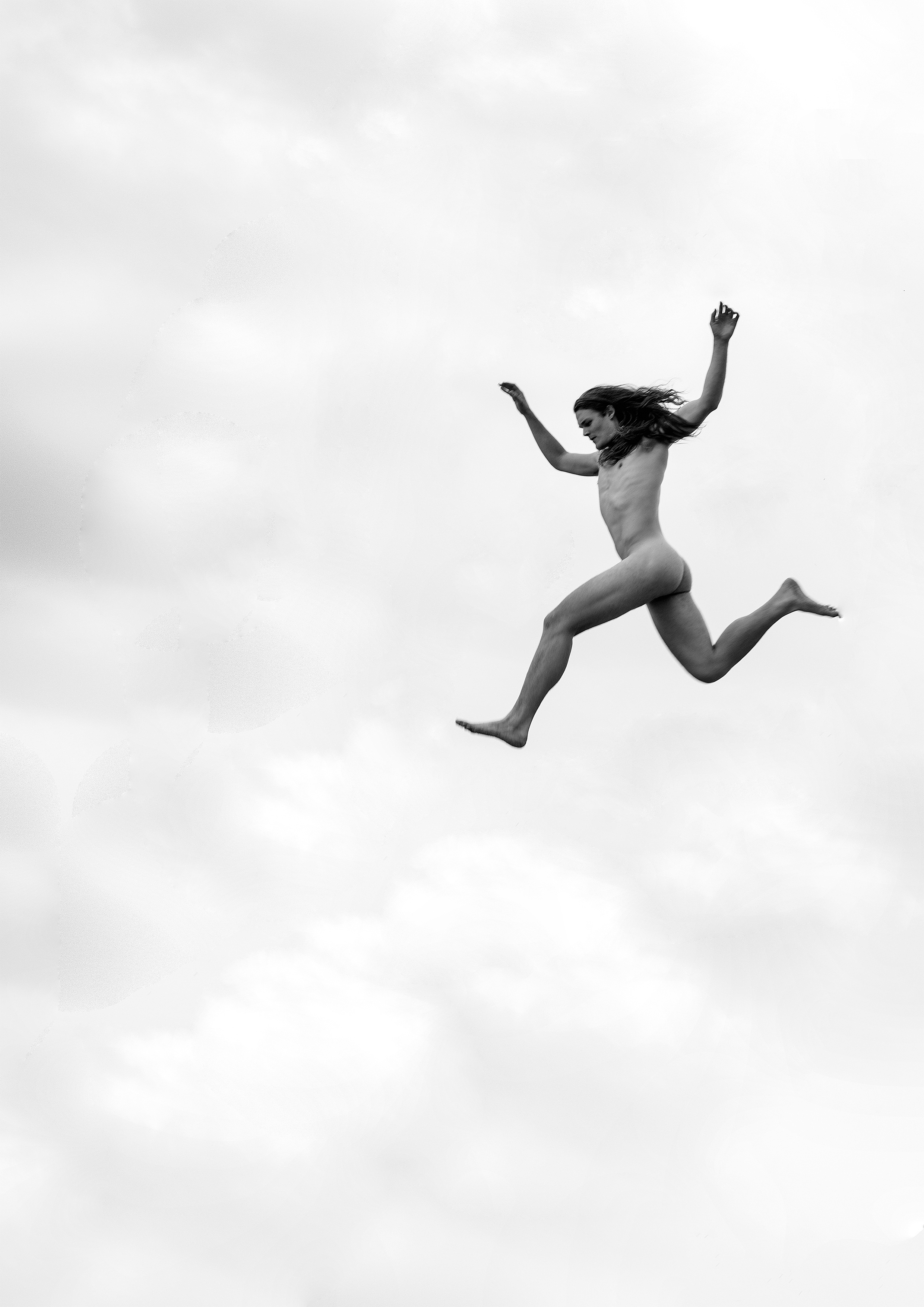
One work is titled Slip - whereas I saw a leap.


Gabrielle Hall-Lomax, Slip

Another titled Bushfires did not speak to me of that phenomenon - but is a lovely image, nonetheless. These are reminders, perhaps, that titles are unimportant to many artists and exhibition visitors. Whatever our views about that, these are fine images.


Gabrielle Hall-Lomax, Bushfires, 2021

Yet another is titled Rituals – it shows four modest-sized, standing stones amongst the mist – an acknowledgement of Stonehenge perhaps?


Gabrielle Hall-Lomax, Rituals

And Touching the sun is a sublime work that deserves lengthy contemplation – for me, the most interesting piece in the suite of three exhibitions.

The exhibition catalogue says the third show, Jamie Hladky’s Reverberation Time, “uses flash to explore places that have been reclaimed by nature after human occupation, illuminating the power of natural forces and our futile attempts to corral them.” Hladky himself has told me that the work is not so much about decay, or nature reclaiming, as he’s seen written. For him, his imagery is about “the irrelevant brevity of our short endeavours and our moments of self-absorbed pride.”

The titles of Hladky’s works reveal only where the images were taken. Around half are of decaying building interiors and half of cave and mining tunnel interiors.


Jamie Hladky, Gilgandra NSW, 2021


Jamie Hladky, Yarrangobilly NSW (1), 2021

One shot of the exterior of a neat and clean motel located in a desert area initially seemed out of place. Asked about it, Hladky told me he sees it as the first image in the series to pull the rest of them indoors - demonstrating that it is always good to have opportunities to discuss works with their authors!

In addition to viewing the three exhibitions, reading the delightful “essays” in their catalogues is a definite must, especially The House by Paddy Julian and A Cloak Stands in a Bore Hole, Arms Extended by Simon Eales.

This review was published in The Canberra Times of 4/4/22 here. It is also on the author's blog here.