Photography Book Review: Brian Rope
Fotoheide - A Photographers Tale - The remarkable career of Heide Smith I Brian O Smith
Cover design by Nector Graphic
Designs
Printed in Australia by Clark
Mackay
ISBN: 978-0-646-71168-3
 |
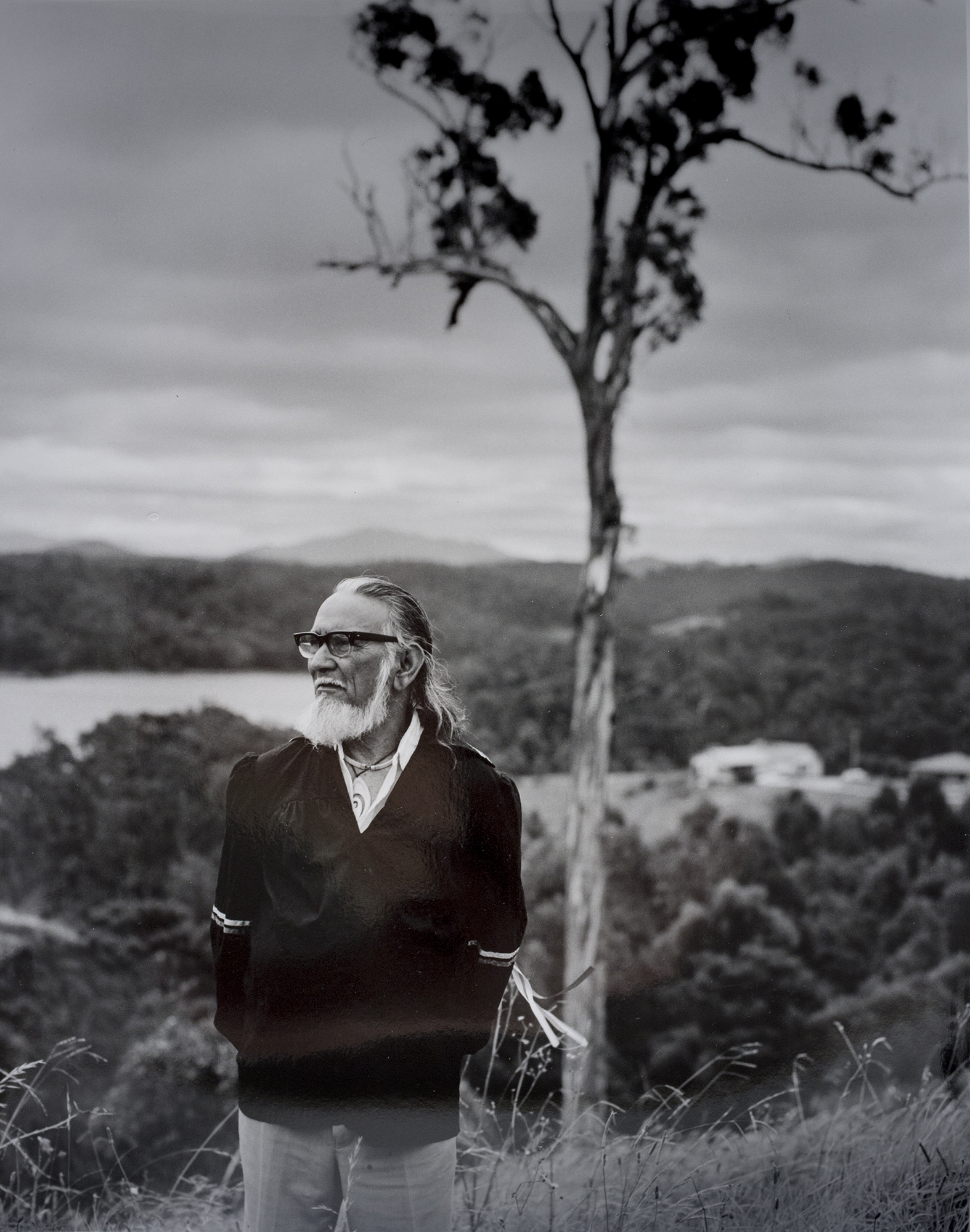
| Cover of Fotoheide - A Photographers Tale featuring Heide Smith’s 1991 portrait of Josef Gross, an English journalist and photographer |
Fotoheide - A Photographers Tale is a book which all Australian and German photo enthusiasts should have in their collections. It is about the career of Heide Smith Photographer, known in her birthplace, Germany, as Fotoheide. The book’s introduction uses various words to describe that career – remarkable, extraordinary, fascinating. Whilst the book’s author is the photographer’s husband Brian Smith, each of those words definitely are fitting.
How do you present a photographer’s career which began in 1959 and has continued ever since? A career during which she has published eleven books, given workshops and seminars to professional and amateur photographers all over Australia and in six other countries, and judged regularly for various groups, including the Canberra Photographic Society. This book attempts to show that career in a little over 200 pages. There is a 2 pages introduction followed by 32 chapters, each of which comprise just one page of words followed by a relevant set of black and white images. We do not see any of the photographer’s colour images in this publication.
The first chapter shows us just three family images, including the photographer’s first portrait of Uncle Albert – taken in 1951 when she was just thirteen and her career had not commenced in the true sense. Then there are chapters about learning to be a photographer, and marriage, motherhood and migration, which set the scene for the diverse career that was to follow.
 |
| Uncle Albert 1951 © Heide Smith |
Along the way, the book looks at Australia and Germany (revisited). At industry, government, tradesmen, churches and churchmen, Black Australians, the Canberra Raiders rugby league players, timeless beauty, Cambodia, oyster farmers and much more. The subject matter is diverse. The quality of all the included images is top class.
The words provide key facts about the numerous elements of the fascinating career. So many portraits of famous people, but also many of ordinary folk at favourite outdoor locations or in their own homes. The story of the Pegasus Riding School for the Disabled in Canberra. Two trips to Cambodia when roadsides were booby trapped, the countryside was littered with thousands of landmines, and trigger-happy guards manned roadblocks.
 |
| Hidden burial ground, 1993 © Heide Smith |
The Smiths had a difficult task selecting the images used in the book from the many thousands available to them. Choosing just a few from those they selected to illustrate this review was also challenging.
A chapter about the Tiwi people contains just seven of the thousands of images made during Heide’s adventures with those islanders. All seven feature people – young and old. The photographer herself is in two of them; one with her two Tiwi sisters. One is a most delightful casual study of four little children.
 |
| Four Little Tiwi 1988 © Heide Smith |
Another great shot in the same chapter provides just a glimpse of the island lifestyle.
 |
| Barney’s Homeland, 1988 © Heide Smith |
A chapter about Canberra includes a variety of excellent images – amongst them the jetty at Acton where the old hospital was, scenes of Lake Burley Griffin, and the old and new Parliament Houses. That is followed by a chapter titled Canberra Studios. It tells readers about Heide’s first Canberra book I Love Canberra, a copy of which is on my bookshelves. And about some of her major exhibitions, such as Portrait of an Industry – Australian Photographers. The photos illustrating this chapter include events, wedding portraits and some great fun shots.
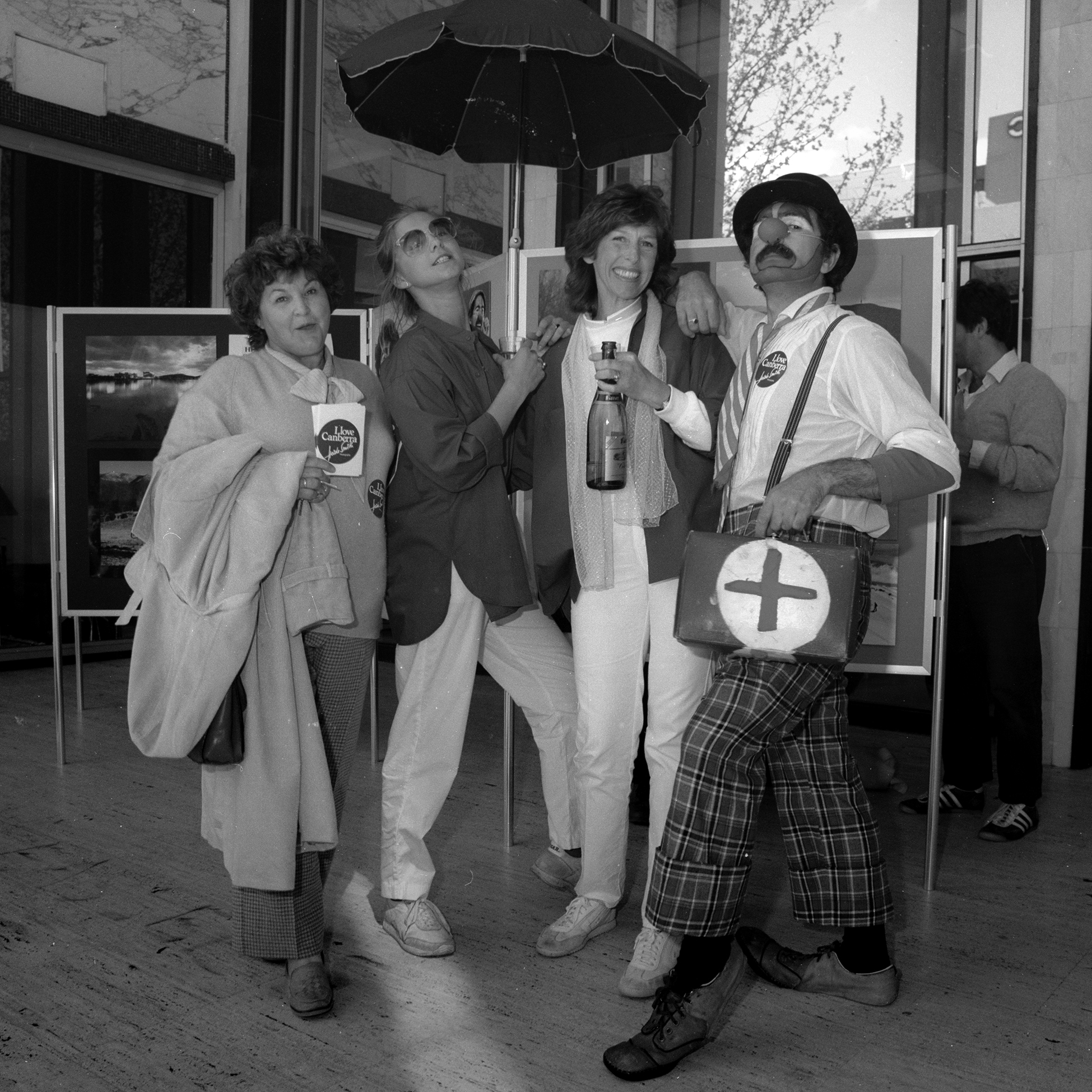 |
| Ingrid, Irene, Lyn and clown, 1983 © Heide Smith |
Other wonderful images in the book include a fun selfie shot with Heide’s team at a seminar or workshop in Hong Kong, and one of a cow in a shop in Varanasi (a scene I’ve experienced myself in India).
 |
| Heide and her team in Hong Kong © Heide Smith |
 |
| A shop in Varanasi in 2009, Holy Cow! © Heide Smith |
Finally, I must mention the last of the artist’s images in the book. It is one of her excellent coastal landscapes that she continues to capture where she and the book’s author now live.
 |
| Stormy Weather Tuross Head 2021 © Heide Smith |
Following that, the penultimate
chapter, Hidden Treasures, is about various vintage prints
discovered long after they were made. And the final chapter has no photographs.
Rather it is words from a few of many reviews of Heide’s photographs and books
over the years of her career. They wonderfully illustrate the way individual people,
newspapers and magazines, and industry groups have responded to this artist’s
remarkable career. Professor Manning Clark, an Australian historian and the
author of the best-known general history of Australia wrote “this book is a
delight to the eye.” So is this book.
A shorter version of this review has been published in Canberra City News here. The version published here is also available on the author's blog here.