Showing posts with label Sculpture. Show all posts

Wednesday, February 28, 2024

With Nature

Exhibition Review: Visual Art | Brian Rope

With Nature | Bridget Baskerville, Megan Cope, Wendy Dawes, Marley Dawson, Sammy Hawker, Annika Romeyn (curated by Alexander Boynes)

CCAS Lakeside | 10 February - 6 April 2024

With Nature is about environmental changes happening because of us. Six contemporary Australian artists address the issues, aligning the materials they employ in their studios to convey their messages.

The landscape has influenced their work outcomes, revealing our impacts on Earth’s transformation. Humans have the ability to collaborate, but we need to explore our frequent failure to do so with respect to nature. These artists, working in photography, drawing, sculpture and textiles, ask “how can we collaborate with our natural environment to better understand how to live a sustainable future on this planet?”

Kamberri/Canberra-based Sammy Hawker is showing a number of her marvellous salt works here. These photographs (created across the Yuin Nation on Walbunja & Djiringanj Country) explore repeated motifs presented by salt in the ocean. Her experimental technique challenges traditional approaches to film development and cultivates a deeper connection between art and nature. She allows the environment to shape the outcome saying, “the crosses and fractals feel like signs of sentience, marks of the deeper frequency” and “Earth’s oceans were created from forms of water that came from outer space - a combination of icy comets and grains of solar dust. It feels the oceans hold material memory of this interstellar resonance.”

Murramarang NP #1, 2020 – Pigment inkjet print 110 x 110 cm © Sammy Hawker

Emerging artist Bridget Baskerville has previously explored the effect of extractive industries on waterways around her Kandos hometown. Dead River (2023) shown here originated from a 2023 residency in Queenstown, Lutruwita/Tasmania when she explored how the Queen River, one of Australia's most polluted waterways, interacted with immersed copper plates. A 2-channel video shows her work in progress, and a superb set of corroded copper plates created by an etching process in the water, reveal bright orange rust patterns. The plates indicate the impact of extractive industries on water systems.

Dead River, (detail) 2023, corroded copper plates,
2 channel video, dimensions variable © Bridget Baskerville

 Annika Romeyn, another Kamberri/Canberra-based artist contributes more corrosion/rust in a very different artwork. This artist combines watercolour, drawing and printmaking processes to create intricate and immersive works on paper looking to convey a restorative experience of being in nature, focussing on the threshold of rock and water. Wana Karnu (2024) is a spectacular multi-panel rust and ink drawing which captures her experience of walking gravelly ridges in Mutawintji National Park at sunset. The work reveals rich colours of iron oxide and 'rock rust' formed when iron, oxygen and water interact.

Wana Karnu (detail) - rust and ink, 2024 on Rives BFK 300gsm paper
240X360cm 
© Annika Romeyn

Quandamooka artist Megan Cope, from Minjerribah/North Stradbroke Island, is known for her site-specific sculptural installations, public art, and paintings. She blended art and conservation with Indigenous history and practice in her impressive large-scale midden installation Whispers at the entrance to the Sydney Opera House in 2023. Comprising a 14m wall and 200 timber Kinyingarra Guwinyanba poles covered in Kinyingarra (oyster) shells, it emphasised the resilience, and historic erasure, of First Nations custodianship, culture and Country at the world-renowned site. Here again we are asked to consider the role of art in bringing about cultural and ecological change. A single channel video reveals the landscape of country. It is well worth watching. It clearly reveals what we all should be looking for and seeing wherever in this land we live or visit.

'Kinyingarra Guwinyanba' 2022, Burogari (Cyprus Pine), Kinyinyarra (Sydney Rock Oyster) shell and stainless-steel trace wire Photo by Cian Sanders © Megan Cope

Wendy Dawes has created a remarkable perpetual motion machine, using an overhead projector with a deconstructed monitor to show, on a screen, permanent marker drawings on transparency film. A meter measuring power consumption during the exhibition acknowledges the artist's personal use of resources and highlights the need for more renewable energy sources.

'Perpetual Motion Machine' (work in progress), 2024 © Wendy Dawes

Using chemistry, mechanics and construction techniques, Marley Dawson creates sculptures and installations that highlight some outlandish aspects of our world and ourselves. He is dedicated to pushing the limits of what is considered to be art and encouraging dialogue about the wonders of our environment and ourselves. One of his contributions to this exhibition is a stunning and high-quality artwork constructed from brass, steel and timber and utilising electrics to produce a mesmerising hum from brass pieces vibrating against each other.

Hum (Louis + Morris), 2022, brass, steel, timber, electrics, 184 x 71 x 6cm – Marley Dawson

Concluding his curator’s essay, Alexander Boynes writes “Together, these six artists demonstrate art's ability to prompt introspection, foster conversation, and inspire action in addressing environmental challenges.”

This review is also available on the author's blog here.

Wednesday, August 31, 2022

Into the Forest

Photography | Brian Rope

Into the Forest | Eva van Gorsel and Manuel Pfeiffer

M16 Artspace, Gallery 1b | UNTIL 4 SEPTEMBER 2022

Partners Eva van Gorsel and Manuel Pfeiffer are regular exhibitors at M16 Artspace. Their 2020 joint show Facets exhibited interpretations of the Australian landscape they had seen during a lengthy journey. Their works complemented each other as they revealed the same facets. Then, in 2021, they brought us Congruent-Incongruent using numerous diverse techniques and media to create varied, interesting and pleasing artworks.

Their 2022 exhibition Into the Forest aims to raise awareness of the role our forests have on our planet, our climate and our lives by showcasing the beauty of mostly regional treescapes and woodlands using imagery, sculpture and a sound installation. Along with growing numbers of people around the world, they recognise that the importance of forests cannot be underestimated.

Pfeiffer has a background in earth system sciences, graphic design and arts and shares a deep appreciation of the environment with Van Gorsel who was a principal research scientist in atmospheric sciences before turning to photography. The two artists asked themselves why it is important to show and appreciate the beauty of our natural environment and have offered an answer.

“In science we have pointed out the dangers of climate change before anyone cared to listen. With climate extremes now so extreme that they are getting hard to ignore many more people are aware that urgent action is needed. Many artists were early uptakers of that message. There is a long tradition of showing natures beauty. But many artists now also show the impact our disrespect of nature has on ecosystems. This is important work that is critically needed. But it is key that we do not get lost in despair. That is why we think it is important to show and appreciate the beauty of our natural environment. I think we are at a turning point where it becomes important to again remind us of what we can keep - if only we set our minds and actions to it.”

Van Gorsel’s works here are, perhaps, more traditional than she has shown in their previous two joint exhibitions. They are fine examples of this genre of photography, showing us numerous wonders of nature in our forests – birds, mist, and understory vegetation are just some examples. In every case, the available natural light is used beautifully - as all photographers should strive to do. Monochrome is used sparingly, but to great effect. Shallow focus is used wonderfully in others.


Eva van Gorsel_Into The Forest II_Namadgi


Eva van Gorsel_Mist_Gundagerra NR


Eva van Gorsel_Last Light_Namadgi NP


Eva van Gorsel_Aglitter 03


Pfeiffer’s contributions are equally pleasing, showing us the sights of the forests through his chosen media. A set of artworks of trees, bark and fungi using colour pencils on paper are simply lovely, with their wonderfully balanced light and peaceful hues. Others painted with acrylics on canvas, such as Dreaming Xanthorrhoeas, are equally successful.


His three pieces using wood are special features in the exhibition. A mixed media piece, The Wise, 2021, is the standout for me. Glass, a suspended small rock gently moving, wood and more combine beautifully into a piece to explore, a piece that also says much about nature.


Manuel Pfeiffer_BarkA


Manuel Pfeiffer_Dreaming Xanthorrhoeas


Manuel Pfeiffer_At The Coast


All the artworks take us into the artists’ views of nature. They make us feel good – enabling us to see the colours, hear the sounds, smell the scents. All give us some comfort. And they make us want to be amongst the calming effects of forests and connecting directly with nature through our senses, seeking to reduce the gap that we have opened between us and the natural world. This exhibition very much invites us to reflect on how we humans have impacted the natural environment, and to ask ourselves what we as individuals must now do.

This review was published online by The Canberra Times on 30.08.22 here. It is also on the author's blog here.

Saturday, August 13, 2022

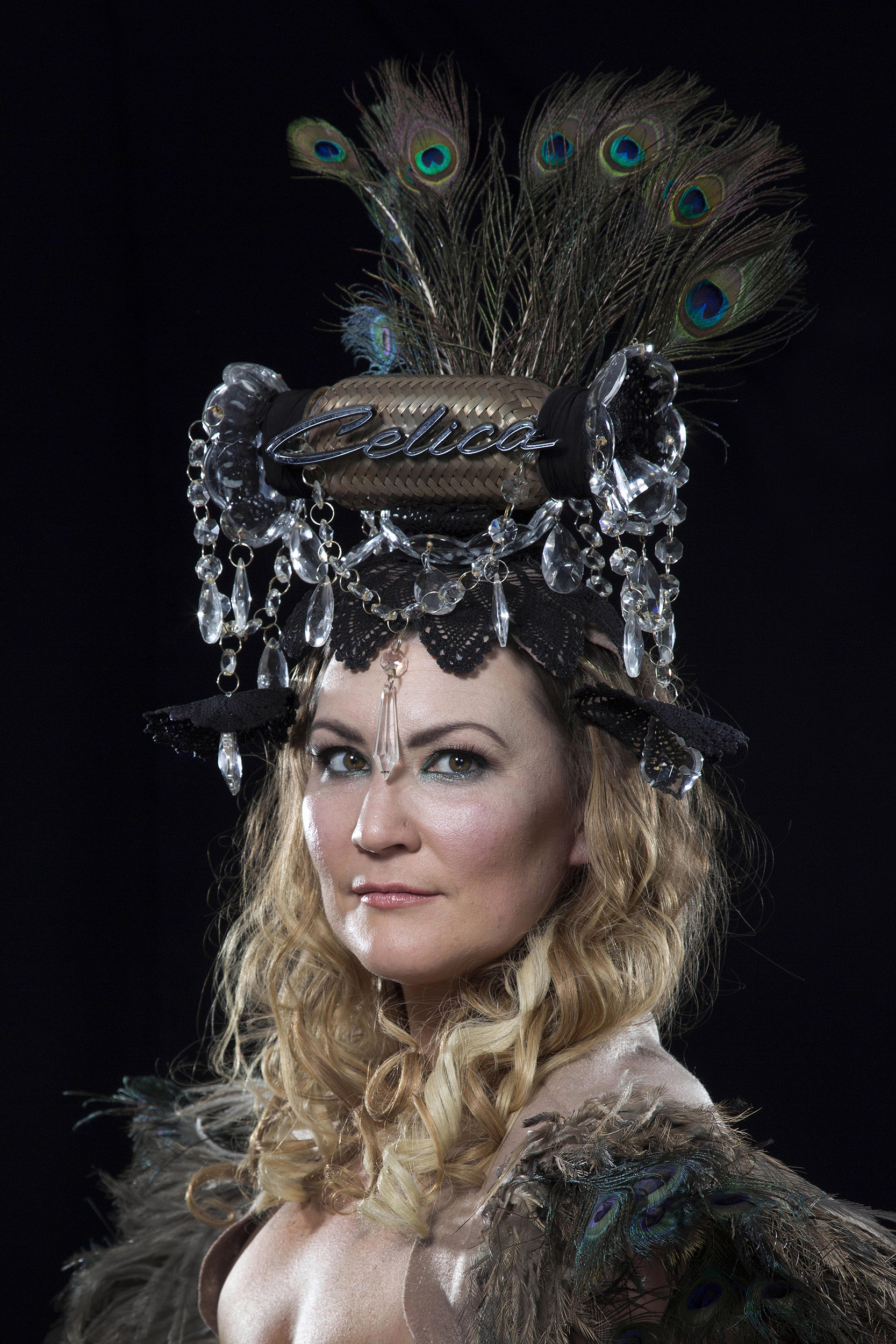
ADORNED

PHOTOGRAPHY, VIDEO, WEARABLE ART, SCULPTURE | BRIAN ROPE

ADORNED | ADORNED COLLECTIVE

TUGGERANONG ARTS CENTRE | UNTIL 10 SEPTEMBER 2022

This exhibition is a survey of the Adorned Collective’s creative journey over the past seven years. It features photographic and video work, plus wearable artworks and sculptural installations.

The Collective was formed in 2015 as a participant-driven initiative to support artists, artisans, makers and craftspeople of all ages and abilities from culturally diverse backgrounds and experiences, by providing a friendly, culturally safe and accessible creative space. The community that was established participates fortnightly in supported drop-in skill-sharing workshops and public programs. The Collective meets and works on Dharug Country, Western Sydney, and is based at Parramatta Artist Studios in Rydalmere. 

Within the workshops, participants collaborate and share creative processes, stories and skills in order to professionally develop and to build community capacity. The group nurtures friendships and celebrates life, culture, diversity and difference whilst creating inclusive social and professional networks and opportunities for local creatives.

During the seven years since 2015, the Collective has developed and exhibited solo and collaborative works. The Adorned artists have utilized each exhibition and project as a way of engaging community through public programs and creative workshops.

So, what is in this extensive exhibition? There are numerous handmade wearable artworks on display. They include wonderful and intricate masks and hatbands. Then there are woven baskets, and sculptures using various materials such as second-hand paper, wire, twigs and sequins. There are letters from a letter exchange project that connected artists living in regional Queensland. And more.

Farzana Hekmat_Freedom Girl_2020 - wearable art

Ginette Morato_Starry Night_2020 - wearable art

How does photography and video come into this? Well, the artists have been photographed and videoed wearing their own artworks. The photographs in the exhibition are large portraits from 2015. They are all colourful and well-photographed. Each image reveals a considerable amount about its subject. Firstly, we learn about their cultural connections and identities. However, if we take the time to study the works more closely and to think about the details that each reveal, we might begin to understand something of what motivated them when deciding to create the artwork being worn. We might say they embody the souls of each artist.


Hilin Kazemi, 2015. In collaboration with Liam Benson. Photo Jasmine Robertson


Kiri Morcombe, 2015 in collaboration with Liam Benson. Photo Jasmine Robertson

There are two video installations, each quite different from the other. The creative directors of Adorned Wisdom, Memory and Song, 2017, show us the excellent outcomes from a period when guest dance and performance teachers engaged ten of the artists and their drop-in visitors with performance and script development as a means of weaving their stories together and bringing their wearables to life.

The resulting high quality two panel video created from camera footage and sound recordings is most engaging. Diverse music styles, movement, voices, stories and more hold the viewer’s attention as each segment reveals something different and new. The musical score adds the skills of yet another artist to the collaboration. The Do you remember me? Segment tells a wonderful story. Another part, about domestic violence – is simultaneously simple and powerful. And the concluding piece where our eyes watch numerous eyes watching us is delightful.


Susan Ling Young, Wisdom Memory and Song (production still) 2017

In another part of the gallery the second video installation Incognito, Adorned, 2010 is very different. It features footage captured by the artists themselves. They have put on their wearable masks and performed for their cameras, revealing small moments – tender, humorous and, most importantly, empowering of themselves. I particularly enjoyed one artist playfully interacting with a pink blossom tree whilst wearing her “matching” mask and dress.


Lesley-Anne - still from Incognito, Adorned Incognito, 2020


Marina - still from Incognito, Adorned Incognito, 2020


Marina 2 - still from Incognito, Adorned Incognito, 2020

Indeed, empowering is the word for this entire exhibition. Working together in the Collective and with the numerous guest artists brought into the projects undoubtedly has professionally developed each and every participant – and enhanced the creative community of Western Sydney.

This review was published on page 10 of Panorama in The Canberra Times of 13.08.22. It was published on the Canberra Times website here on 14.08.22. It is also available on the author's blog here.

Monday, December 20, 2021

‘hand/made/held/ground’ & Made in Australia Series II

Photography & Mixed Media Review | Brian Rope

‘hand/made/held/ground’ & Made in Australia Series II | Brenda L. Croft

Canberra Museum & Gallery | Until 22 January 2022

‘hand/made/held/ground’ is a major body of work by a leading contemporary artist, Brenda L. Croft, a proud Gurindji/Malngin/Mudburra woman whose background also includes Australian, Chinese, English, German and Irish heritage.

This mixed media installation explores Croft’s intimate patrilineal relationship, and her return to her father’s, and her own, Country; sharing something of that lineage connection and her journey. It reimagines and honours customary objects - jimpila (spearhead) and kurrwa (stone axe) - created on their Gurindji homelands in the Northern Territory. Contemporary representations on display reflect ancestral journeys - undertaken on traditional homelands, and returning home.

When, and who by, the stone axe was created is unknown. However, it is known that the axe survived over 130 years of pastoral impact prior to being found by Croft when she visited the remote site where it was.

The spear tip was given to Croft under temporary care by a supporter (Lyn Riddett) of the Wave Hill walk-off led by Vincent Lingiari. Riddett received the spear as a gift from an Elder at Daguragu in 1971. In the following years, the tip of the spear was accidentally broken before it was able to be repatriated to the Gurindji community, via Croft.

Whilst caretaker of the spear, Croft repaired it with wax and had a wax mould made of it, along with a mould of the stone axe. With permission from family and community members, she used those moulds to create multiple copies of these significant cultural objects - black and red lead crystal, clear and uranium glass cast stone axes and spear tips.

It is these copies, displayed on a combination of new and aged steel bases echoing steel bore water tanks, that we see in this exhibition. Each is lit individually from within revealing various colours, their configuration representing constellations in a night sky.

Jimpila (spearheads) (detail) from hand-made/held-ground installation at Niagara Galleries, Melbourne, 19 November – 14 December 2019.
Photographer © James Henry. Image courtesy Brenda L Croft and Niagara Galleries.


Jimpila (spearhead – uranium glass) 2017 - 21. Glass components: kiln cast uranium glass. Display case: stainless steel, Sikaflex, electrical wire, 12 volt globe. Dimensions: variable. Photographer © James Henry. Image courtesy Brenda L Croft and Niagara Galleries.

As well as the kurrwa and jimpila pieces, large satellite images displayed on the gallery walls map journeys embarked on by Croft, sometimes alone and other times accompanied by family and Gurindji community members. These maps, together with the axe and spear tip copies, reveal a connection between land and sky. As the lights in the moulds pulse on and off, their beating synchronises with ancient footsteps on the earth and symbolises the beating hearts of the objects’ owners.


Yijarni (Gurindji History Book Project) (detail) and Jimpila (spearheads) (detail) from hand-made/held-ground installation at Niagara Galleries, Melbourne, 19 November – 14 December 2019. Photographer © James Henry. Image courtesy Brenda L Croft and Niagara Galleries.

In an adjacent space to that displaying ‘hand/made/held/ground’, Canberra Museum and Gallery (CMAG) is showing eight works from Croft’s earlier ‘Made in Australia II’ series, held in its own collection. This is an interesting and clever juxtapositioning of two sets of artworks.

Made in Australia II was produced by Croft to honour her mother, who advocated for social equity at a local level, while also ensuring her children were proud of their heritage. A non-Indigenous woman, Dorothy Jean Croft broke from tradition in Sydney - she found love with a Gurindji/Malngin/Mudburra man, Joseph Croft. They married and raised a family together, living in numerous regions of Australia, including Canberra.

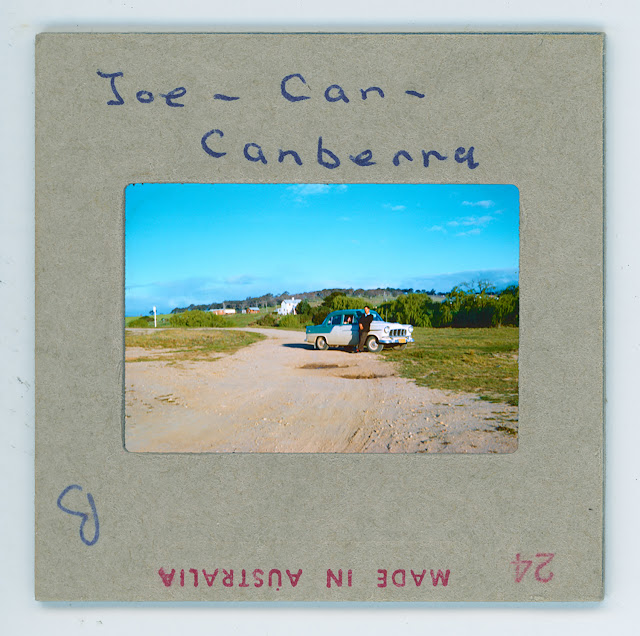
The artist Croft has celebrated her mother’s story by scaling up her (mother’s) original 1950s-60s vividly coloured 35mm Cibachrome slides to giant size photographic prints that speak to the strength and potency of her parent’s relationship - played out quietly in this heart of the nation.


CROFT 21. Civic Centre Canberra 1959 - Made in Australia II Series


CROFT 24. Joe - Car, Canberra - Made in Australia II Series


CROFT 44. Joe & Snow 3 Mile Lake - first snowfall ANZAC - 1960 - Made in Australia II Series

Together, these two bodies of Croft’s work celebrate both the male and female lines of her kinship stories, whilst also shedding light on some of our nation’s tensions: a story of lives impacted by stolen generations, returning to traditional homelands, the assertion of women’s independence and the breaking of class and racial barriers.

Both series wonderfully pay tribute to her mother’s memory.

This review was published in The Canberra Times of 20/12/21 here. It is also on the author's own blog here.


Monday, March 29, 2021

Habitat: Ways of living

 Visual Art | Brian Rope

Various Artists: Alex Asch, Burchill/McCamley, Miriam Charlie, Sean Davey, David Flanagan, Michal Glikson, Tina Havelock Stevens, Katie Hayne, Mikhaila Jurkiewicz, Waratah Lahy, Hardy Lohse, Catherine O’Donnell, David Paterson, Alan Patterson, Patrice Riboust, Natalie Rosin, Khaled Sabsabi, James Tylor (Possum)

CMAG | Habitat: Ways of living | Until 26 June


This important and well-constructed exhibition examines high-rise, upmarket apartments, suburban settings and places that have collapsed. In Canberra, elsewhere in Australia, and overseas.


In her catalogue foreword, Rowan Henderson makes the point that ‘Home’ is a value-laden word. Very true – for the fortunate, homes are where we feel secure. Others are less fortunate, even suffering the domestic violence issues currently filling so much media.

David Paterson exhibits photographic images of densely packed high-rise apartment blocks in Hong Kong and Singapore. They are wonderful geometric compositions. Look for birds in flight passing across the buildings.


David PATERSON
Singapore apartments, 2019
inkjet print, courtesy of the artist

In intimately scaled watercolours (and gouache) on paper, Waratah Lahy illustrates the recent transformation of Canberra’s inner north, from older residences on large blocks, to townhouses and apartments.

Hardy Lohse’s photographs of the Currong Flats being demolished pose questions. What are our memories and responses?


Hardy LOHSE
Currong Apartments, 2016
inkjet print, courtesy of the artist

Katie Hayne’s engagement with demolition of mid-century public housing is depicted in her video, Stuart Flats, going, 2019. She also evokes this disappearing side of Canberra in two small oil on board paintings.

David Flanagan’s photographs are about green fields’ real estate projects near Canberra’s northern boundary, and include one featuring a billboard proclaiming, ‘FULL OF POSSIBILITY’.


David FLANAGAN
Untitled # 21, from ‘Move up to the views’ series, 2015
chromogenic colour photograph

Alex Asch explores the suburban life of Canberrans in his installation, Suburban Block, 2020. The catalogue suggests a visual association with children’s building blocks. They reminded me of black houses I’ve seen in coastal areas of Kent, England.

With charcoal on paper artworks, Catherine O’Donnell focuses on suburban landscapes and houses from her youth. And she shows a linear analysis of composition in a graphic depiction of the Sirius Building in Sydney. There also is a watercolour and ink sketch, Sirius public housing apartments, 1978 – 79, bearing Alan Patterson’s signature.


Catherine O’DONNELL
Sirius, 2018, charcoal on paper
Courtesy of the artist and May Space

Patrice Riboust spent many hours studying various forms of historical architecture. Using those as source material, he produced highly detailed sketches of imaginary structures - ink and marker on tracing paper.

Natalie Rosin contributes impressive ceramic sculptures reflecting brutalist buildings observed during a residency in Poland.

Janet Burchill and Jennifer McCamley used old colour film to photograph Berlin locations being used by Turkish immigrants as places of refuge and informal socialising. The resulting work, Freiland, 1992, consists of a series of nineteen discrete but sequential images. Some of the film stock used had been compromised prior to use, infusing some of the images with an unearthly blue, or harsh red cast.

The 2006 Lebanon War severely damaged civilian infrastructure in central Beirut. Khaled Sabsabi has painted over his photographic images creating a frieze-like series.

Miriam Charlie is a Yanyuwa/Garrwa woman living in Borroloola, a community in the Northern Territory. Her photographic series, No country, no home, 2015, documents the living conditions of her friends and relatives there.

One work by James Tylor (Possum), Unresettling (Stone footing for dome hut), 2016, is a simulacrum of the stone foundations for an Aboriginal domestic shelter. These phantom structures are physically created by the artist’s hand and translated via the camera’s aperture.

None of us need reminding that calamitous bushfires were experienced over the 2019-20 summer in nearby forests. Sean Davey’s photographs nevertheless are a poignant reminder.


Sean DAVEY
Untitled (Little Bombay Road, Bombay NSW) 2019
pigment print on Ilford cotton paper, Courtesy of the artist

Flame is also an important element of Michal Glikson’s video, Jhumpiri: Coming down, 2014 – 2019, set in one family’s makeshift structure on the streets of Lahore, Pakistan.

Tina Havelock Stevens shows stills adapted from her video, Drum Detroit, 2011, revealing urban decay.


Tina HAVELOCK STEVENS
Skull House, from the Drum Detroit series 2011 – 13
video still, chromogenic colour photograph, metallic
Courtesy of the artist

Mikhaila Jurkiewicz often uses large format negatives in her photography, requiring her subjects to remain still during protracted sittings. The results somehow  reminiscent of daguerreotypes.

This review is also available on the author's own blog here.