Sunday, August 12, 2012

CAPITAL JAZZ PROJECT


The Street Theatre. Saturday 4th August

Continuing until 12th August 2012.

Reviewed by Bill Stephens

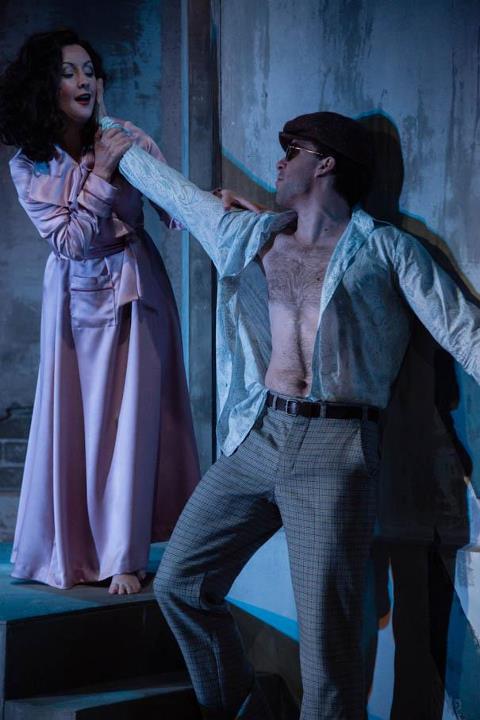
Canberra’s hot-house of creativity, The Street Theatre, was alive with adventurous and bemused music lovers on Saturday night eager to sample some of the one-off performances included in this year’s ten-day feast of contemporary jazz that is the Capital Jazz Project. As expected of The Street these days, the presentation of this event is superb, with excellent sound and atmospheric lighting to enhance the performances

More than ninety players are participating in this year’s event, with the emphasis on reed instruments and composition,   and although such trend-setters as Paul Capsis, Christa Hughes and Gian Slater will perform during the festival, there was not a vocalist to be heard on Saturday night. Instead contrasting programs by three world-class ensembles were on offer in the two theatres.

 Internationally renowned saxophonist, Sandy Evans commenced the evening in Street Two, transformed into a glamorous, cosy jazz club for the festival, with table candles, gold wall frames and chandeliers. Working with long time collaborators, bassist Brett Hirst and drummer Toby Hall, Evans also included charismatic Indian tabla player, Bobby Singh, to present a series of new compositions that latest of which, she announced, had been completed “twenty minutes ago”, and which commenced with Evans on clarinet setting the theme and mood for a series of exotic, mesmerising improvisations.

Uber-cool combo, Albare, was the attraction in Street One. Fronted by Moroccan-born jazz guitarist and composer, Albert Dadon and including Cuban drummer Ignacio Berroa, pianist Phil Torcio, bassist Evri Evripedou, and German harmonica virtuoso Hendrik Meurkens who, in the words of Dadon, was a “German who played like a Brazilian”, Albare presented a series of silky smooth, Latin-American-inspired compositions. Lost in their music-making, the musicians played with eyes downcast, studiously ignoring their audience, who, nevertheless, dutifully clapped every improvisation, the experience of luscious music at this level, reward enough.

Back to Street Two for a performance by tenor saxophonist and composer, John Mackey who premiered an eleven- section suite which he confided was “only completed today”. With titles including “Insurrection” and “Emotional Valour” the music had a very New York jazz club feel, dense, atmospheric, and emotionally involving with its complex progressions and improvisations, providing a satisfying conclusion to a fascinating evening.


An edited version of this review appears in the August 9 - 15 edition of CITY NEWS and in the CITY NEWS digital edition.

Monday, August 6, 2012

Capital Jazz Project and The Next Gen

Capital Jazz Project and The Next Gen – an afternoon of critical conversations at The Street Theatre and Belconnen Arts Centre, Sunday August 5 at 1.30pm and 3pm respectively.

by Frank McKone

These two events, staged independently, formed an interesting afternoon of thinking about the business of being a critic.

At The Street Theatre, as part of a 10-day program ‘of all things jazz’, Miriam Zolin, managing editor and publisher at extempore publishing (www.extempore.com.au) conducted a seminar discussion with four writers/broadcasters: freelancer Jasmine Crittenden, blogger Eric Pozza, Sydney Morning Herald reviewer John Shand and ABC presenter of The Music Show, Andrew Ford.

At Belconnen Arts Centre, Yolande Norris, independent arts writer, curator and producer, moderated four presentations by local young artists:

Reuben Ingall – musician (acoustic and electronic), composer and contemporary dance collaborator who has worked with Quantum Leap Youth Choreographic Ensemble and currently works with independent dancer Adelina Larsson;

Jamie Winbank – dancer and choreographer, working in interactive theatre, as well as teaching dance;

George Rose – multi-disciplinary graphic artist and designer, coordinator of You Are Here, a curated festival of the best of Canberra’s independent and experimental arts and culture;

Michael Bailey – creative member of Boho Interactive, a theatre company whose aim is to spread understanding of concepts from complex systems science (Game Theory and Network Theory) via interactive theatre projects.

Each discussion had its own key question.  At The Street it was, Is the best music criticism a description or an opinion?  At Belconnen it was, Why would anyone in their right mind be an artist?  For me, the key question became, What is the key question I should ask myself as a critic?

Some of the erudite speakers at The Street had seemed to give me sensible answers, yet my confidence in knowing my role was challenged by these young experimental artists.  How do you judge people’s work when they are testing out new ideas, new combinations of genres, new technologies?

All four at The Street were in agreement on basic principles, but it was John Shand who most clearly articulated two central points: the judgement is about how well the artist has achieved what they intended to do; and the critic must be honest in making that judgement.

On the way to and from these points, there was discussion of how much a review should analyse technical matters, and therefore reach conclusions, or how much it should be about the reviewer’s emotional or intellectual responses to the work.  In music, and improvised jazz in particular, this raised perhaps the most division between the speakers, because the political and social history of jazz could justify focussing on the effect on the audience rather than on the technical skill.

In the end I concluded that the best work must integrate the technical with the emotional, and so create the greatest quality.

But my own rather intellectualised metacognitive approach was rather blown apart when the young artists’ presentations of videos of snatches of their works, and their attempts to explain what they were doing, raised a question about the principle of judging whether the artist has achieved what they intended to do.  In fact, it had been Andrew Ford who had talked about interviewing musicians who were quite inarticulate verbally when asked about their playing, and had put the view that many artists actually don’t know what they are doing while they are doing it.

Ford and others had backed this position by quoting composers, including Ford himself, whose work had come to mean completely different things to other people than the composer had thought he meant.  In other words, as I thought while watching and listening to the young people, how can I know what their intentions are, or were when I see a finished work, and be able to say if they achieved their aims?

Indeed, it had seemed easier to do this for a jazz performance, however improvised, because a tradition has grown up over the last century of what jazz is which has allowed even for the shift from trad jazz to modern jazz.  A language for talking about jazz has grown up alongside the performance of jazz.

But when the young are deliberately challenging previous conventions and experimenting with new forms, am I right to say I found Reuben Ingall’s work less than enthralling, Jamie Winbank rather superficial, Michael Bailey’s concepts intellectually interesting but seemingly a bit too much like Questacon, while, in the range and skills she showed, George Rose seemed the most together and likely to produce the best art in the long term?

What would I have said about jazz in its early years?  That it wasn’t what I understood to be real music?  While in fact, as a youngster in the 1950s I played Pee Wee Hunt’s trad Twelfth Street Rag on my mouth organ, and later became fascinated by the Modern Jazz Quartet, despite my father’s objection that they were just tip-toeing about, instead of playing real jazz. 

The Street Theatre’s speakers also made the point that at times a reviewer can be useful to a composer or performer by criticising their work honestly – sometimes helping the creative to understand what they have created, or sometimes to help them improve a work – and I have had feedback occasionally to support this.  Of course, I have also endured brickbats as well.  But in the end it may be that John Shand has the last word.

He suggested that, when it comes to placing a value on the work of the artist compared with the work of a critic, we critics are essentially parasites on the body of performance.  So there!


Sunday, August 5, 2012

Carlier Makigawa: Contained: Defining Space


Carlier Makigawa: Contained: Defining Space
2011Brooch Blackened Silver, Coral 50cm wide

At Bilk, Palmerston Lane, Manuka, until August 18, 2012.  Open Tuesday to Saturday 11am to 5pm.

Carlier Makigawa, who lives and works in Melbourne, is one of Australia’s leading silversmiths and jewellers.  This is her first solo show in Canberra, although she is known nationally and internationally.

A consistent theme in Carlier’s work is the frame: the volume it creates and is contained by it.  Whether the pieces are necklaces, bangles, rings or small table sculptures, they appear as three dimensional line drawings in space.  Many contain nothing but hint at the possibility.  They are full of form and feeling and have a fragile appearance.

2012 Necklace 2012, sterling silver 24cm
Small, pod-like forms are clustered – often seemingly unbalanced – to form the jewellery.  These elements are based on gum nuts, seed pods and other flora from Western Australia, where the artist was born and trained.  Other works are more angular and are joined to form more geometrical objects.

Makigawa uses silver – often blackened – and frequently combines this precious metal with polished coral twigs which add colour and contrast, attracting the viewer’s eye. 

A loosely circular blackened silver brooch is punctuated around its uneven circle with small pieces of red polished choral, projecting from the apertures of the pods.  A similar work in matt silver holds pale, creamy pink pieces of choral. 
 
The angular frames of two brooches titled Nature and Structure contain larger branches of pale choral and appear to be constructed around them.  On one or two brooches, one or two elements are painted with bright colours, highlighting the volume.

Three bracelets, one in matt silver, one in blackened silver and one incorporating both colours, lightly circle the wrist.  While they appear to be fragile, they are strong.

Two blackened silver necklaces are made from straighter, slightly longer elements, linked together.  These sit comfortably around the neck and move gently as the wearer moves.  A matt silver necklace is slightly shorter, sitting higher on the wearer.  The simplicity belies the detailed construction process used by Makigawa.

Carlier Makigawa 2012 Brooch Blackened Silver, Coral

 
In addition to the jewellery, the artist is showing three small table sculptures.  The elements are angular and blackened silver frames sit inside matt silver frames.  They too hint at what might be contained.  The shadows cast by strong lighting add a fourth dimension to the whole. 

©  Meredith Hinchliffe
August 4, 2012

Monday, July 30, 2012

AIDA

Opera Australia
Sydney Opera House
17th July 2012.

Reviewed by Bill Stephens
Photo: Branco Gaica

Revisiting this production, with the present cast, one is struck by how well Graeme Murphy’s vision serves Verdi’s masterpiece.  “Aida” has always been about spectacle, particularly Radames’ triumphant return having routed the Ethiopian army.  But in this production Murphy has cleverly focussed  on the triangular relationship at the centre of the opera,  between the Egyptian army captain,  Radames, the princess of Egypt, Amneris, and her handmaiden, Aida, with whom Radames is in love.
Not that this production is short on spectacle.  Interpreting Murphy’s concept, Roger Kirk has designed a series of cardboard cut-out, two dimensional sets which echo the triangular motif of both of the relationship and Egypt’s iconic pyramids. Enhanced by Damien Cooper’ s extraordinary lighting, the ever-changing Egyptian motif projections of  The Brothers Gruchy, Kirk has also included a series of travelators,  what seems like hundreds  of lavish gold, black and white costumes for the huge cast, and even a pool of water to create a constantly moving spectacle which continually dazzles and delights the eye.

But what makes this production so truly memorable is the way it also engages the mind, with Murphy's masterful harnessing of the mesmerising spectacle to focus on the very real human emotions driving the three protagonists in this lavish, sensuous environment.
                                                                                                                   

Latonia Moore (Aida)
Photo: Branco Gaica


Latonia Moore is quite simply superb as the Ethiopian princess, Aida. Though surprisingly diminutive in size she brings such a warm presence and inner resolve to the role that the audience is left in no doubt as to her royal heritage. Moore’s rich soprano voice captivates as it soars over the chorus and orchestra and especially when she reveals a thrilling lustre in the more intimate moments. Hers is a performance to cherish.


Latonia Moore (Aida) 
Rosario La Spina (Radames)
Photo: Branco Gaica
                                                                                             In fine voice early in the performance, though displaying some tiredness in the later scenes, Rosario La Spina is a none-the-less a commanding Radames. The costumes suit his impressive physical presence and even though his acting ability is not his strength, the role of Radames is one where the singer simply has to stand and deliver, and he delivered in spades as a convincing all-conquering hero.


Miljanic Nikolic (Amneris)
Photo: Branco Giaca
No problems in the acting department for statuesque Milijanic Nikolic, who not only looks drop-dead gorgeous but certainly knows how to make the most of her stunning costumes. As Amneris, princess of Egypt, Nikolic exudes authority, and uses her lovely voice and admirable stage presence to deliver a captivating portrait of a woman totally in control of her destiny.


Warwick Fyfe (Amanasro)
Latona Moore (Aida)
Photo: Branco Gaica
Unrecognisable in swarthy make-up and afro, Warwick Fyfe gives a fine performance as Aida’s father Amonasro, while Jud Arthur as the King of Egypt, and Andrew Brunsden as a Messenger also impress in smaller roles. 

But of course it wouldn’t be Verdi without the chorus, and in this production the choral scenes are thrilling with the chorus looking and sounding magnificent, as does the excellent orchestra under Arvo Volmer.


"Aida" continues at the Sydney Opera House until October 13th 2012. From September 14 Jacqueline Mabardi will play Aida.

Sunday, July 29, 2012

DON GIOVANNI


Annabelle Chaffey (Donna Anna)
Samuel Dundas (Don Giovanni)
Photo: Albert Comper. 
Presented by Oz Opera                 

Canberra Theatre 14.07.12

Reviewed by Bill Stephens
Oz Opera is the touring arm of the national opera company, Opera Australia. It tours widely presenting scale-down productions of popular operas to audiences, many of whom would be unlikely to ever see a production of these operas in a capital city. 

These productions, usually sung by trainee singers, have not always served the operas well; often leaving the audiences they are intended to inspire scratching their heads and wondering why they should bother to see a full-scale production.

Fortunately this production of “Don Giovanni” is not one of those, and if you are of the persuasion that opera is at its most memorable when the sound, visual and dramatic elements all fuse with equal impact, then this production is for you. Because not only is it beautifully sung, (most of the company are already soloists with the national company) it is also a dramatically convincing and visually beautiful production in which the down-sizing cleverly tightens the focus on both characters and storyline.

In adapting this opera for touring Director Michael Gow has stripped away any arias and choruses superfluous to the telling of the story. The opera is sung in English, with just one aria, Don Giovanni’s lovely second act serenade, sung in Italian to give the audience a sense of the original language. This works surprisingly well, given that it is a serenade and its purpose is obvious, no matter in which language.  

Gow’s adaption of the original libretto, together with Anthony Legge’s  intelligent and accessible translation, clarifies the storyline so effectively that the audience is quickly drawn into the drama, which all takes place in the main square of a small ‘ 1950’s Italian village, where the villagers still care about marriage, and  wear flattering, colourful ‘ la dolce vita’ style costumes designed by Roger Kemp, who is also responsible for the attractive town square which, with just a few props and clever lighting, moves from cheerful and inviting, to menacing, even horrific, as the story progresses.

Particularly impressive is the quality of the singing, with each member of the company singing their roles flawlessly while offering confident, intelligent characterisations to propel the opera along. A splendid orchestral reduction by Andrew Green is beautifully played by the accomplished nine-piece orchestra conducted by Brett Weymark which adds significantly to the pleasures of this production.                                                                                                                                                                                                                                                                                                                                                                                                                             
Adrian Tamburini (Leporello)
Samuel Dundas (Don Giovanni)
Photo: Albert Comper
Heading the strong cast, Samuel Dundas is a persuasive, handsome Don Giovanni, charismatic and completely convincing as the desplicable, rapacious seducer.


His man-servant Leporello is played by Adrian Tamburini as more a friend than a servant. Because they are similar in age and physique this resemblance provides opportunities which are explored particularly effectively in the scene in which Don Giovanni forces Leporello to swap clothes with him to deceive Donna Elvira. This scene is laugh-out-loud funny, because their resemblance makes it much easier to believe that Donna Elvira could indeed be tricked by this ruse. It is also signals a subtle change in their relationship which makes the eventual climax to the opera even more powerful.


Samuel Sakker (Don Octavio)
Annabelle Chaffey (Donna Anna)
Photo: Albert Comper.

Among Don Giovanni’s many conquests Annabelle Chaffey is splendid as Donna Anna, radiating a delicious combination of antagonism and attraction, while Jane Ede rages magnificently as the jilted Donna Elvira.


Samuel Dundas (Don Giovanni)
Kiandra Howarth (Zerlina)
Photo: Albert Comper. 

Kiandra Howarth is a bewitching Zerlina, puzzled by the jealousy of her fiancé Don Ottavio, (a nicely understated performance by Samuel Saker) even as she’s drawn like a moth to the flame to Don Giovanni.  


Given his strong physical presence, the double casting of Eddie Muliaumaseali’I as both the Commendatore and Masetto, worked particularly well, so that Don Giovanni’s terror in mistaking Masetto for the Commendatore in the last hideous denouement is absolutely convincing.
Eddie Muliaumaseali'i (Masetto) 
Kiandra Howarth (Zerlina)
PhotoL Albert Comper.


This production ends with Don Giovanni being immolated by the townspeople. This endiing, devised by Michael Gow, is dramatically compelling and even more stunning because of the realisation that such an event could conceivably occur in such a town.

Here is a production of “Don Giovanni”, without any unnecessary bells and whistles but which brilliantly conveys the intent, experience and satisfaction of a major production and therefore a worthy example of what is being achieved by the national company.
This production is touring New South Wales, South Australia and Victoria until 15th September 2012.


Dames, the Dame and Shakespeare’s Boys.


You could say the third week of June was a riot of dames. And I meant to simply talk about these but then a car knocked my bike down on Northbourne Avenue necessitating a lovely day amid the theatre of Canberra Hospital emergency and time moved on while a bit of healing went on and I went to the Young People Arts Australia Symposium at Casula among the bellbirds and Michael Hurst brought his version of Shakespeare’s boys into town, not the young ones who are boys playing girls pretending to be boys but the boys with problems, like Hamlet and Macbeth and Lear and Othello.

Dame Edna Everage owes more than something to the panto dame but Paul Capsis in Angela’s Kitchen was echoing the old theatrical tradition of men and boys playing girls and women.

Dame Edna is a lovely grotesque like the old Australian panto dames, Buster Fiddess or Johnny Lockwood. You always know there is a bloke underneath.

More deeply buried in the case of Dame Edna, however; Lockwood and Fiddess always had a hearty whiff of five o’clock shadow about them in a way that Dame Edna does not.  Edna’s more elegant, more genuinely conscious of a feminine propriety, even when she is being most stroppy with an audience member and slapping down the would-be comedians.

Paul Capsis playing his grandmother Angela (and other female relatives) in Angela’s Kitchen in the same week was something different, a genuine and serious playing of gender as role. Which is not to say that Edna isn’t doing this but she’s working in a comic vein where delicate exaggeration is the go. Capsis mirrors his female relatives with an accuracy that makes you wonder what he would be like as Rosalind or Beatrice or even Juliet. He knows in detail how an aunt lights a cigarette and when at the end he comes out of the central cupboard between the ghostly projected images of old Malta in a red dress that is accurately cut in the lines of the late 40s and early 50s it’s the woman that was his grandmother, the woman who came from Malta in 1948 and made a life in Sydney. The recreation of her deep influence on his life is absorbing, strong and moving.

NZ actor Michael Hurst in Frequently Asked Questions was perhaps off in Rosencrantz and Guildensern Are Dead territory where the lads gather desperately trying to work out the secrets of existence. An actor playing Hamlet in a dreadful wig wonders if it is all worth a candle, then Hamlet wonders it, then Macbeth gets in the act, then Lear and Othello add their peculiar immaturities to a script which is particularly fun if you know your Shakespeare.  One bloke playing the lot is a bravura act crowned by a line in stage fighting that reminded me of the old Tivoli’s ‘wrestling Eskimos.’ I don’t know if this act has surfaced yet on any of the Someone Somewhere Must Have Talent shows but it used to consist of what looked like two small wrestling Eskimos until it was revealed at the end of the act as one bloke in a cunning costume.  Hurst does something akin without the cunning costume but with a lot of clever stage fighting and a co-operative lounge chair.

It isn’t all comedy, however, with the Dane being particularly vulnerable and Macbeth showing a chilling unprincipled savagery in a starkly lit sequence direct to the audience. The writing goes past the jokes and into some fairly black territory. Whether the wigged actor survives all of this is as unanswered a question as ‘To be or not to be’.

Angela’s Kitchen and Frequently Asked Questions have both been part of the splendid Solo at The Street Theatre series of which there is one more to come, Boy Girl Wall starting August 22.

Dame Edna says that’s her farewell tour and Sandy Stone certainly ascended to heaven (or at least the flies) in a glowing white armchair in Eat Pray Laugh but Capsis comes back for one night on August 3 as a musician with Make Me a King as part of the Capital Jazz Project and I bet he’s excellent there as well. 

We could also certainly do with more of Hurst’s quirkily powerful brand of theatre.  It’s always been clear to me from the oddments of NZ film and TV that penetrate here that good things go on over there and Frequently Asked Questions proves it.


 Alanna Maclean

Monday, July 23, 2012

Entertaining play about climate change

 “The Underground Ark,” by Bruce Hoogendoorn, directed by Fiona Fox, at the Courtyard Studio, Canberra Theatre, until June 23. Bookings 6275 2700 or www.canberratheatrecentre.com.au
Reviewed by Helen Musa


                            Picture  shows Hannah Wood (Jamie) and Ethan Gibson (John)

In “The Underground Ark,” Canberra dramatist Bruce Hoogendoorn has written a thoughtful and entertaining play about the implications of climate change.

Set in a world destroyed by global warming, the play sees an elite group of human beings sent underground to survive and reproduce their kind according to a set of rules and regulations.

The playwright toys with eugenics, the concept of a master race and the dangers of utopianism, tempered with a healthy dose of satire and dramatic conflict as the idealists, the pragmatists and humanists battle it out. In the end, Hoogendoorn plumps for humanity and hybrid vigour over social engineering.

Just when you thought the plot was wound up so tightly that he’d never be able to extricate the characters, the playwright abruptly introduces a surprise ending that sees the characters gazing into the middle distance as they imagine a more or less optimistic future.

With a brand new play, it is dangerous to confuse text with production, but the characters seem to be  well-delineated and the script stylishly written, though in the earlier part perhaps a bit too speechy.

The actors do service to their roles, with a particularly fine performance by Ethan Gibson as the fanatical young medical student John.

But I was troubled by the lack of emotional ebb and flow in the directing that saw the ending very nearly fall flat. I am fairly sure this is not the script and that closer vocal work with the actors would have yielded the emotional power needed to convey Hoogendoorn’s challenging ideas.

July 23, 2012 (This review was first published in Canberra Citynews on June 16, 2012)