Friday, December 11, 2015

BABY BOOMERS THE MUSICAL


Devised, written and directed by Louise Rostron
Music by Lucy Bermingham and Louise Rostron
Original songs: Lyrics by Louise Rostron
Musical direction by Matt Webster
Choreography by Jacquelyn Richards
Teatro Vivaldi to December 19

Review by Len Power 10 December 2015

I’m baby boomer vintage myself but what I saw onstage at Teatro Vivaldi left me with no affection for ‘my’ era.  ‘Baby Boomers the Musical’, devised, written and directed by Louise Rostron, is strictly sub-amateur night in writing, production and performance.  I can’t think when I have seen a worse show than this.

Moving from the end of the Second World War up to the present day, Louise Rostron’s show looks at the various eras the baby boomers have lived through, accompanied by various songs.  Luckily there’s not much script between songs because it’s pretty thin and uninspired.

The choice of songs is slapdash and often dragged in from the wrong era.  ‘Makin’ Whoopee’, a 1928 Eddie Cantor song, is used to underline the explosion of baby-making right after the war resulting in the baby boomers.  Surely a song from the late 40s could have been found to put the same point over.  The song ‘Bui Doi’ from the musical ‘Miss Saigon’, not written until 1991, was used in the Vietnam war sequence.  It was a downer of a song to end the first act anyway and had me wondering why an Australian song like ‘I Was Only 19’ wasn’t used.  That would have resonated more with an audience familiar with the era.  The show also included some original songs by Louise Rostron that were totally forgettable.

Many of the cast couldn’t sing well enough to handle the songs.  There was far too much off key singing, inability to reach and sustain top notes and some performers were obviously struggling for breath going from one number to the next.  It seemed badly under-rehearsed.  Many of the songs seemed to have no direction at all with performers just standing there and shuffling around while singing.

Costume design was credited to Christine Pawlicki but what was on stage was a jumble of unattractive clothing that often didn’t suit the performers or the era they were singing about.  Jacquelyn Richards, the choreographer, was severely limited by the postage stamp size stage and the abilities of the performers.  The show is accompanied on piano by musical director and arranger, Matt Webster.

At the end of the show, Louise Rostron appeared and led the cast in the final number.  She proved to be not much of a singer either, which somehow didn’t surprise me.

Len Power’s reviews can also be heard on Artsound FM’s ‘Artcetera’ program from 9.00am Saturdays.

Monday, December 7, 2015

King Lear


King Lear by William Shakespeare.

Directed by Neil Armfield. Set Design Robert Cousins. Costume Designer Alice Babidge. Lighting Nick Schlieper. Composer John Rodgers with Simon Barker and Phillip Slater. Sound Designer Stefan Gregory. The Roslyn Packer Theatre. Sydney Theatre Company  and Colonial First State Global Asset Management. November 28 2015 –  January 9 2016


Reviewer  Peter Wilkins


Geoffrey Rush as King Lear in Neil Armfield's production for Sydney Theatre Company
Photography by Heidrun Loehr


Shakespeare’s King Lear opens with the divestment of his kingdom, the abrogation of his regal responsibility and the wilful banishment of his most beloved daughter.  It is the catalyst to  consequence most catastrophic, the tragic decline of the noble hero, the essential flaw of the Aristotelian tragic figure. It is therefore a damning indictment of flawed reason, of family dysfunction, ruthless ambition, blind vanity and naked exposure to human failing.

Neil Armfield’s vision for the Sydney Theatre Company is bold, bare and resolute. It is raw in its humanity, mighty in its minimalism and magnificent in the clarity of its intent.  Shakespeare’s text on an open stage reverberates with irony and stark antithesis, - the  loyalty of Lear’s faithful Earl of Kent (Jacek Koman) and the treachery  of daughters Regan, (Helen Thomson) and Goneril (Helen Buday);  the wise utterances of The Fool (Robyn Nevin) and the vexatious outbursts of the foolish old man, his King (Geoffrey Rush); the honest  love of  Cordelia (Eryn Jean Norvill) and the false love of Gloucester’s bastard son, Edmund (Meyne Wyatt).
Geoffrey Rush as King Lear and Eryn Jean Norvill as Cordelia
Photography by Heidrun Loehr
On Armfield’s wild and wet heath in a brilliant exposure of staging on the Roslyn Packer stage, the feigned madness of the Earl of Gloucester’s legitimate and loyal son Edgar (Mark Leonard Winter), naked before the elements is confronted by The Fool’s ironic observances of Life’s absurdity, the shifting landscape of the mind of a King cast out and teetering upon the precarious precipice of reason and confusion. It is a scene of overwhelming symbolism, fiercely purgatory in its assault, stunningly unequivocal in its revelatory significance.  It offers a stunning contrast to the second half setting of Robert Cousins’ panoramic design. Epic in concept and visually striking in its intentional contrast, Cousins’ design, under Nick Schlieper’s uninhibited lighting design, provides a vast landscape of changing passions and conflicting motives.  From the Happy Birthday celebration at the commencement of the play and introduced by The Fool in the guise of Marilyn Monroe at Kennedy’s birthday celebration to the expansive cleansing whiteness of the cliffs of Dover as Edgar leads his blind father Earl of Gloucester  (Max Cullen) toward the imagined cliff’s edge, the open stage is a Pandora’s box of human vice, folly and virtue. At times amplified dialogue in the vastness of the open space becomes muffled and indistinct. Nevin’s swift punchlines, often accompanied by awkward accompaniment from musician Simon Barker in the Gallery box become lost. Cullen’s Gloucester too often loses words and the driving momentum of the gripping production and intense performances from the cast sacrificed significant text at the matinee.

The parallel plots that traverse Lear’s loss of reason and possible descent into fearful moments of madness are planets spinning about Shakespeare’s brilliantly shining Sun, the story of King Lear, his abrogation and tragic decline. I have seen great actors of our Time tackle this gargantuan role on stage and screen. Among them, Laurence Olivier in the tormented grip of veering confusion between clear reason and clouded madness, Paul Schofield in Peter Brook’s icy cold and snow bound landscape, Robert Stephens on Stratford’s Memorial Theatre stage at Stratford upon Avon, John Bell in Barrie Kosky’s idiosyncratic production in Canberra’s Playhouse and Ian Holm in the intimate Cottesloe Theatre of the England’s National Theatre. Geoffrey Rush in Neil Armfield’s logically inspired production is magnificent as a king “more sinned against than sinning”. His Lear is intensely human from his bitter and vexatious “ Better thou hadst not been born  Than not to have pleased me better”   to his heart wrenching howl as he enters with the dead Cordelia in his arms” we see a man wearing the guise not of a king, but possessed by the follies of the ordinary man.  We see his impulsive flashes of blind vanity, his gutted remorse, his awakened reason and his flashes of madness.  Some say Rush’s Lear lacks gravitas. I say that he holds the mirror up to Nature and through his purgation discovers truth beyond the madness of existence. It is no accident that tears stream from the audience’s face as Lear holds the glass to Cordelia’s mouth and gently breathes his last. Rush is a great Lear, because he grasps the true mettle of his king’s authentic humanity, his foolish acts and wise understandings, too late perhaps, but in good time to find respite in the grave.


Helen Thomson as Regan. Geoffrey Rush as King Lear. Robyn Nevin as The Fool
Colin Moddy and Nick Masters  in the background. Photo: Heidrun Loehr
Rush’s Lear finds good company in a cast carefully directed by Armfield’s sure and vividly theatrical directorial hand. Robyn Nevin’s Fool is the epitome of the wise comic, subtly admonishing with ambiguous wit. Nevin’s chameleon-like versatility conjures a character , so convincing in his down to earth, no nonsense, common sense clown. Mark Leonard Winter’s Mad Tom upon the blasted heath strips poor Edgar to Nature’s essential rawness in his feigned madness to survive.
Max Cullen as Earl of Gloucester and Geoffrey Rush as King Lear
Photo by Heidrun Loehr
 
Only Max Cullen’s Gloucester is lost in the shadows. The scene at Dover affords him some measure of empathy, but  incoherent diction and with his character somewhat diminished by the large open stage,the parallel subplot of Gloucester’s foolish gullibility pales somewhat in stature.

This Lear will linger for a very long time. Armfield’s touches of theatrical genius, such as the use of black makeup to depict death and the final assembly of the dead upon the stage, the visual and sensory intensity and realism of the drenched scene upon the heath and  Nick Schlieper’s  lighting of the second half of the play, bathing the stage in white, highlighting the representational symbolism of the piece and the cleansing power of just absolution for crime and flawed nature are powerful depictions of Shakespeare’s themes of Love, Time and Death.

I am told that tickets to this production can not be had for love or money. That is not surprising. This is a Lear that will last long in the memories of audiences who have seen it, not only because it is a powerful story about a foolish king, but because it is the moral tale of all humanity as told by outstanding actors of our time under Neil Armfield’s imaginative, inventive and intellectually enlightened direction .  Don’t give up hope. Keep trying for that available ticket or pray that Rush’s moving and powerfully human performance may find its way to the screen. Sydney Theatre Company’s King Lear merits such longevity.

Sunday, December 6, 2015

King Lear by William Shakespeare

Geoffrey Rush as King Lear
All photos by Heidrun Löhr

King Lear by William Shakespeare.  Sydney Theatre Company directed by Neil Armfield.  Set design – Robert Cousins; Costumes – Alice Babidge; Lighting – Nick Schlieper; Composer – John Rodgers; Sound – Stefan Gregory; Voice and text coach – Charmian Gradwell.  At Roslyn Packer Theatre (one-time Sydney Theatre) November 24, 2015 – January 9, 2016.

Reviewed by Frank McKone
December 5

Magnificent!

There are a couple of points I want to query, but to have men in the audience, including me, in tears at interval, and again at the end is a measure of the power of this production of King Lear.

It’s thoroughly original in design and performance, taking the meaning of the play apart in a way I have never seen before.

First is the recognition that this is a mythical drama, placing Shakespeare in the company of Sophocles and Euripides.  Though it is partly about the nature of autocratic kingship, which in our modern democracy we may think is no longer relevant, we only have to remember that the Athenian democracy which produced the Ancient Greek theatre did not last long.  Beware!

Where it is about love – conditional or unconditional – this story of familial failings is certainly relevant to us all in any period of human history.  Take care!

In placing our abiding sense of self-importance against the uncomprehending reality of the universe,  this play, in this production, is huge.  We may rail against adversity, but the best we can manage is an acceptance of our human condition, though even this is no consolation.

Our tears at the tyrant’s gouging out the eyes of the naive old man Gloucester, at Lear’s haunting wail as he carries in his dead daughter, still hoping her breath will stir a feather, and at Edgar/Poor Tom’s words which conclude the drama, are as much for ourselves as for any character on the stage.  As Shakespeare wrote, we – “all the men and women” – are “merely players”. 

How much can we hope when the best Edgar can suggest is to “Speak what we feel, not what we ought to say”, in the face of “The weight of this sad time”?

But we can still hope in one important way.  We can place our hope in art, when we see it at its peak of humanity, maturity and skill.  As I saw it, watching this King Lear.

Being mythic does not imply that the setting must be in an ancient past, nor limited to any time or place.  Robert Cousins has understood this so well that clothing may be modern, words may be amplified with modern technology, nakedness may be explicit as it can at last be on a modern stage, rain may be real water, swords may be no more than short knives; and all may be presented for the first half in black empty space foreboding awful things to come, yet turn white in an even more frightening open space than before.  Every element in costumes, props, becomes significant and imbued with meaning in a weird way.  Every detail stands out in our minds because there are no boundaries which allow us to sit back satisfied.

And every word, every sound, every switch in tone of voice, every little stiffness in movement, or extreme looseness, turns our attention on.  With such a well-chosen cast almost every moment is perfect, dramatically.  Only two elements felt out of place, to me.

As we approach Dover and the invading/rescuing army is still at some distance, its presence is made known by faint and a little too staccato drumming which, at that point, distracted my attention from the characters on stage – until their words made it clear what the sound was.  I think this was a just a matter of timing, perhaps on the night (or in the afternoon as it was in my case).

More concerning for me was the directing of Eryn Jean Norvill as Cordelia.  I’m well aware of Norvill’s qualities as an actor from seeing her in previous shows, so I think even the doyen of directors, Neil Armfield, was in error in making her posture and voice more harsh in effect than seemed right to me.  I was not assuming that Cordelia should be as soft-spoken and forgiving as she is generally played.  I saw in the playing of the three sisters that they each in their own way had to find themselves as independent self-determined women, each at their different ages and stage in their relationship with their father.  Helen Buday’s Goneril had things in control, as she saw things, while Regan as Helen Thomson played her was still on the edge.

I saw in Cordelia the late teenage daughter, without a mother (which Shakespeare never explains) and needing to establish her self.  To that extent, with such an expectant father, I could see her pushing him too hard (which he doesn’t expect, assuming she had been compliant when younger).  So I saw her forcefulness which made sense, and I could explain to some degree her brittle quality of voice as she pushed herself forward with a new youthful sense of purpose.  But when Geoffrey Rush’s beginning-to-be-delusional father reacts as aggressively as he did, I felt there should have been more of a chance that she would soften and back off a little, and use a rounder tone with him – though still not giving in, of course.

I expected this would show her developing sense of maturity, which showed in her dealings with her two suitors.  For me, she left that first scene with less sympathy than I wanted to give her, and I have to say some of that feeling returned when she reappeared as a properly motivated but unsuccessful army commander, saying bitterly to Edmund “We are not the first / Who, with best meaning, have incurr’d the worst”, but then in rounder tones, I think, to her father “For thee, oppressed king, I am cast down; / Myself could else out-frown false fortune’s frown.” 

Again. maybe it was just on the day, but I felt the presentation of Cordelia was done with less subtlety than I saw in the other characters.

Which brings me to the four characters which are central to the success of the play: Robyn Nevin’s Fool, the Earl of Kent played by Jacek Koman, and the key figures of Edgar/Poor Tom and Lear himself.  Armfield’s direction and the skills of these four ensured they held the play together, notwithstanding the excellence all around them.

Robyn Nevin played with beautiful timing, in relation to the other characters and especially to the audience.  There was a softness in the stand-up comedy that made the question of the Fool’s almost fogotten death terribly poignant.  I’ll mention how effective the ending was a little later.

Being about or perhaps even a bit more than Lear’s age (I’m well past having a teenage daughter), I sometimes found Jacek Koman’s accent a little hard to follow, but his consistency in presenting the always reliable retainer in Kent was done with just the degree of variety needed to make us still willing to hear him out and want to go along with him on the very last page:  “I have a journey, sir, shortly to go; / My master calls me, I must not say no.” 

In some productions this becomes sentimental, but there was a shock and even tears to realise Kent’s sacrifice for the sake of humanity.

It may go without saying that Geoffrey Rush would be a great King Lear, but what made him so?  For me, in contrast with other Lears I’ve seen, it was his special relationship with Poor Tom, apparently mad, a guise taken on by Gloucester’s legitimate son, Edgar to escape attack from his jealous born-out-of-wedlock brother, Edmund.  Mark Leonard Winter plays Edgar, while Edmund is played by Meyne Wyatt.

Lear takes Poor Tom for real.  Poor Tom’s a-cold because he is, literally, naked.  As Edgar plays Poor Tom more and more wildly to maintain his disguise, Lear begins to match him, stripping off his clothes which barely protect him from the constant rain.  To the horror of the Fool and Kent, but to my admiration for the actors’ willingness to go for broke, Rush’s Lear joins Winter’s Poor Tom in a kind of devilish dance, reminding me of the witches’ sabbath scene in Berlioz’ Symphonie fantastique.

In other productions Poor Tom has been a-cold and timorous, while Lear has stayed too kingly, even as a pretence.  However justified in some directors’ analysis, Geoffrey Rush and Mark Leonard Winter transport us into a kind of euphoric state, almost ecstatic in their loss of normal constraint.  This was acting at its very best.

And so to the end, which for me has always posed a problem.  Most of the deaths – of Goneril, Regan and Edmund – are off-stage.  Only Lear, cradling the dead Cordelia, is on stage with his supporters Albany, Kent and Edgar.  Quite out of the blue, as he is dying, Lear says “And my poor fool is hang’d!”  Albany says “Bear them hence,” the last words are spoken, then Exeunt, with a dead march.

As a young student I thought this was a boring ending, and in other productions the energy has dropped even before Lear has finally died.  And how did Lear know the Fool was hanged, considering that we hadn’t seen or heard of him since Act III?  Another interpretation, though, is that Lear is referring to Cordelia as his “poor fool”, since we know that Edmund ordered her to be hanged.  Either way, the end concerned me.

But at last I have seen how to do the end properly.  As a play of mythical proportions, Armfield and the design team bring on the dead, including the Fool, bit by bit as the final scene proceeds.  Against white nothingness figures take their place, standing stiff, with the face and the palm of one hand blackened, just as Gloucester’s empty eye sockets had turned black.  At the point when Lear dies, the sense of dread from the surrounding dead reaches a climax, the last words are spoken, and the curtain drops steadily and deliberately. 

Magnificent!  And a standing ovation!

LtoR: Colin Moody, Helen Thomson, Eryn Jean Norvill, Geoffrey Rush, Mark Leonard Winter as
Duke of Cornwall, Regan, Cordelia, King Lear, Edgar. (Wade Briggs as King of France is out of shot)
Act I, Scene1


Robyn Nevin and Geoffrey Rush as
Fool and King Lear


Helen Buday, Colin Moody, Geoffrey Rush, Robyn Nevin, Nick Masters as
Goneril, Albany, Lear, Fool,


Mark Leonard Winter, Jacek Koman, Geoffrey Rush, Robyn Nevin as
Poor Tom, Earl of Kent, King Lear, Fool


Max Cullen, Mark Leonard Winter, Geoffrey Rush as
blinded Earl of Gloucester, Edgar/Poor Tom, King Lear


Meyne Wyatt and Helen Thomson as
Edmund and Regan


Geoffrey Rush and Eryn Jean Norvill as
King Lear and Cordelia
Act V, Scene 3


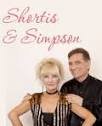
Not Quite Christmas. Shortis&Simpson


 Photo: canberraticketing.com.au


Not Quite Christmas. Shortis&Simpson (shortisandsimpson.com) - A satirical, seasonal tour 14 Nov 2015 – 5 Dec 2015 at Café Wood Works, Bungendore;  Robertson Community Technology Centre; Nerrigundah AG Bureau, Nerrigundah (25 minutes drive west of Bodalla on Eurobodalla Road); Teatro Vivaldi, ANU campus, Fri/Sat December 4/5.

Reviewed by Frank McKone
December 4

It isn’t really Christmas that’s “not quite”.  It’s more about what we might get for Christmas after the last year or two politically.  Not quite what we would like.

Most of the songs use music that’s well known, and often easy to sing along with, but John Shortis’ words and his and Moya Simpson’s performances are much more than “quite”.  This year’s satire is very good – and at the same time very traditional.

This is anything but a criticism, but may need to be explained to readers around the world outside the Bungendore – Queanbeyan – Canberra axis of goodness.  If New York is the Big Apple, Shortis&Simpson is like the trunk of the tree of knowledge, which was planted in the Queanbeyan School of Arts Café at the dawn of time in 1996 and bears fruit at this time of each year, harvested at various scrumptious locations.

Vivaldi’s has become a worthy descendant of the original Q School of Arts Café – which closed in 2000 after too much excitement for Bill, Pat and Tim Stephens to handle – and since the untimely end of Dominic Mico’s ownership of Smith’s Alternative Bookshop.  Looking vaguely like the Famous Spiegeltent (the real one will be here in Canberra early next year), and dressed up with several thousand Christmas LEDs, the atmosphere enhanced by a three-course meal and stimulated by wine from the bar was ready for knowing laughter.

I could legitimately mention every number in the show, all being equal.  But for the sake of witty brevity I’ll give space to three, for their different qualities.

For clever rhyming, John’s forté, the Bill Shorten song took the unwrap the parcel prize.  Every line rhymed with Bill in the manner of all those nasty parliamentarians’ name calling – like “Electricity Bill”.  But none of them ever came near to the rhyme “pterodactyl”.  You had to listen very carefully to see how that came about!  I hope John will publish the words of his songs as a lasting record.

For Moya’s voice, after her gravelly rendition of Bob Dylan’s new song “The 21st Century’s been reinstalled: The Times They are A-Changing”, I could not go past her commemoration “Vale Cilla Black” – a quite extraordinary range to match “the woman with two voices”.

And for unstoppable laughter there was the old trick of the two drunkards talking about our political leaders: Shill Bortern, Talcum Murnbull and Ony Tabbott who let Creta Pedlin cun the runtry when he was Mine Primister.  It doesn’t look so funny on paper, but after a good five minutes of sincere drunken commentary on our lopitical peaders, vivatro tealdi was a lyot of rafter.  It was amazing how much seemed to make sensible critical political commentary.  A glass or so of sauvignon blanc made even better sense of it.

And on a serious note, apart from asking God to take Eric Abetz and Cory Bernardi away somewhere – anywhere – there was no need to unwrap the parcel for the asylum seeker children still in detention.  We all knew what their best Christmas present would be.

I think I’m right to point out that Shortis&Simpson have succeeded where many others have fallen by the wayside.  In their 20th year they constitute the longest running professional theatre company in our history, excepting Canberra Youth Theatre and The Jigsaw Company.  I think that makes John and Moya an Institution – not to be sneezed – or laughed at!


Saturday, December 5, 2015

ANACHRONISMS: A COMPOSER'S JOURNEY THROUGH TIME


Music Of Michael Dooley
All Saints Church, Ainslie
28 November 2015
 

Review by Len Power

How could you resist “a musical Tardis transporting concert-goers from baroque-era Leipzig through four centuries of musical heritage ending in a tango hall in Argentina?”

In ‘Anachronisms’, local composer Michael Dooley delivered on his promise at All Saints Church in Ainslie with eleven original compositions in baroque, early and late classical, romantic, impressionist and modernist styles, plus a tango.  Somehow he also rounded up a dazzling group of pianists to play his compositions with him, including James Huntingford, Emily Leong, Sally Greenaway, Aaron Chew and Andrew Rumsey.

This was no stiff and formal classical concert.  It was a relaxed evening of great music with clever and witty comments coming thick and fast from the composer and the pianists, all of whom showed they could change to a career in stand up comedy if they wanted to.

There were some standout moments in the concert.  The dream-like andante grazioso movement of the Sonata in C major reminiscent of Mozart and composers of the early classical era was played beautifully by James Huntingford.  The Pilgrim Fantasia – a grand, emotional, romantic musical journey – was played brilliantly by Aaron Chew and Andrew Rumsey expertly played the challenging Toccata, written in the style of composers from the Modernist era.  The big crowd pleaser, though, was the Etude: In Pursuit Of The Mouse, a fiendishly fast and witty piece performed with gusto by James Huntingford.

The evening finished with ‘Tango In Chic’, in which all six performers managed to play this appealing work together on the one piano.  As if that wasn’t enough, James Huntingford and Andrew Rumsey danced a passionate tango together up and down the church’s centre aisle!

This review was first published in Canberra City News digital edition 30 November 2015.  Len Power's reviews can also be heard on Artsound FM's 'Artcetera' program from 9.00am Saturdays.

Wednesday, December 2, 2015

EVANGELINE


Directed by:  Chenoeh Miller

Lighting Design: Hartley T.A. Kemp

Sound design: Dane Alexander

Performers: Erica Field, Alicia Jones, Ruby Rowat, Peta Ward

Presented by Little Dove Theatre Art

Courtyard Studios, Canberra Theatre Centre, 3rd – 5th December 2015

Reviewed by Bill Stephens

Described as “a live art work” Chenoeh Miller’s creation, “Evangeline”, as presented at the first preview last night, defies easy categorisation.

Drawing on elements of Japanese butoh combined with psychological and philosophical references, Miller has created an extraordinary performance exploring reactions to grief,  which offers an aural, visual, and if you’re game, even a tactile dimension to an extraordinary theatrical experience.

The experience commences on arrival at the Courtyard Studio when audience members are ushered into a disco-like environment complete with pumping music, jabbing coloured lights and smoke haze, where in a small defined stage area, two women, both in bright red costumes, one with her back to the audience, the other facing the audience with head downcast, perform endless repetitive gyrations or spasms to the music.

There are wooden tables, with boxes spread around for the audience to sit on. Cocktails and hors oeuvres are on offer, and the audience is encouraged to move around and observe the performers from different angles. 
  

Eventually two more red-clad women enter through the audience. As they reach the stage area, all the performers face the audience and in addition to repeating the movement already established, all begin contorting their faces into grotesque expressions of grief, bewilderment or horror.

From time to time the music changes, but the gyrations and spasms are repeated relentlessly, until finally the four women simultaneously fall to the ground and lay motionless.


Eventually they rise and stand in a bewildered, trancelike state, until members of the audience feel the compulsion to comfort one or other of them.

Then, simultaneously, they raise their arms above their heads and slowly leave the stage, leaving their audience in awe of their bravery and endurance, perhaps moved, bewildered or puzzled, but certainly not ambivalent.