Showing posts with label PhotoAccess. Show all posts

Thursday, April 4, 2024

Volver (The Return)

Exhibition Review: Photography | Brian Rope

Volver (The Return) | Judith Martinez Estrada

Photo Access | 15 March 2024 – 27 April 2024

Two exhibitions running concurrently at Photo Access explore identity and memory, in quite different ways. Volver (The Return) is one of them. The artist Judith Martinez Estrada has focussed on migration as well. Starting in 2017, she comprehensively explored her paternal family’s apartment in Madrid, which they had rented for more than 100 years. Unearthing photos, documents and other material relating to her family gave her a significant volume of mixed media to which she has applied a variety of techniques.

Three babies had been born at the flat. Two people had died there. A century of family life had been lived there with all its highs and lows. The family’s history and the memories of all who had lived there was powerful and very much overlapped. As the relationship between the apartment and the artist’s grandparents, aunt and parents changed, so the memories altered - as they tend to for many, if not most, of us. As we get older we sometimes forget things long remembered. Sometimes we recall things from our early years which we have not thought of for a long time, if ever. Personally, my earliest knowledge of family history comes not from actual memories of the events but from hearing a story told over and over. Sometimes we are unsure whether an apparent memory is a real one.

So, what is the artist revealing to us here of this significant treasure of her family’s memories? Charu Maithani’s catalogue essay provides considerable background. Her documentation of the apartment became the catalyst in Martinez Estrada’s practice that brings together personal and political histories alongside archival and digital artistic techniques. Working with layers she creates a temporal and spatial juxtaposition of memories and objects. Each layer in the works creates spaces for remembrances to be added, including ones we do not know of yet. Layering allows multiple entry points and numerous recollections and half-rememberings to coexist.

In series of works entitled Family Biographies, photos and a variety of documents are held together using various means, such as rubber bands and paper clips. Has this been done to hide some of the past, the memories, the history? What else is there in the closed book, on the notebook pages not visible to us, in the photos hidden behind the top ones? Or are the assembled objects being presented to us as a symbol, telling us that the apartment which binds family members together will continue to draw back those still living?

Family-Biographies-Biografias-Familiares-XII-2018 - installation image provided by Photo Access

Another series Unknown Portraits uses strips to cover faces, thereby further hiding the already unknown identity of the people photographed at an unknown time in the past.

Unknown-Portraits-Retratos-Desconocidos-II-2018 - installation image provided by Photo Access

Two prints exhibited side by side share the title When God Left. The left side one spoke clearly to me of a god. A hand gesturing towards us is familiar to all who grew up attending Christian schools or churches. Here though we also see a nail hole telling us the artwork partially included is of Christ after his crucifixion – when he had left his earthly life. A video work tells us that Estrada’s grandfather played a role in the relocation and protection of artwork during the Spanish Civil War. Also displayed is a reproduction of an official commendation for that work. His granddaughter is now tracing and recreating the journeys he made transporting artworks from Madrid to Valencia. Did this painting of Christ belong to Grandfather Ramon?

When-God-Left-I-2018 - installation image provided by Photo Access

Old images of grandparent’s Ramon and Emilia are on display, overlaid on new images of things in the apartment. 

Ramon-II-2019 - installation image provided by Photo Access

There is much more to see, explore and consider in this fine exhibition. If you are able to do so, visit the gallery whilst this and its companion exhibition (also about identity and memory) are showing. If you can’t get there, at least take a look at some of her other works here or on her Instagram account

This review is also available on the author's blog here.

Friday, October 21, 2022

Concept to Publication, 2022

Photobooks | Brian Rope

Concept to Publication| Beata Tworek, Caroline Lemerle, Claire Manning, Con Boekel, Grant Winkler, Ian Houghton, Jamie Hladky, Louise Grayson, Rob Lee, Sara Edson, Yvette Morris

Photo Access | 13 - 22 October 2022

PhotoAccess recently launched numerous independently published photo-books, all made during its inaugural workshop program Concept to Publication. Guided by Canberra-based documentary photographer Dave Hempenstall, eleven photographers came together to explore the potential of the photographic book.

Over ten months, they investigated different forms, discussed significant historical and contemporary works, experimented with making and the materiality of the photo-book and refined their authors’ voices to make the books that then were put on exhibition at Photo Access. Copies of some of the books were also available for purchase.

Spending time in the gallery looking at, and through, each book is a most pleasant way to spend time. The books are diverse in every way. There are, in fact, more books than authors. Rob Lee has a set of eight slim books about eight different places where books are to be found. They include a reading room, a museum, various libraries and, even, the Lifeline Bookfair’s warehouse. Perhaps, next, he might make books in people’s home bookshelves, in bedside table piles, or even in their hands being read whilst traveling on public transport?

Sara Edson has two books on display, both very small. Transfer from Dalton is tied in a tiny parcel. It is a delightful little concertina folded book that one could play with for hours turning it about in many directions. Both contain numerous pleasing colour photographs.


Transfer from Dalton. Book by Sara Edson. Image by Dave Hempenstall

Louise Grayson’s book shows images of Deception Island, Antarctica. The photos are a mix of monochrome and colour shots amongst quite a number of blank white pages. Where there are images on facing pages, I was unsure about some of the juxtapositions but that in no way diminished my enjoyment of the publication. I particularly enjoyed the images of birds in flight over the landscapes and, especially, one essentially black and white image with just a small splash of red – a worn jacket and hat.

Con Boekel also has blank pages amongst his fine images of wounded trees. This book is about the small urban nature island known as Dryandra Street Woodland, where many trees have been cut with axes or chainsaws. He sees the wounds on the trees as symbols of the damage inflicted by humans; and trees there that flourish as symbols of hope for the future. This is a great project, and the book is appropriately dedicated to Canberra’s nature conservation volunteers.

Caroline Lemerle has taken what might be described as a traditional approach but, regardless of whether that is the case or not, she tells her story That 50th extremely well showing, through splendid imagery the friendships, family, food, fanfare and feasting of what clearly was a great celebration.

Beata Tworek’s Everyday Magic includes some shots that might initially be seen as mundane. But all are, indeed, magical. Again there are some blank pages – this time some are white but others black. There are also a number of beautiful transparent pages of photographed flora – these add immensely to the finished product.

Yvette Morris has also included blank pages in The Space Between, so I presume the project identified that as an option participants might incorporate into their books. This particular work explores transient space through black and white images of dirt mounds – again mundane subject matter. Morris successfully draws an analogy between the transitory space of unnoticed changes in the mounds and everyday subtle changes in people.


The Space Between. Book by Yvette Morris. Image by Dave Hempenstall
 

In Wrong Way, Go Back, Grant Winkler acknowledges his wife’s encouragement to persist and also the value of the interactions with other participants and Hempenstall. Whilst the photographs in the book might at first seem random selections, spending time with them effectively enables the viewer to get his message.

Jamie Hladky’s When we drove out of town to escape the bushfire smoke is a spiral bound collection of moody black and white, smoky images. Another excellent book in this collection.

Moments We See is Claire Manning’s contribution. It is a delightful hand-bound book of fold out pages, each of which open to reveal words about pairs of photos revealing how she sees and interacts with her world. It is a most successful and clever creation that could be enjoyed repeatedly.


Moments We See. Book by Claire Manning. Image by Dave Hempenstall.

Last, but not least, there is Ian Houghton’s Ginninderra Creek. This is a lay-flat book of quality double-page spread images about the creek which is a green corridor through urban areas of Gungahlin and Belconnen as well as across rural land. Again, it tells a great story.


Ginninderra Creek. Book by Ian Houghton. Image by Dave Hempenstall

Photo Access has suggested that the wonderfully diverse approaches and final forms are a testament to the participants dedication to the process. I agree. The program was deemed so successful that Photo Access has already announced another such event for 2023.

This review is also available on the author's blog here.


Saturday, October 1, 2022

Un/known

Photography | Brian Rope

Un/known | Susan Bell, Emily Blenkin, Fiona Bowring, Andrea Bryant, Saini Copp, Sophia Coombs, Annette Fischer, Lucy Found, Saskia Haalebos, Kristian Herman, Lia Kemmis, Eunie Kim, Kathy Leo, Louise Maurer, Kleber Osorio, Margaret Stapper, Beata Tworek, Sarah Vandermar

Photo Access | 15 SEPTEMBER - 8 OCTOBER 2022

Featuring works created during PhotoAccess’ Concept to Exhibition 2022 workshop, Un/known brings together a variety of artists examining, confronting and sharing personal stories. During nine months, mentored by 2021 National Photographic Portrait Prize finalist Marzena Wasikowska, the displaying artists went beyond their settled methods of working. Bringing varying levels of skill and past practice to the workshop, the artists have each advanced their photovoice and produced new work, expressing their one-of-a-kind approaches to image-making. 

The resultant exhibition is substantial and diverse. Sixty-three works, including two video pieces and a photobook, take quite some time to explore properly. And it is impossible to properly do justice to all eighteen artists and their works here.

The catalogue speaks of two images by Kleber Osorio showing evidence of a style familiar to him, and of a new approach emerging. His four new works effectively use water and reflections in that new approach. 

Louise Maurer shows two fine prints layering elements of multiple images to create new works. Both can fairly be described as compilations of images, ideas, emotions, and sensations - as encountered in dreams.

Sophia Coombs has four delightful prints exploring femininity through connection to the ocean. The woman in the sea is, of course, a female figure in an ocean. That sea is also a woman “because she is deep and wild.”


Sophia Coombs - The woman in the sea

Margaret Stapper has successfully explored whether photography can be therapeutic and enable reconnection with the past. She has made excellent composites inserting old photos of herself into new images. The facial expressions seen in the work In Conversation tell a wonderful story.


Margaret Stapper - In Conversation, 2022, composite photograph

Beata Tworek has used gold powder and thread to enhance scars such that “shameful” body imperfections have become valuable symbols.

Eunie Kim contributes some delightful works using silver-gelatin liquid emulsion and cyanotype print on acrylic paper.

Fiona Bowring’s video and photobook of women working in Fyshwick contains great imagery and warrant taking the necessary time to explore both thoroughly. Ruth at the sink is just one example of these workers.


Fiona Bowring, Ruth at the sink, 2022, digital photograph

Andrea Bryant’s three giclee prints, including Flux 2, are simply superb.


Andrea Bryant, Flux 2, 2022

Kathryn Leo is showing two posters seeking, through images and words, to reveal something of life’s journey. Smooth and Rough is the more successful of them.


Kathryn Leo, Smooth and Rough, 2022

Adam Luckhurst is showing a body of work seeking to highlight the perilous climate circumstances that we are in. I needed to read his words, including a poem Destination, in the catalogue before his message was clear to me. 

Annette Fisher gives us The Pregnant Tree, a delightful installation comprising a balls of crushed photos hanging on a dead branch. The images are of the ruins and remains following a building annihilation. Her suggestion that they might be preparing for a new life is allegorical.


The Pregnant Tree (image supplied)

Lia Kemmis also has contributed a wonderful installation. Placed in a corner of the gallery, it is in effect the corner of a room in a home. There is a “wall-hanging”, a framed canvas on a wall, a table covered with a satin cloth featuring a digital print, and a chair with another satin cloth image embellished with fake fur on which are containers of numerous small prints. The only thing missing is a second chair on which visitors might sit to enjoy the corner.

Emily Blenkin has based the titles of her works on that old cliché “a picture tells a thousand words”. In fact, each work comprises three separate images, so I found myself asking how many words were actually told by the individual pictures?

The artists not mentioned here have also each made contributions which enhance  the exhibition.

This review was first published on 27.09.22 by The Canberra Times online here and on page 10 of Panorama in their print paper on 1.10.22. It is also available on the author's blog here

Monday, May 2, 2022

Between Hope and Despair - Natasha Fijn, Eating Wild Weeds - Alex Flannery, Archive Apparitions - Elisa deCourcy

Review of Photography Exhibition | Brian Rope

At Photo Access | 21 April - 21 May 2022

In this suite of exhibitions, three artists explore the possibilities of cross-cultural and/or intergenerational communication through the photographic medium.

Dr Natasha Fijn is an ethnographic researcher and observational filmmaker. In combination with text, observational films and photo essays form an integral part of her creative research output.

In the aftermath of the 2020 Plumwood Mountain bushfires, Fijn shows her observations of temperate Australian forest recovering alongside her grandfather Jan Reinder Fijn’s record of the liberation of Nazi-occupied Maastricht in 1945. Each set of images in Between Hope and Despair documents a place immediately following a time of crisis. So, we see burnt trees and a destroyed shed at Plumwood, and a destroyed bridge at Maastricht.


Natasha Fijn, Burnt trees with water meadow beyond, Plumwood Mountain, 2020


Natasha Fijn, Destroyed Shed, Plumwood Mountain, 2020
 

Jan Reinder Fijn, A sad picture the destroyed St Servatias Bridge, 1944

​Both Fijns have employed the art of critical, participant observation in the documentation of their respective landscapes. The two documented times are separated by seventy-five years, but are connected by an intergenerational sense of urgency, through attention to their environments. The juxtapositions effectively reveal that both the old and recent events were indeed crises.

An Australian of Irish descent, Alex Flannery’s aim is to create photos that are both documents of the moment and also of things meaningful to him. Ouyang Yu is a contemporary Chinese-Australian poet and prose-writer. Operating in two languages and closely, caustically interrogating Australia's cultural identity and diversity, Yu's work is seen as matching a strident political voice with a tightly tuned lyrical self.

Eating Wild Weeds is a collaboration between Flannery and Yu. Together, they consider the complexities of cross-cultural understanding. Flannery’s images paired with Yu’s poetry investigate seeing, knowing and experiencing life in another country, engaging questions of visitation, migration, communication and being part of a multi-national family.

Flannery shows us interesting everyday scenes that he saw in the Chinese cities of Xiangyang and Wuhan during 2019.


Alex Flannery, Laddermen and Mao, 2019


Alex Flannery, sun and man in the street, 2019


Alex Flannery, river and jumping board, 2019

Yu’s displayed poetry needs to be read and considered. To illustrate, I share the concluding words of his I Love Sleep – “I love sleep … correct me if I am wrong … for in sleep I am equal to anyone … Without a fight.”

Dr Elisa deCourcy is currently an Australian Research Council fellow, working on a project about the first fifteen years of photographic practice in the Australian colonies. For Archive Apparitions, she collaborated with historic processes photographer, Craig Tuffin, who is among one of a dozen artists working with the historic daguerreotype process internationally, and with James Tylor.

In this work, deCourcy reactivates the daguerreotype process, as practised in the 1840s, to tell new stories of migration, environmentalism, family, and photography's role as a container of memory. The work continues conversations around colonisation, race, femininity, work and mobility, and photographic custodianship that began in the mid-nineteenth-century photography studio.

Cased daguerreotypes are among the oldest extant photographic images in (Australian) gallery, library and museum collections. These tiny, pocket-sized photographs in cases look quite foreign to us today. Their mirror-like surfaces make their subjects appear ethereal and otherworldly, but they are often sharp images often rich in detail.


Elisa deCourcy and Craig Tuffin, Konrad, 2021 - detail

In the mid-nineteenth century, both settler-colonists and First Nations people brought objects to the photography studio: books, letters from loved ones, cloaks, shields, heirlooms and even other photographs to narrate their personal biographies and relationships to family, kin and Country outside the frame.

The visual narratives constructed in this contemporary series gesture to engagements with the past. However, instead of objects, here are portraits of currently living people, who have various personal and professional relationships with historic colonial Australian photography, narrated through historic portrait devices. How appropriate that one of the subjects is Helen Ennis, who specialises in Australian photographic history.


Elisa deCourcy and Craig Tuffin, Helen, 2021, sixth-plate, cased, daguerreotype

This review was published in the Canberra Times (albeit without the final sentence) on 2/5/22 here. It is also on the author's blog here.

Monday, April 4, 2022

SELECTED SUBURBAN WORKS - WILLIAM BROADHURST - FANTASY COLLISION - GABRIELLE HALL-LOMAX, REVERBERATION TIME - JAMIE HLADKY

 Review of Photography, Mixed Media Exhibition | Brian Rope

At Photo Access, 10 March - 9 April 2022

These three solo shows have been described as each sharing a fascination with the strange. They are said to probe notions that have long intrigued photographers in numerous ways, demonstrating the diversity of contemporary photo-media.

One show, William Broadhurst's Selected Suburban Works, imbues everyday scenes with a sense of mystery through abstraction. He presents a series of fleeting encounters shot in south-west Sydney.

The majority of Broadhurst’s works convey a powerful sense of movement and, if you like, blur - causing the detail of the content to be strangely abstracted whilst, sometimes, revealing almost ghost-like shapes and figures.


William Broadhurst, Untitled#6, 2021

There are other works where particular content is more obvious - the moon is a clear presence in two works, in one seemingly hovering over a field of suburban lights.

Another work includes a person pushing a shopping trolley near the top of a hill. Others reveal a young person near a post and two youngsters alongside a soccer goal - doing precisely what is unclear in both images.


William Broadhurst, Untitled#5, 2021

Yet another work features a shirtless man (the artist?) working with a whipper snipper, although what it is cutting is out of the frame leaving us to imagine it. Perhaps the image I enjoyed most includes, it seems, a blurred reclining kangaroo surveying suburbia from a nearby hill.


William Broadhurst, Untitled#1, 2021

A second show, Gabrielle Hall-Lomax’s Fantasy Collision, integrates paint and digital manipulation techniques into layered photographic images. The works draw some attention to how human activity has transformed our Australian eco-systems. Expanding on environmental photography traditions - often used as a tool to raise awareness and educate us humans about the impact we cause on the environment - Hall-Lomax integrates paint and digital manipulation techniques into her works to reflect on the interconnectedness of nature - the body and the psyche are unified.

One work is titled Slip - whereas I saw a leap.


Gabrielle Hall-Lomax, Slip

Another titled Bushfires did not speak to me of that phenomenon - but is a lovely image, nonetheless. These are reminders, perhaps, that titles are unimportant to many artists and exhibition visitors. Whatever our views about that, these are fine images.


Gabrielle Hall-Lomax, Bushfires, 2021

Yet another is titled Rituals – it shows four modest-sized, standing stones amongst the mist – an acknowledgement of Stonehenge perhaps?


Gabrielle Hall-Lomax, Rituals

And Touching the sun is a sublime work that deserves lengthy contemplation – for me, the most interesting piece in the suite of three exhibitions.

The exhibition catalogue says the third show, Jamie Hladky’s Reverberation Time, “uses flash to explore places that have been reclaimed by nature after human occupation, illuminating the power of natural forces and our futile attempts to corral them.” Hladky himself has told me that the work is not so much about decay, or nature reclaiming, as he’s seen written. For him, his imagery is about “the irrelevant brevity of our short endeavours and our moments of self-absorbed pride.”

The titles of Hladky’s works reveal only where the images were taken. Around half are of decaying building interiors and half of cave and mining tunnel interiors.


Jamie Hladky, Gilgandra NSW, 2021


Jamie Hladky, Yarrangobilly NSW (1), 2021

One shot of the exterior of a neat and clean motel located in a desert area initially seemed out of place. Asked about it, Hladky told me he sees it as the first image in the series to pull the rest of them indoors - demonstrating that it is always good to have opportunities to discuss works with their authors!

In addition to viewing the three exhibitions, reading the delightful “essays” in their catalogues is a definite must, especially The House by Paddy Julian and A Cloak Stands in a Bore Hole, Arms Extended by Simon Eales.

This review was published in The Canberra Times of 4/4/22 here. It is also on the author's blog here.

Monday, February 14, 2022

VIEW2022

Photomedia Exhibition

VIEW2022 | Annette Fisher, Catherine Feint, Fiona Bowring, Greg Stoodley, Isaac Kairouz, Izaak Bink, Jemima Camper, Tom Campbell, Wendy Dawes, Xueqin Yi

Photo Access | 4 February - 5 March 2022

This show features emerging, or re-emerging, contemporary photographers. Technically, an emerging artist – no matter how old or how long they’ve been at their chosen medium - has not yet been recognised by major critics, galleries and museums. More generally, the term tends to be used when artists have been practising for less than 10 years, haven’t been acquired by a gallery, and have a low profile in the art market. A re-emerging artist is one whose career was interrupted by circumstances and is now resuming. I understand one of these exhibitors is 80. Yes, artists can emerge at any age.

Ten photographers, each producing works in their own distinctive styles, using diverse materials and exploring many subjects. You might appreciate different artists/works than those that stand out for me. I am confident, however, that every gallery visitor will find delight here and enjoy contemplating all exhibits. 

Accompanied by a video showing demolition, Annette Fisher’s powerful Demolition print captures light coming from the rubble, surprisingly revealing beauty in the site.


Demolition, 2021 – Annette Fisher

Greg Stoodley’s two Small Worlds prints delightfully reflect on how animals, in this case a cat, may be real supports during lengthy periods spent at home.


Cat TV, 2021 – Greg Stoodley

Isaac Kairouz’s Hek! BIDEO installation includes video, collage and painting. Each element needs to be explored individually, whilst the whole wonderful installation also needs to be contemplated in the context of the ways a person’s various social identities come together.


GolDen sHowASs, 2020 – Isaac Kairouz

Catherine Feint’s Childhood Home is a set of monochrome film shots of the house in which she grew up. The twist though is that they are actually photographs of her created cardboard models of the house. The quality of the shots is such that I did not realise that until reading the catalogue.


Figure 4 – Catherine Feint

Suspension, by Wendy Dawes, also took me by surprise. The catalogue refers to the rotoscope technique and drawing on suspension files. I know of rotoscoping, but it did not occur to me that the reference to suspension files meant just that – two artworks have been created on those ugly holders that we suspend in filing cabinets to hold documents. A much more creative use!


Suspension Trampoline, 2021 – Wendy Dawes

Jemima Campey’s two related video works explore the growing use of scripted and performed apologies, designed to minimise damage to the person’s “brand”. We can all quickly bring to mind certain politicians.


Still from digital video Crocodile Tears, 2021 – Jemima Campey

Tom Campbell’s split-screen video work tells two simultaneous stories, investigating the impact of border closures on our connections with places and family. I had to view this a few times to take in all the words on each screen but doing so reinforced the message.


Still from split-screen video – not that hill as a site of dominion 2021, Tom Campbell

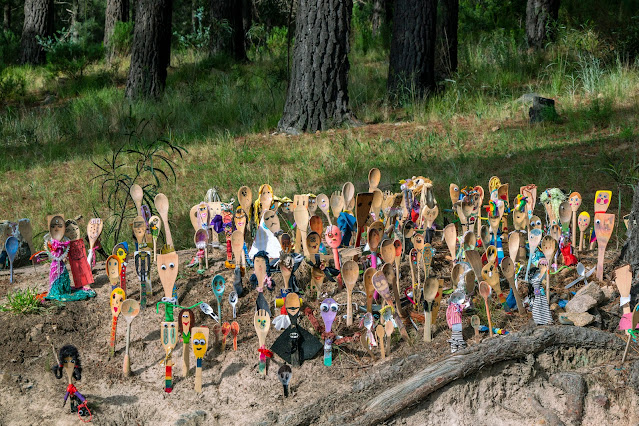
Fiona Bowring’s Spoonville is another quality print of a whimsical feature. Having seen this work previously on social media (as well as other folk’s images of other Spoonville installations) reduced its impact for me.


Spoonville-7719, Fiona Bowring

Xueqin Yi’s Plants Chant images resulted from using her camera to escape boredom and, so, becoming intensely interested in and gaining comfort from observing plants. There is much more than just plants in the images though, as she has included their, sometimes odd, surrounds.


Untitled, 2018 – Xueqin Yi

The catalogue says Izaak Bink’s I want you, because I can’t have you uses found images to draw attention to the exaggerated masculinity gay men can be forced to emulate – and forces us to ask, “whose place is it to decode this work?” Whilst not feeling any need to ask such a question, I nevertheless thoroughly enjoyed the graphic style of these two works.


Ride Em Cowboy – Izaak Bink

Thoughtfully curated by Wouter van de Voorde, this exhibition explores alternative processes and offers fresh perspectives on current issues, from early-career artists.

This review was published in the Canberra Times on 14/2/22 here. It is also available on the author's own blog here.

Saturday, December 18, 2021

The Pandy Shuffle

Photography | Brian Rope

The Pandy Shuffle | Eleven Artists

Huw Davies Gallery, Photo Access | Until 22 December 2021

Curated by Wouter Van de Voorde, The Pandy Shuffle shows works from eleven photo artists. The name? Well, it’s not the Melbourne shuffle - a rave dance from the ‘80s. And the artists didn’t learn how to shuffle and cut shapes in the usual dance sense. But they certainly had to shuffle their arrangements and plans, creating a Pandora’s Box of ideas as they coped with the pandemonium of pandemic times.

Van de Voorde mentored them through a Concept to Exhibition project at Photo Access in 2021. He wanted to connect people, have discussions about how images work and how they communicate when juxtaposed with each other. It became a shared endeavour, no-one expecting to be working together online through lockdowns.

As curator, Van de Voorde wanted there to be an overarching narrative binding the works together. He and his participants have executed a varying quality, but successful, coherent and collaborative show - celebrating their doggedness and creativity.

Each artist brought their distinctive style; an admirable consonance between them. All created work revealing their individual thought processes and confirming their endurance through this year.

Claire Manning’s excellent artworks feature diverse and interesting subjects, and include a magnificent large self-adhesive vinyl print A Place to Hide, 2021.


Claire Manning, A Place to Hide, 2021

Sara Edson’s wonderful contemporary work explores notions of home and connections between family, friends and strangers, recording “experiences and feelings in a strange year, that sometimes seemed a blur.” An image of a panda mask wearer along the Queanbeyan River path reveals a delightful encounter.


Sara Edson, Untitled, 2021

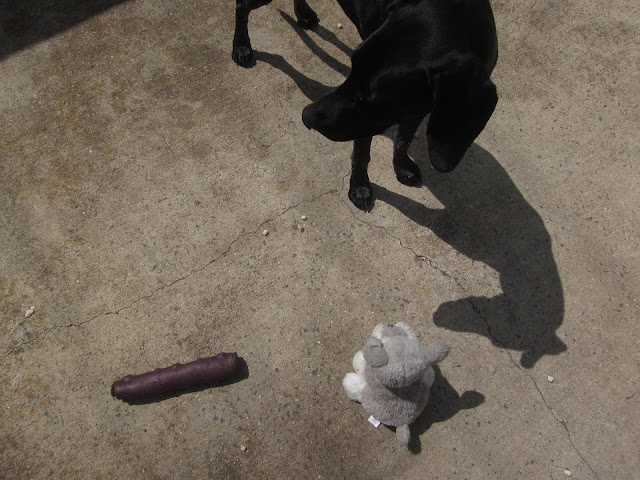
Tom Varendorff planned to document the ever-increasing number of dog toys that lie around his house and yard. In the end his – also contemporary - photos weren't as focused on the toys as he'd first thought.


Tom Varendorff, Untitled, 2021

Andrea Bryant’s works are all seductively lit and worthy of close examination. Still Life 2 is not a traditional still life. It has much to consider in a different composition.


Andrea Bryant, Still Life 2, 2021

Grant Winkler’s four exhibits of abandoned spaces adorned with the nowadays inevitable “street art” additions are replete with detail. His use of sunlight in two Walking on Sunshine works is wonderful.


Grant Winkler, Walking on Sunshine Obverse, 2021


Thomas Edmondson’s artist statement reveals that he is colour blind (mild deuteranopia) and that his work attempts to visualise “happenings left in places”. One impressive piece, Kambah Drains, reveals an amazing collection of graffiti on various surfaces – the words cave, temple, grim and aspire invite interpretation. 


Thomas, Edmondson, Kambah Drains, 2021

Erin Burrows says, “works were created from a period of chaos to calm in an ever-changing world, how busy and messy life can be, then clarity and balance can be found.” Each work is full of stuff for our eyes to tour.


Erin Burrows, Chaos 1, 2021

Phil Carter found quiet suburban roads to show us, seemingly devoid of people, built probably at great cost and barely used.


Phil Carter, 2021, Somewhwere Near Here 5

Briony Donald’s images of pigeons - and their titles - made me smile. One of two others featuring rhino birds stands out because of the bird’s juxtaposition with a young person.


Briony Donald, Untitled, 2021

Caroline Lemerle is interested in capturing the ‘layers’ of inner city living, suggesting her images “illustrate the silent fraught conversation between middle-class affluence and the inner-city poverty of marginalised people”. They do, although two prints titled Newtown Disconnect 1 and 2 have a clear connection - dominant colours in each tying them together.


Caroline Lemerle, Newtown Disconnect 1, 2021

Kathy Leo took her photos while exploring the beauty around Canberra on a personal recovery journey. She has compiled images and poetry into an artist book, some copies for sale along with prints of Birds in the Pond. The works share her discoveries and their healing wonder with us, her audience.


Kathy Leo, Birds in the Pond, 2021

This review was published in The Canberra Times on 18/12/21 here. It is also on the author’s blog here.