Showing posts with label Art. Show all posts

Tuesday, July 2, 2024

William Yang's Mardi Gras

Exhibition Review: Photography | Brian Rope

William Yang's Mardi Gras | William Yang

National Library of Australia (NLA) Treasures Gallery | 6 December 2023 – 1 December 2024

One of my prized possessions is a copy of Yang's book China, inscribed simply by his own hand “To Brian, Best Wishes, William Yang, Port Macquarie, 2011”. I had just heard and seen one of his presentations during the Australian Photographic Society’s annual convention in that coastal centre.

Yang is a well-known and renowned Australian performer, filmmaker, artist, and photographer. He began his career shooting fashion, but soon shifted to social documentary. Gay liberation, illegal Sydney warehouse parties, and AIDS-related deaths were all documented by this photographer.

Born in Mareeba, North Queensland, in 1943, Yang was raised in the little village of Dimbulah in the Atherton Tablelands. He got his first camera when he was seventeen but didn't start taking photography seriously until he was a university student. He relocated to Sydney in 1969 with the intention of becoming a playwright, but instead found employment as a freelance photographer covering social events. When his 1977 solo exhibition Sydneyphiles opened at the Australian Centre for Photography, his images received critical acclaim.

That exhibition gave viewers an almost voyeuristic glimpse into the social circles and private lives of people who were rarely seen by the general public, including socialites, fashion designers, actors, directors, artists, and Sydney's gay community. The community at that time was controversial as homosexual behaviour was prohibited. In Australia, pictures of gay life, love, and sex had never been shown so widely. Those who were gay and had their photos taken by the artist ran the risk of losing their jobs or facing rejection from their families.

In 1978, a newly formed Gay Solidarity Group held a protest demonstration followed by a parade celebrating queer pride: the Mardi Gras. Due to illness, Yang missed the first three annual parades whilst convalescing in Queensland. Returning to Sydney in time for the 1981 parade, Yang became a pre-eminent chronicler of Mardi Gras.

More than 250 of Yang’s photographs are held by the NLA. Among them are series relating to artists, writers, actors, celebrities, friends, Chinese Australians, intimate dinners, boisterous parties, and the Mardi Gras. This NLA Collections-in-Focus exhibition, William Yang’s Mardi Gras, displays material from over 20 years of photography documenting the parades. Originally opened late in 2023, the exhibition had to close whilst the venue was being renovated but has now resumed.

The 24 images displayed (all with Yang's trademark handwritten descriptions on them) explore four themes: Protest, Community, Art and Remembrance. What began as a protest event celebrating queer life, also became a community event; an artistic event; an event to remember people of the community lost to the HIV/AIDS epidemic.

An image of a fairy makes a statement about the courage of revealing oneself as a gay/queer at that time.

Fairy, Sydney Gay & Lesbian Mardi Gras, 1982. William Yang (National Library of Australia-nla.obj-136859502)

An image of two people lighting a candle effectively and sensitively remembers those who died from AIDS.

“The Last Candle.” AIDS Vigil 1994. 2/10. William Yang (National Library of Australia-nla.obj-136864462)

Morals crusader, Fred Nile, was made fun of in the 1989 parade when a Papier Mâché version of his head on a platter made an appearance. Yang was there to get an image.

The Sisters of Perpetual Indulgence and the Head of Fred Nile
1989 Sydney Gay & Lesbian Mardi Gras. William Yang
(National Library of Australia-nla.obj-136862227)

Yang was also there in 2009 to capture a simple, but effective, image of a protestor urging people to fight AIDS rather than Iraq where Australia had been involved in armed conflict from 2003.

“Protest.” NSW Mardi Gras. 2009 1/10. William Yang (National Library of Australia-nla.obj-136861261)

After years of documenting the parades, Yang wrote in his monologue Friends of Dorothy I’ve finally figured out what Mardi Gras is. It’s the re-enactment of a ritual. A ritual we have worked out over the years as defining and celebrating a gay, lesbian, bisexual, transgender and intersex culture.

In a review of Yang’s Sydneyphiles Reimagined, at the State Library of New South Wales, Edward Scheer wrote Yang’s photographs …… offer the complete opposite of the selfie. ….. he offers carefully framed and curated portraits. ……. He brings the pictures back into the present moment.

This exhibition reminds us of the importance of Collections held by the NLA and other institutions. The opportunities to see exhibitions of selections from such Collections should be taken by us all if we possibly can do so.


This review is also available on the author's blog here.

Saturday, May 6, 2023

THE MIRROR Angles of Resistance

Brian Rope | Photomontage, Acrylics on canvas

THE MIRROR Angles of Resistance | PETER MALONEY

CCAS Lakeside | 15 April – 3 June 2023

THE MIRROR Angles of Resistance is said to examine Canberra-based artist Peter Maloney’s practice from the perspective of his gay/queer sexuality for the first time in his 40-year career. (In 2018 Drill Hall Gallery did survey his work from the preceding 30 years.) 

This show exhibits multiple examples of Maloney’s forms of expression – completed works, informal sketches and studies sourced directly from his studio. It provides a revealing account of his working method.

The curator, and artist’s partner, Mark Bayly has written “Maloney has produced a polymorphous body of work across multiple media, including collage, painting, photography, performance, sound and video. As a painter, his early commitment to gestural abstraction has given way to a practice of genre-defying bafflement. I suggest this, because in examining Maloney’s series of works over the past twenty years, I propose that they can best be mentally assembled and appreciated – as a puzzle – in the form of a funfair hall of mirrors.”

And there we have it – a puzzle to be solved. Walking around the gallery, exploring item by item, I was astounded by the variety and diversity. I found myself studying particular pieces for lengthy periods for a host of different reasons. In some cases it was to read then re-read text, as we might do with parts of a book or quality article – perhaps searching for meanings, perhaps revelling in the beauty of the words. A work titled The Rapping Nun fascinated me with its references to Borley Rectory - famous for being described as "the most haunted house in England".

Then there were the wall cases containing items we would love to pick up and hold and explore closely. And two copies of his monogram Fugitive Text we can pick up. And various complex mixed media pieces such as ‘Untitled (dune dream)’, 2005 – collage, photomontage, acrylic paint graphite and watercolour on paper -  which can be thoroughly examined.

Peter Maloney - 'Untitled (lies that life is black and white)’, 2018 (photomontage on mountboard)

There are numerous collages using black-and-white photographs (many of naked men) and portions of text from newspapers. There is painted text and works on paper incorporating text. The use of text clearly is important to Maloney and his art practice. It is also about him – his desires, who he is, his connections to others in his community.


'Berghain, 10am', 2014-20 (screen print and acrylic paint on canvas stitched to cotton stretcher) - courtesy of the artist - photograph by David Paterson

One work created on celluloid film shows two portraits side by side. Is it the same person? Identical twins? Unrelated look-alikes? Its title Michael: doppelganger perhaps hints at the most unlikely latter possibility. Whatever the story, we are drawn in to look and think – the artist is expressing his feelings and emotions.

Another work I Was Never Lost, 2014 had me intrigued for a variety of reasons. Why did it include the words “Schauen sie schnell! Eine kleine sterneschnuppe”, which translate to “Take a quick look! A small shooting star”? Why did it have a ghostlike figure and an apparent likeness of Ned Kelly on either side of an image of a naked man? What is it all about? This is today’s art at its best – challenging, intriguing, always pushing the definition, sometimes even bizarre or nonsensical.

'I was never lost, says Maloney', 2014 (photo transfer, acrylic paint, beeswax, ochre on canvas) - courtesy of the artist - photograph by David Paterson

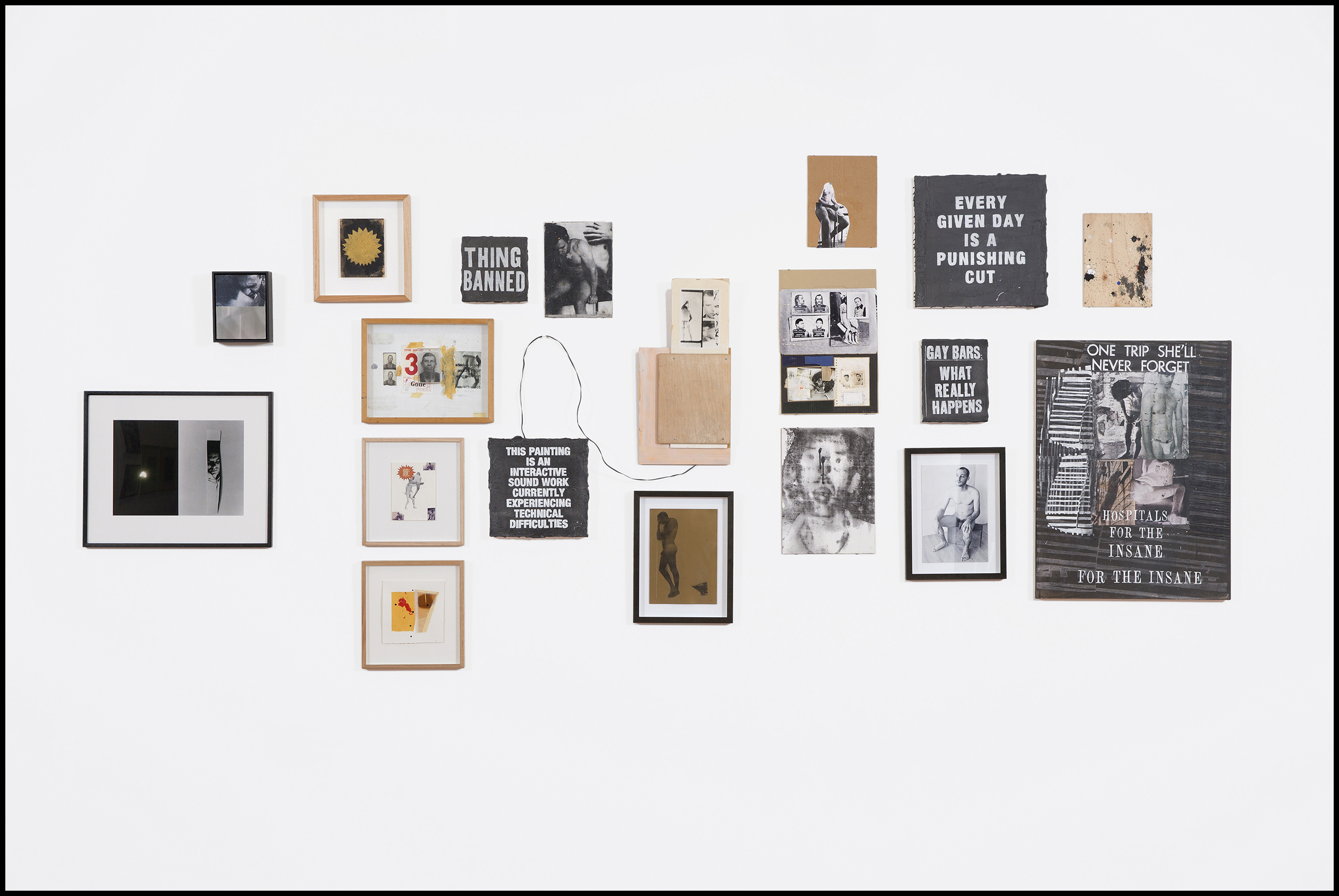
Maloney has developed an eclectic and highly personal art style. Nowhere is that more evident than in Electroclash, 2002-12 which comprises sixteen pieces in various media, including paint on canvas, plywood, B/W photographs, phototransfer and collage on paper, and even an electric lead.

'Electroclash', 2002-12 (16 elements in various media, including acrylic paint on canvas, plywood, electric lead, B/W photographs, phototransfer and collage on paper) - courtesy of the artist - photograph by David Paterson

There are B/W and colourful large canvases - The Honey, 2010, Red Hot Hill Flattener, 2014 and Applause, 2002.

Peter Maloney - 'The Honey', 2010 (acrylic on canvas)

Peter Maloney - 'Red Hot Hill Flattener’, 2014 (acrylic on canvas)

And, wonderfully, a work titled Untitled (Greg in the studio), 2012 which is a photocopy of a photograph of a distressed photocopy (which, presumably, was of a photograph).

This review was first published in The Canberra Times on page 11 of Panorama and online on 6/5/23 here. It is also available on the author's blog here.

Saturday, August 13, 2022

ADORNED

PHOTOGRAPHY, VIDEO, WEARABLE ART, SCULPTURE | BRIAN ROPE

ADORNED | ADORNED COLLECTIVE

TUGGERANONG ARTS CENTRE | UNTIL 10 SEPTEMBER 2022

This exhibition is a survey of the Adorned Collective’s creative journey over the past seven years. It features photographic and video work, plus wearable artworks and sculptural installations.

The Collective was formed in 2015 as a participant-driven initiative to support artists, artisans, makers and craftspeople of all ages and abilities from culturally diverse backgrounds and experiences, by providing a friendly, culturally safe and accessible creative space. The community that was established participates fortnightly in supported drop-in skill-sharing workshops and public programs. The Collective meets and works on Dharug Country, Western Sydney, and is based at Parramatta Artist Studios in Rydalmere. 

Within the workshops, participants collaborate and share creative processes, stories and skills in order to professionally develop and to build community capacity. The group nurtures friendships and celebrates life, culture, diversity and difference whilst creating inclusive social and professional networks and opportunities for local creatives.

During the seven years since 2015, the Collective has developed and exhibited solo and collaborative works. The Adorned artists have utilized each exhibition and project as a way of engaging community through public programs and creative workshops.

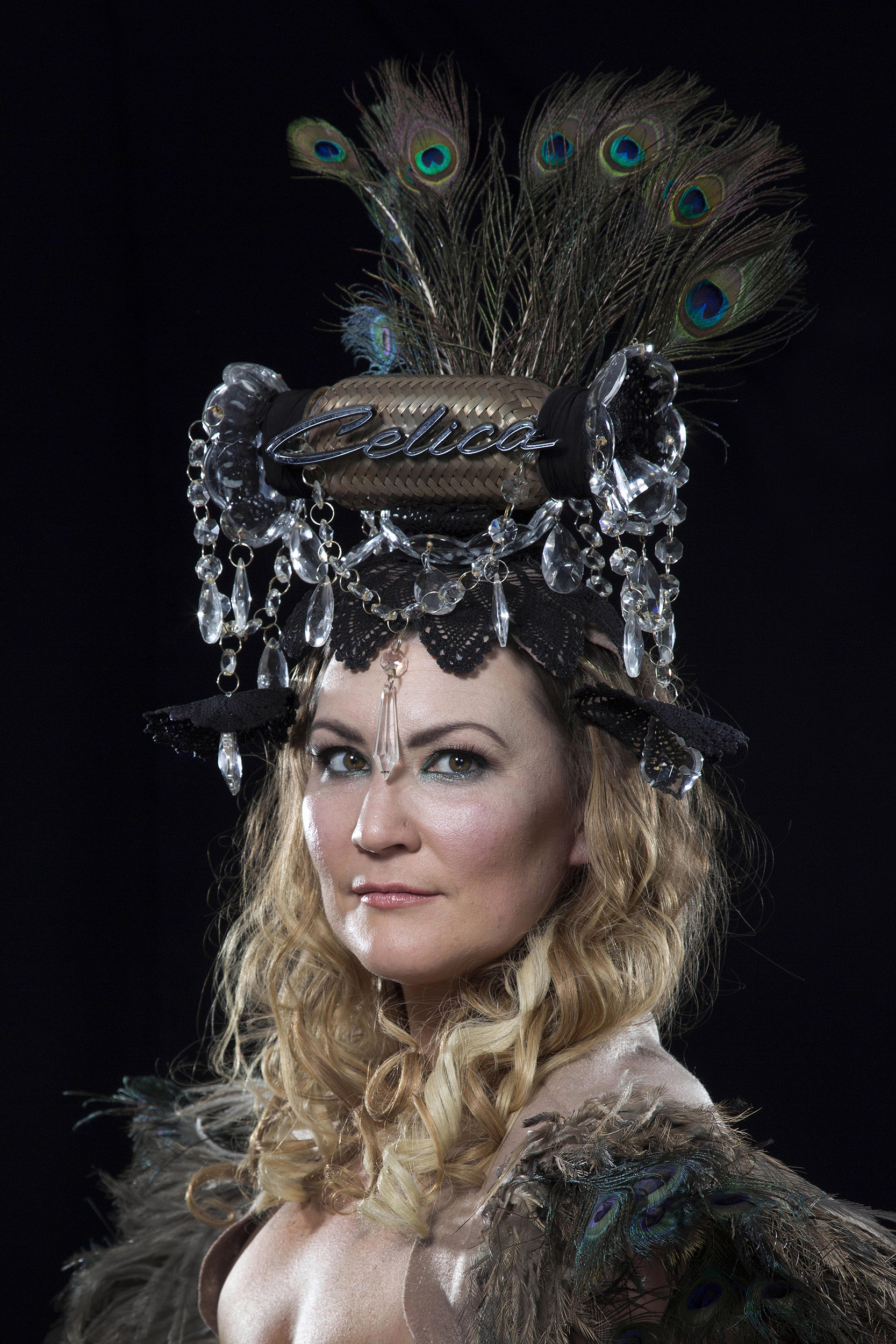
So, what is in this extensive exhibition? There are numerous handmade wearable artworks on display. They include wonderful and intricate masks and hatbands. Then there are woven baskets, and sculptures using various materials such as second-hand paper, wire, twigs and sequins. There are letters from a letter exchange project that connected artists living in regional Queensland. And more.

Farzana Hekmat_Freedom Girl_2020 - wearable art

Ginette Morato_Starry Night_2020 - wearable art

How does photography and video come into this? Well, the artists have been photographed and videoed wearing their own artworks. The photographs in the exhibition are large portraits from 2015. They are all colourful and well-photographed. Each image reveals a considerable amount about its subject. Firstly, we learn about their cultural connections and identities. However, if we take the time to study the works more closely and to think about the details that each reveal, we might begin to understand something of what motivated them when deciding to create the artwork being worn. We might say they embody the souls of each artist.


Hilin Kazemi, 2015. In collaboration with Liam Benson. Photo Jasmine Robertson


Kiri Morcombe, 2015 in collaboration with Liam Benson. Photo Jasmine Robertson

There are two video installations, each quite different from the other. The creative directors of Adorned Wisdom, Memory and Song, 2017, show us the excellent outcomes from a period when guest dance and performance teachers engaged ten of the artists and their drop-in visitors with performance and script development as a means of weaving their stories together and bringing their wearables to life.

The resulting high quality two panel video created from camera footage and sound recordings is most engaging. Diverse music styles, movement, voices, stories and more hold the viewer’s attention as each segment reveals something different and new. The musical score adds the skills of yet another artist to the collaboration. The Do you remember me? Segment tells a wonderful story. Another part, about domestic violence – is simultaneously simple and powerful. And the concluding piece where our eyes watch numerous eyes watching us is delightful.


Susan Ling Young, Wisdom Memory and Song (production still) 2017

In another part of the gallery the second video installation Incognito, Adorned, 2010 is very different. It features footage captured by the artists themselves. They have put on their wearable masks and performed for their cameras, revealing small moments – tender, humorous and, most importantly, empowering of themselves. I particularly enjoyed one artist playfully interacting with a pink blossom tree whilst wearing her “matching” mask and dress.


Lesley-Anne - still from Incognito, Adorned Incognito, 2020


Marina - still from Incognito, Adorned Incognito, 2020


Marina 2 - still from Incognito, Adorned Incognito, 2020

Indeed, empowering is the word for this entire exhibition. Working together in the Collective and with the numerous guest artists brought into the projects undoubtedly has professionally developed each and every participant – and enhanced the creative community of Western Sydney.

This review was published on page 10 of Panorama in The Canberra Times of 13.08.22. It was published on the Canberra Times website here on 14.08.22. It is also available on the author's blog here.

Monday, March 7, 2022

Where Lakes Once Had Water

Audio-visual Art | Brian Rope

Where Lakes Once Had Water | Sonia Leber and David Chesworth

Drill Hall Gallery | Until 10 April 2022 

Where Lakes once Had Water (2020) is a video that runs for 28:14 minutes. Whether gallery visitors see it from start to finish depends on whether they manage to arrive as it commences to play. I arrived around 7 minutes into it, so stayed to see the missed opening scenes after viewing all the rest of the video.

In 2018 and 2019, Melbourne/Naarm-based artists Sonia Leber and David Chesworth travelled with a team of Earth and environmental scientists investigating changes in climate, landscape and ecology in the Northern Territory over millennia. Their resultant video channels this experience, in which Indigenous rangers, Elders and community members collaborate with scientists in spectacular yet challenging environments.

Leber and Chesworth are known for their distinctive video, sound and architecture-based installations that are audible as much as visible. Their works are speculative and archaeological, often involving communities and elaborated from research in places undergoing social, technological or local geological transformation. The works emerge from reality but exist significantly in the realm of the imaginary, hinting at unseen forces and non-human perspectives.

Presented across two screens, this immersive long-form video is a journey encompassing audio-visual realms, scientific endeavour and traditional Indigenous knowledge, stories and custodianship – an amalgamation of efforts to understand this ancient land.

Where Lakes Once Had Water was filmed on the lands and waters of the Mudburra, Marlinja, Jingili, Elliot, Jawoyn and Larrakia communities, with additional filming and editing on Barkindji, Dharawal, Djabugay, Yidinji and Wurundjeri Country. In partnership with Bundanon, it is the first of four art commissions by The Australian Research Council Centre of Excellence for Biodiversity and Heritage (CABAH), which works across disciplinary boundaries, and seeks to garner broad perspectives of the past in order to engage new audiences with the story of ‘epic Australia.’ The aim is to engage artists with aspects of research - to make new work that responds to, questions, and interprets the research for broader audiences.

From fieldwork in deserts to microscopic work in laboratories, scientists sought evidence of Earth's forces over long-term cycles of wet and dry. Many of those forces – wind, temperature, long-term aridification and tectonic movement – were invisible to the human eye or lay beyond human timescales.


Sonia_Leber_David_Chesworth_Where_Lakes_Once_Had_Water_video still 01b

Leber and Chesworth say their project “tests the hypothesis that the Earth is experienced and understood through different but interconnected ontologies. These ways of being, seeing, sensing, listening and thinking can align with art, Indigenous thought, science, ancient and modern cultures, the non-human, and somewhere in between.”

The video introduces Ray Dimakarri Dixon calling to ancestral spirits to watch over Country as scientists excavate the red earth of once-submerged lake beds. The fieldwork is observed by non-human cohabitants, as ecologies of birds, termites, flies and vegetation continue their own struggles of survival. Across the ancient shorelines, everyone is receptive to the signs, signals and rhythms of the land and water.


Sonia_Leber_David_Chesworth_Where_Lakes_Once_Had_Water_video still 07, with Ray Dimakarri Dixon

There are few spoken words – essentially only Auntie Susan Kingston, appropriately using Indigenous language. There are, however, numerous other sounds employed. Was that a created xylophone I saw and heard? Were sounds recorded by microphones and other recording devices scanning termite hills part of the soundtrack I listened to?


Sonia_Leber_David_Chesworth_Where_Lakes_Once_Had_Water_video still 08, with Auntie Susan Kingston and Aara Welz

There is so much to see in this video. Dry landscapes, grains, gorges and ants. Core samples, bottled water, laboratories, measurements, analysis. Geological explorations, erosion, dirt roads, fishing. Cattle, a road freight train. I could go on and on.


Sonia_Leber_David_Chesworth_Where_Lakes_Once_Had_Water_video still 02


Sonia_Leber_David_Chesworth_Where_Lakes_Once_Had_Water_video still 03b


Sonia_Leber_David_Chesworth_Where_Lakes_Once_Had_Water_video still 04b, detail

It is wonderful to see art used to educate artists and art lovers about biodiversity and heritage research and, hopefully, gain at least a little more understanding of these places where lakes once had water.

This review was published on page 37 of The Canberra Times of 7/3/22 here. It is also available on the author's blog here.

Saturday, November 27, 2021

Uncalibrated Space

Photomedia | Brian Rope

Rory Gillen | Uncalibrated Space

Tuggeranong Arts Centre | Until 16 December 2021

Rory Gillen is a Canberra-based audio-visual and new media artist and educator. He has worked extensively in documentary and event photography, as well as maintaining an arts practice exploring the cutting edge of post-digital and networked photographic art. Working across photography, audio, video, and electronics, Gillen creates multisensory installations that critically engage. 

Graduating from the ANU School of Art and Design in 2019 with first class honours, Gillen has exhibited in various galleries, including Canberra Contemporary Art Space, Brunswick Street Gallery (Victoria), and the Perth Institute for Contemporary Art.

Gillen is sometimes referred to as the resident tech nerd at Photoaccess where he currently works developing post digital programming and workspaces as well as tutoring and facilitating visiting artists in their practice and technical skills.

Many scholars consider us to be in the era of ‘Post Digital’. What does this mean for photography; its analogue form in some ways already consigned to the dustbin of history by theorists who insist that we live in a post-media era?

In a recently streamed conversation with another multidisciplinary artist Gillen dived deep into the changing face of photographic practice. He suggested, correctly, that whilst digital photography is essentially about capturing data, post digital is about investigating it and exploring concepts that silently exist in the data set. As someone who was amongst the first computer programmers in Australia and who watched the ones and zeros coming together as light dots on a bulky “pre-computer” whilst debugging my programs, I am fascinated now when people speak about manipulating ones and zeros - akin to manipulating negatives in darkrooms.

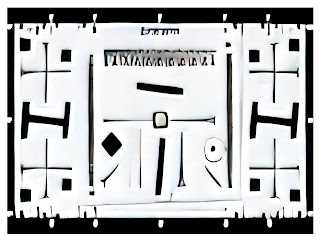
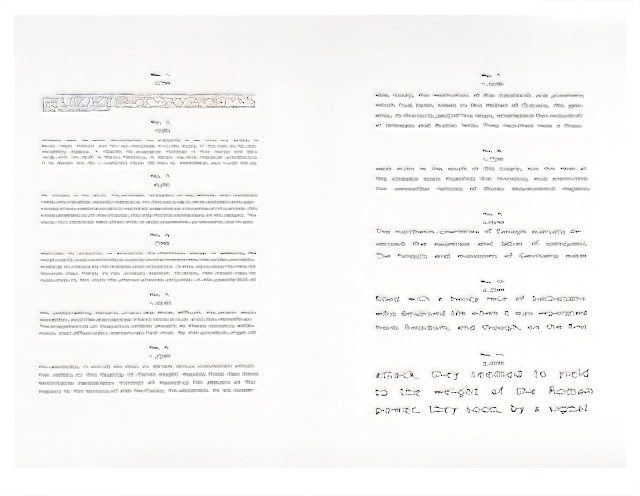
In his artistic practice, Gillen is fascinated by “the digital paradigm shift toward the fundamental machine readability of objects, exemplified by the digital image”. Here he explores the facets that deep learning carves into images and investigates “the underlying machinations of the algorithms themselves” posing the question “what is real, and how do we know”?

This exhibition comprises twelve inkjet prints plus a mixed media installation showing faces, illustrations, landscapes and objects – and much more. Aluminium, plywood, a desktop computer, wires and miscellaneous electronics are all part of the installation, without them there would be no screen images to see.


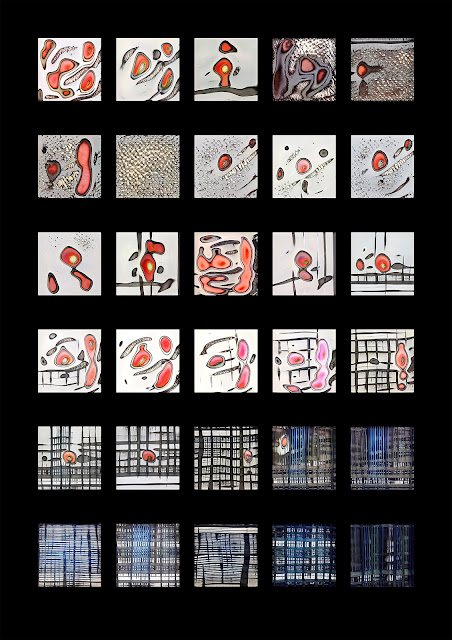
3500 Steps From Illustrations, 2021 © Rory Gillen


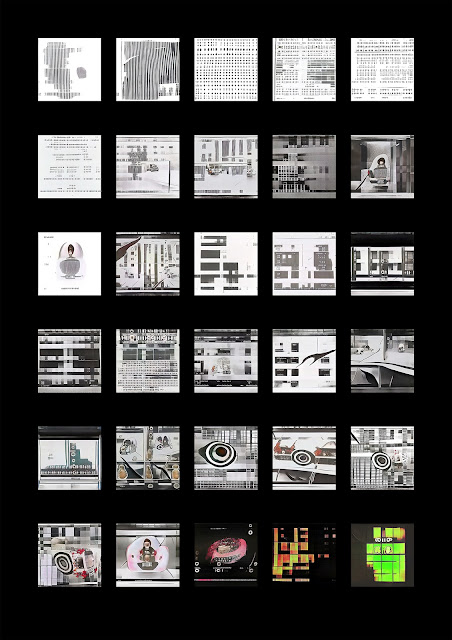
3500 Steps From Objects, 2021 © Rory Gillen

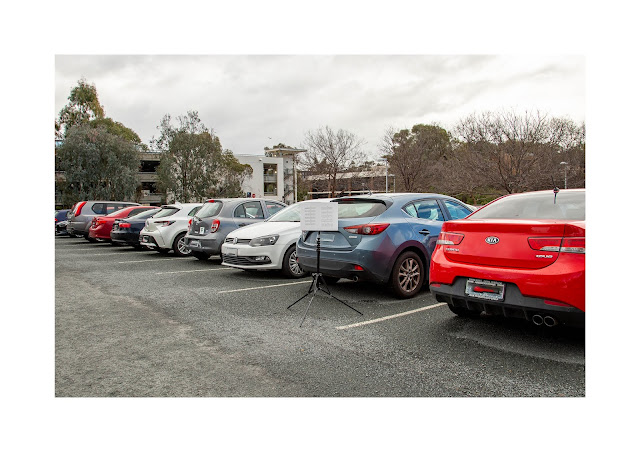
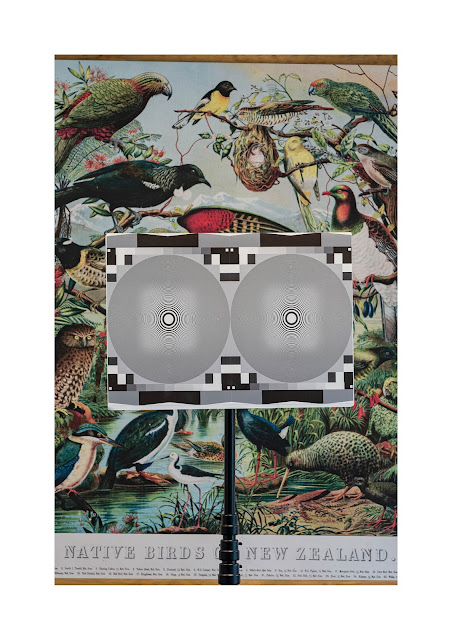
The prints relationships to faces, illustrations, landscapes and objects is not immediately obvious. At first glance I asked myself why one smaller print was of parked cars with a music stand amongst them. Closer inspection revealed that the stand was in fact supporting a copy of one of the larger prints. The same is true for other smaller prints of a landscape, Gillen’s own face, and an illustrative poster – stands in each of them support copies of larger prints in the exhibition. Four large prints titled 3500 Steps from Faces, etc. are curated grids of images resulting from heavy manipulation of ones and zeros.


Untitled Source Image IV, 2021 © Rory Gillen

Untitled Source Image II, 2021 © Rory Gillen

There is so much to look at, so much to wonder about. Images on the computer screen are mesmerising, flashing on and off at a rapid rate. Individual images on a larger LCD screen have a dreamlike quality. I saw cartoon-like faces, old hand made nails, overhead views of building site plans, hieroglyphics and lenses. Whatever you see you will enjoy.


Uncalibrated Space IV, 2021 © Rory Gillen


Uncalibrated Space III, 2021 © Rory Gillen

Grant Scott, the founder/curator of United Nations of Photography, has written “The role of the 21st century photographer has changed and is constantly evolving. It is, therefore, the responsibility of the engaged photographer to understand that reality and to respond to those changes.” Gillen is so engaged. We can expect the future to bring us many more manipulated and appropriated artworks from him and others.

This review was published in the Canberra Times on 27/11/21 here. It is also on the author's own blog here.


Saturday, November 20, 2021

Congruent - Incongruent

Photography and Art Exhibition Review | Brian Rope

Eva van Gorsel and Manuel Pfeiffer | Congruent - Incongruent

M16 Artspace | Until 21 November 2021

Eva van Gorsel is a photographer who uses numerous diverse techniques and approaches to create varied, interesting imagery - her background in environmental sciences and scientific photography always there. Her imagery here does not disappoint. As usual they are excellent artworks, pleasing to look at, contemplate and think about.

Manuel Pfeiffer is a painter who uses an extensive range of materials, including acrylics, pencils, charcoals and much more. His works here are of mixed media, including acrylics, pencils, even plaster of Paris. They are equally pleasing to explore.

The gallery sheet informs visitors that these artists feel our lives have changed, that harmony has been disrupted by climate change and pandemics globally. Few would disagree. The artists suggest many of us have been striving for balance more consciously - in our friendships and workplaces, and in how we interact with our environment.

Here was their starting point to create an exhibition addressing congruence (in agreement or harmony) and incongruence. The artists have creatively investigated their concept, exploring balance, harmony and disharmony, symmetry and asymmetry.

They have also used the mathematical concept of congruence – figures, identical in form, coinciding exactly when superimposed. In geometry, two figures or objects are congruent if they have the same shape and size, or if one is a mirror image of the other.

So, in these works, we see reflected, rotated and translated shapes and lines overlaid on a variety of landscapes. Whilst art lovers generally enjoy the aesthetics of congruent images, they also do not mind some tension – it keeps us looking and exploring the artwork.

The depicted landscapes are from diverse Australian places, including New England, Lake Burley Griffin, Kosciusko, Cocoparra National Park, the Flinders Ranges, and the Devils Marbles. They include mountains and seas, sunrises and night times. Some include circular shapes that may be either the sun or the moon – or something else?

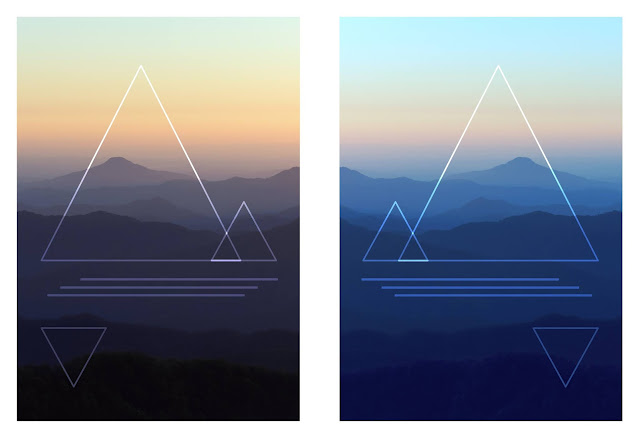
Van Gorsel has an interest in how colour and geometry shape landscapes. She examines moods created by warm and cold colours, the direction of light and how it changes, transitioning colours painted on skies or reflected in water. Here, her diptychs are congruent - despite focussing on contrasting concepts. They are displayed as pairs of works side by side. All the images are based on photography. Each panel is the same size, each is a pigment ink print on archival paper.

Her Mountain Ranges diptych shows the same scene overlaid with the same triangles and lines – each a reflection of the other, one warm toned, the other cool.


MountainRanges i & ii © Eva van Gorsel


And the two images in her Lake Lights diptych are again reflections of each other, except that the circle in each varies in density or hue.


Lake Lights i & ii © Eva van Gorsel

Pfeiffer’s works are, on the one hand, based on incongruence: every diptych, in itself partly congruent, is different in technique and the materials used reflect the wide variety of possibilities available to artists. On the other hand, all works are of the same size (some in portrait, others in landscape format) and mounted the same way, in the mathematical sense of the word congruent.

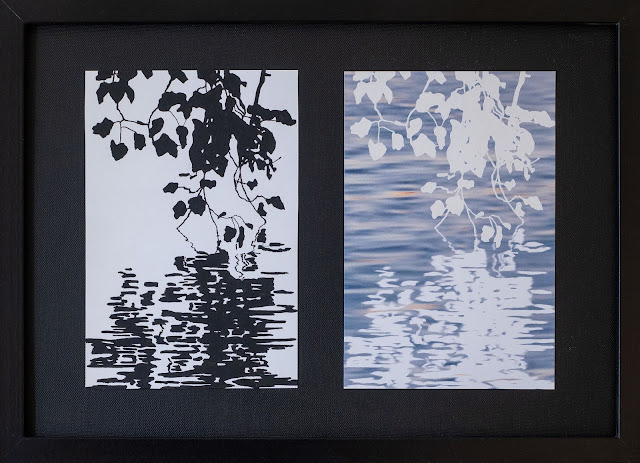
The left-hand side of his Lake Burley Griffin diptych is a monochromatic version of the coloured and inverted right hand side.


Lake Burley Griffin © Manuel Pfeiffer


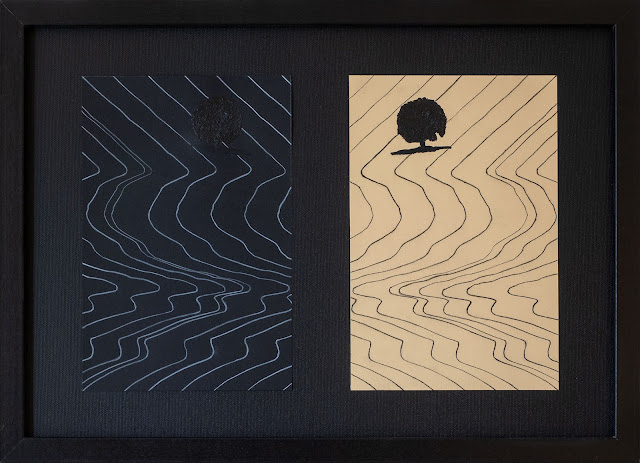
View From Cocoparra is presented in an analagous way but is much more graphic with delightful contour lines and a simple and subtle tree.


View From Cocoparra © Manuel Pfeiffer

Two sets of works play off each other perfectly. These artists have again produced a fine exhibition as they did with their previous joint show Facets in 2020.

This review was published in the Canberra Times of 20/11/21 here and on the author's blog here.

Saturday, November 13, 2021

Experiments in Living [Melt], Surface Appearances, Light Materials, & 398

Photography | Brian Rope

Experiments in Living [Melt], by Sammy Hawker (ACT)
Surface Appearances, by Eunie Kim (ACT)
Light Materials, by Caroline Huf (ACT)
398, by Aloisia Cudmore (ACT)

PhotoAccess Huw Davies Gallery | Until 27 November 2021

Each year, PhotoAccess awards local and interstate artists, both emerging and established, assisting them to expand and develop their photo-media practices. They are provided with mentorship to produce solo exhibitions in the Huw Davies Gallery. The four ACT exhibitors this year were recipients of the Dark Matter, Emerging Artists Support Scheme, and Wide Angle residencies.

The works in Sammy Hawker’s Experiments in Living [Melt] encompass text, documentary video and negative prints produced in collaboration with the chemical activity of rain, hailstones, seawater and open flame. This is now familiar territory for Hawker, who challenges us to reconsider the illusion of control we hold over the natural world. These images do not disappoint.

Because we are limited, finite, beings subject to dying, vulnerability to trauma is a necessary and universal feature of our human condition. Hawker’s images speak to this, identifying the importance of nurturing our relationship to the world, and reminding us that our everyday experience is illusory, never the reality itself, of non-human forces shaping our lives.


Tom & Pyrocumulus © Sammy Hawker

Eunie Kim says she is grateful to have found her life’s calling in photography and is excited to see what comes next, embracing every opportunity. In Surface Appearances, Kim has used ‘Liquid Light’ photographic emulsion painted onto varied papers and brought her current Australian life into conversation with the traditional aesthetics of her Korean heritage. This is most evident in three beautiful “paintings” on sugarcane paper, looking at flowers, birds and insects.

Using materials and subjects from a contemporary Australian setting whilst simultaneously conjuring the aesthetic of traditional Korean painting, Kim explores her immigrant experience. Applying the emulsion via brushstroke, on differing thickness and texture of paper, has produced varying works. They reflect Kim’s process of learning, regretting and then correcting mistakes, and taking chances.


Cells, captured in 2015, recreated in 2021 © Eunie Kim

Light Materials is a series of video works deconstructing and recombining film materials through a process of digital or analogue weaving, Caroline Huf explores the exhaustion and re-invention of settler Australian myths about the mystery and threat of the bush.

Huf’s work, It's No Picnic, disrupts Peter Weir’s iconic movie Picnic at Hanging Rock, a key cultural expression of early colonial anxieties in the unfamiliar Australian landscape. Each scene is pulled apart, altered in speed, scale, and moved out of time to appear as woven patterns and twills. The film’s pan pipes become an industrial sound and the threads slowly disappear, suggesting a worn-out myth.


It’s no picnic- 2021, video still © Caroline Huf

And Let’s Get Lost presents Huf’s personal engagements with local landscapes, wearing dresses she created from strips of 16mm film to remind us of the, often, fleeting nature of our experiences with landscapes. The film dress unravels as she moves through the landscape before being fed through the projector and into the gallery. Both the dress and its experience become an ephemeral memory. Watching these works, particularly the digital video projected onto sandstone, is a somewhat mesmerising experience.

Aloisia Cudmore’s works span multiple mediums including photography, video, sound and installation. She investigates the notions of intimacy at the threshold between physical and virtual space.

398 comprises personal black and white digital images in which Cudmore captures intimate moments of physical proximity with her friends, family and community, during a time when travel restrictions, prohibitions on gathering and ultimately lockdowns separated us emotionally from those most important to us. These quite simple images of moments are a testament to the people that keep us connected.


4, 2021 © Aloisia Cudmore

We are fortunate to have these four photomedia workers amongst our quality emerging and established artists in the A.C.T. It is no surprise they were chosen to receive the awards that led to these works.

This review was first published in the Canberra Times here. It is also on the author's own blog here.

Saturday, September 18, 2021

Are We Dead Yet?

Photography Exhibition Review | Brian Rope

Stephen Dupont | amBUSH Gallery, Kambri (ANU) | Until 24 October 2021

This exhibition comprises 21 large photographic prints detailing various devastating ecological events around Australia, that have made award-winning Australian photographer Stephen Dupont realise the inevitability of the shift in conversation from ‘Is climate change happening?’ to ‘Is it too late?’

Inspired by his young daughter Ava – a climate activist – Dupont’s discussions about environmental issues ask the big question: is it possible to save the planet, or have we pushed Mother Nature to the brink of extinction? Are We Dead Yet? is part of a long-term artistic documentation of the effects of climate change on our nation.

In a review published 18 months ago, I confessed having struggled somewhat for several months seeing so many images of the bushfire crisis. On social media I had found it very difficult to ‘Like’ excellent images that revealed the anxieties all of us felt. Now here we are still seeing images of the aftermath of drought, bushfires and the pandemic – not only in this exhibition but numerous others.

Given Dupont’s experience and expertise, it was not surprising to see very high-quality images on display. Shot over the course of the past few years, in locations across several States, Dupont’s photographic journey tells striking visual stories, and conveys a sense of urgency. He wants to motivate us, his audience, to question our roles and responsibilities in these real-time catastrophes.

Using a solitary figure swimming in the ocean during a dust storm, a flooded football ground, the remains of a caravan, charred bushland, the parched ground of drought-stricken regions, and the rich colours of smoke and dust-filled skies, Dupont socks it to us. If we were previously immune to its impacts, or unchallenged by climate change, he wants to infect us with concern right now.

Some of the images reveal the impacts of climate change less obviously than do others. The remnants of a tree, used on the exhibition poster and in the catalogue, is probably the most graphic despite its simplicity; but another more effectively reveals the widespread and devastating destruction in the Tarkine region.


Tarkine, 2018 © Stephen Dupont

An image of a dust storm is very dramatic and powerful, showing the dust towering over a lone bather in the sea. Other images of dust storms remind us that they are widespread and commonly occur.


Scarborough Beach Dust Storm, 2020 © Stephen Dupont

Floating burnt embers during a bushfire are the real story element in a quite strangely beautiful story of sunlight streaming through the fire’s smoke. Once again, whether we need it or not, we are reminded by this and half a dozen other images that these types of fires were widespread in 2019 and 2020.


Hillville Fires 02, 2019 © Stephen Dupont

Another bushfire image clearly shows the human impact. The face of the man in it needs no words to tell of his emotions. And another equally, and poignantly, tells of the impact through a rather sad looking Christ figure.


Bodalla Fires, 2020 © Stephen Dupont

And an image of the skeletal remains of a caravan owned by Dupont’s friend, completely destroyed by fire in the devastating 2020 black summer bushfires has just been named as a finalist in the Australian Life competition (albeit with a different title). This powerful photograph clearly conveys just what such a fire can do and will, I suspect, be a strong contender in that competition.

A view from above of whites and blacks of trees impacted by dieback and fire is visually arresting. For me, the patterns make it the strongest artwork in the exhibition.


Snowy Mountains, 2020 © Stephen Dupont

Whilst the exhibition is technically open, the gallery is closed during the ACT COVID lockdown expected to run until 17 October. In the meantime there is a walk through of the exhibition here. All the images may also be seen on the artist's website here.

This review was published in the Canberra Times on 18/9/21 here and is also on the author's own blog here.