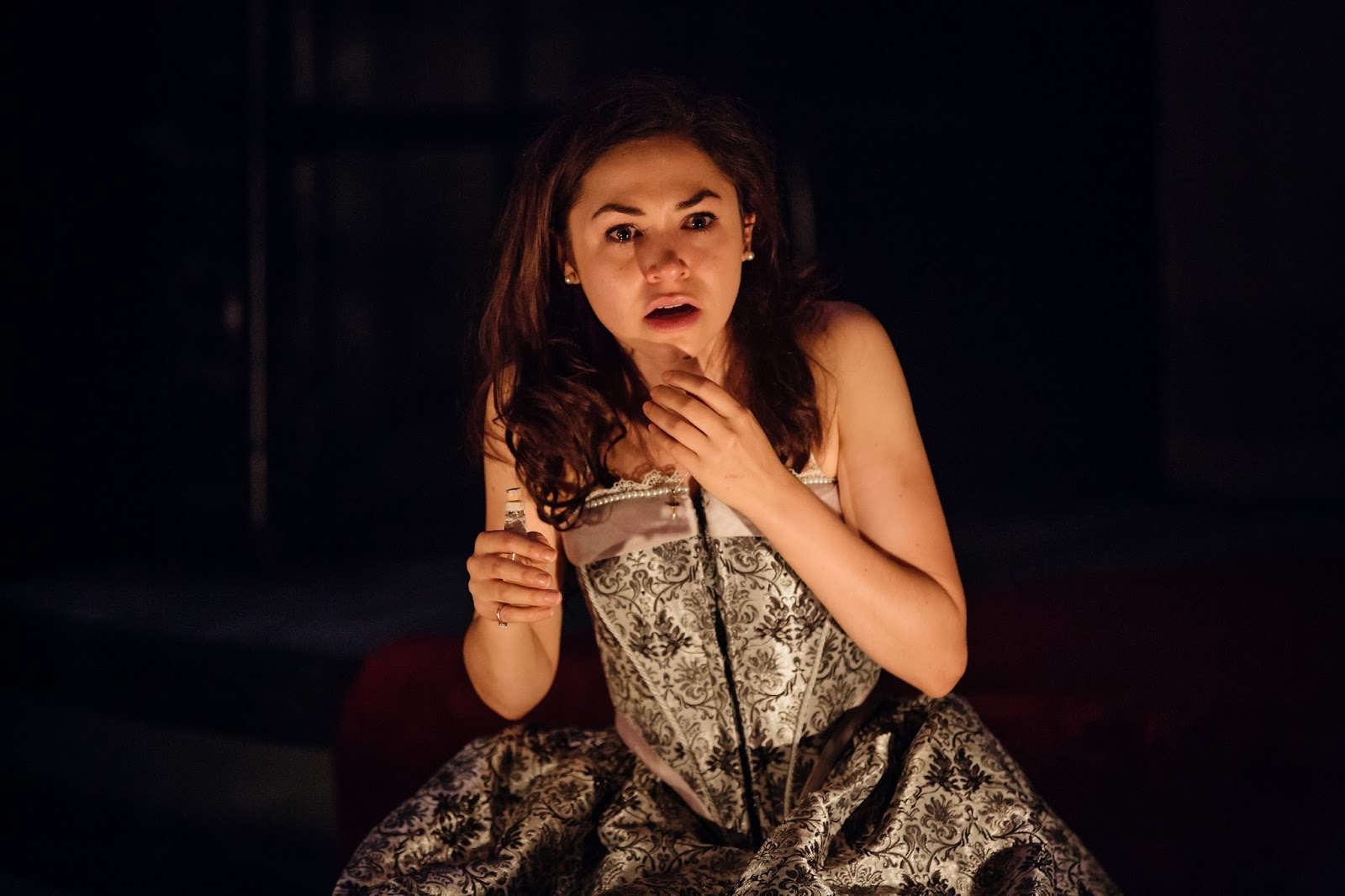
Thursday, April 7, 2016

Jack Biilmann and The Bronze Whalers

"The First Bite"

Transit Bar
1 April 2016
Reviewed by Samara Purnell  


Image by Davey Barber


Jack Biilmann and his band, The Bronze Whalers, made their way onto the Transit Bar stage to perform for the first time as a group. Looking all shiny and fresh in matching, striped, sailor-inspired t-shirts, they greeted the comfortably packed-in patrons: “What's going on motherf*ckers?!” Then launched into their first tune.

Complete with trumpet and trombone, The Bronze Whalers immediately established their modern, ska-imbued sound. This allowed speculation as to whether the name “Bronze Whalers” was at all inspired by Bob Marley’s band “The Wailers” or perhaps a nod to Biilmann’s roots in Pambula Beach.

The sound mixing and levels were spot-on and the band found a great balance between the brass, guitar, drums and vocals without overwhelming each other. The band regularly played with rhythm, as did Biilmann when performing a long solo segment. The solo may have been better broken up between numbers with the band or else shortened somewhat, given the vibe and sound between the two is quite different.

Biilmann recently supported Steve Smyth and the two artists were well matched. Biilmann’s solo songs feel perfectly suited to a laid-back roadtrip across Australia. He has impressive and expressive guitar playing and a deep, gravelly voice, readily comparable to Eddie Vedder. At times the band hinted at a Pearl Jam sound as well. Biilmann is a storyteller, so it’s unfortunate that at times his lyrics are lost due to his laidback twang.

“Forever Unbeaten*” is an original tribute to the late cricketer, Phillip Hughes, a song endorsed by the Hughes family. It would have had greater emotional impact with a more nuanced or poignant melody. “Old Tom” continued the sea-theme and is a grinding, bluesy song about the killer whale in the Eden Museum, and a highlight of Biilmann’s set. “Old Tom” segued into “Black Betty” with more playful rhythm changes. And, with a few medleys included during the evening’s set, Biilmann let loose with some of Lil Jon’s “Get Low”, almost as an “in-joke”, but in his stylised interpretation, not only was the song fun and catchy, he managed to make the explicit lyrics palatable. 

When the band rejoined Biilmann on stage, the polished sounding set kept the vibe light-hearted and the loose, rock-reggae rhythms that had had everyone up and moving from the start of the gig, kept them so until the final notes had rung out…

Monday, April 4, 2016

Romeo and Juliet - Bell Shakespeare


Review by John Lombard

While this is the story of doomed Romeo and Juliet - and that can hardly be a spoiler since the prologue tells us the pair will meet a sticky end - it is really the tragedy of Paris (Michael Gupta). Paris is Juliet's betrothed, the family friend who is unaware that Juliet has made a secret marriage to the scion of her clan's rival family. But Paris is far from repulsive: he's sensitive, passionate, handsome, and he seems to be completely devoted to Juliet. Juliet could have been very happy with him - if not for Romeo. But Juliet is 13, and at just the right age to risk her life for an intense infatuation.

Director Peter Evans' production of this well-loved classic is alive to the absurdity of Romeo and Juliet's spring romance. Rather than playing this as a passionate and destined love match, there is a wry humour at how fickle this hook-up feels  At the start of the play Romeo is sick with love to the point where his friends want him to just shut up about this girl who has bewitched him. But the girl who has captivated him is not Juliet but instead the unseen Rosaline. Juliet, far from his eternal mate, is fact his rebound. When within 24 hours they have sprinted from first flirtation to courtship to secret marriage, we feel the absurdity of what is happening - but we also realise that this madness is deeply truthful, because love really does make people ridiculous - especially when hormones are at fever pitch.

But despite the play's romantic reputation, this is equally a play about gang violence, with brawls between bravos from the warring Montagues and Capulets causing civic disturbance in Verona. Despite crackdowns from the authorities the young hotheads keep the fight going, eager to give and respond to insults (thumb-biting is particularly unforgivable). Anna Cordingley's Renaissance era costumes - a striking period departure for the relentlessly modernising Bell Shakespeare - deck the Montagues in cool blue and the Capulets in fiery red, a shorthand both for allegiances and for the temperaments of these two families. The famous love scenes are there (and a surprisingly high count of dick jokes), but there are also engaging and well-choreographed fights, in particular the artful duel between canny Mercutio and sword virtuoso Tybalt. The youthful energy even extends to the scene transitions, with actors bolting on and off with a pace that matches Romeo and Juliet's whirlwind romance.

Alex Williams as Romeo has wit and energy, conquering Juliet with his complete confidence and sense of purpose. The character is rash - his reaction to potential banishment is semi-hysterical - but Williams makes him likeable and sympathetic. As his Juliet, Kelly Paterniti exudes sweetness and straightforwardness, but as the play goes on has the opportunity for some moments of blood-curdling horror, in particular one monologue where she imagines what it would be like to be trapped within the family tomb. Her character is revealed by her domineering, horny and violent father Lord Capulet (Justin Stuart Cotta): stifling home life under this martinet makes wild rebellion more plausible.

But for a titular tragedy, the play is often dominated by its comic relief. Michelle Doake as Juliet's dotty, verbose, bawdy nurse gives us a performance as recognisable as it is ridiculous. But Damien Strouthos as the nonsense-spouting but resourceful Mercutio almost inevitably steals the audience's affection away from the title characters with in a resourceful and manly interpretation of the character. Fortunately Romeo has a little of his own lustre and is not smothered as Claudio is by Benedick in Much Ado About Nothing.  But even so: Juliet may have Romeo's heart, but Mercutio has the audience's.

Red vs. blue, light vs. dark, sex vs. death - this is a production of contrasts, with robust and ribald comedy paving the way for closing tragedy. For every sex joke there is a creepy moment, Mercutio's frippery giving way to a ghoulish, lamp-lit climax. Romeo and Juliet are the victims of their own reputation, dead lovers exhumed with such frequency that that they have become as dusty as a forgotten grave (cruelly, schools love to traumatise students with the hard labour of reading the text, when it only truly shares its delights in live performance). The necromancers at Bell Shakespeare have brought a dead classic to vivid life, exposing the freshness and vitality that was always buried just beneath the surface.

Sunday, April 3, 2016

Romeo and Juliet - Bell Shakespeare


Romeo and Juliet by William Shakespeare.  Bell Shakespeare directed by Peter Evans.  Canberra Theatre Centre Playhouse, April 2-9, 2016.

Designers: Set and Costumes – Anna Cordingley; Lighting – Benjamin Cisterne; Composer and Sound – Kelly Ryall; Movement and Fight – Nigel Poulton; Voice – Jess Chambers.

Cast
Romeo – Alex Williams; Juliet – Kelly Paterniti; Benvolio – Jacob Warner; Mercutio/Prince – Damien Strouthos; Tybalt/Apothecary – Tom Stokes; Lady Capulet – Angie Milliken; Paris/Abraham – Michael Gupta; Lord Capulet – Justin Stewart Cotta; Friar/Samson – Hazem Shammas; Nurse – Michelle Doake; Lord Montague/Peter/Friar John – Cramer Cain.

Reviewed by Frank McKone
April 2
All photos by Daniel Boud
 
Every time I see a new production of a Shakespeare play, I learn something new.  Peter Evans’ version of this ‘most famous’ play, Romeo and Juliet, tells me how important it is to set it in its own period – 16th Century Verona – rather than try to make it ‘modern’. 

It’s not that I disliked Kip Williams’ STC 2013 production (reviewed on this blog September 25, 2013), where Paris and Romeo in modern costume shot at each other with hand guns in a barely-lit Capulet mausoleum, looking rather like a tv crime fiction shoot-out in an underground car park or a decrepit old factory.  That approach made Juliet clearly into a symbol of modern feminism as her spirit rose to bring the scourge of family violence to an end.

But how wonderful it was to be immersed in the colour and grandeur of old Verona in Anna Cordingley’s design.  In this setting, Shakespeare’s play takes us back in time to show how modern his understanding was 400 years ago, and how important it is that we keep up our determination to emphasise love and equality over entrenched power and violence.  Oddly, staying true to Shakespeare’s original – itself a setting in a fictional and therefore symbolic Verona – deepens the emotional impact and the universal significance of his work.

After the show, Evans spoke of his realisation that Romeo and Juliet is Shakespeare’s most famous play – it’s the play almost everyone knows and quotes – and his fear that his production might not come up to expectations.  In thanking his team – cast, designers and crew – not only for the successful prior run in Sydney but especially for the extra week’s work in preparing the show for the Canberra Playhouse, he demonstrated in my view the very nature of the theme of the play – of working together.  I have a suspicion that Shakespeare would recognise Evans as a worthy colleague if he were here today.

Of the many qualities which stood out for me, I want to mention three.

First was the clarity of voice and interpretation of speeches, for which not only the actors but surely Jess Chambers must be praised.  The young characters in this play are energetic in the extreme and highly intellectual.  For a modern audience, their speeches can become an incomprehensible blurr of poetic or ironic words.  In this production, the welding of imagery and ‘chop logic’ into the emotional relationships was perfectly done, especially by Damien Strouthos as Mercutio and Kelly Paterniti as Juliet.

Damien Strouthos (Mercutio), Alex Williams (Romeo)
Kelly Paterniti (Juliet)


Then the movement and fight directing by Nigel Poulton not only gave us a sense of energy – especially through the highly realistic sword fighting scenes (perhaps not done so well before since the days of Errol Flynn) – but also providing the contrast needed for the ritual quiet sadness for the dead in the final scene – enhanced by Kelly Ryall’s sound design.


Damien Strouthos (Mercutio), Tom Stokes (Tybalt)

Alex Williams (Romeo)


Lastly, among the individual characters, the Capulet family held the play together. 

Alex Williams (Romeo), Michelle Doake (Nurse)


Michelle Doake’s Nurse was surely the funniest, certainly that I have ever seen.  Yet at no point was her character improbable, as she turned from being entirely engrossed in supporting her ‘baby’ Juliet to trying to persuade her to accept a marriage to Paris against her feelings.


Michelle Doake (Nurse), Kelly Paterniti (Juliet)

Juliet’s father, in Justin Stewart Cotta’s interpretation, became the epitome of autocratic power – true to his position in Shakespeare’s day – and yet with such an extreme reaction to the challenge represented by Juliet’s refusal to marry by his command – at the age of 14, mind you – that we could see the psychological failure in Lord Capulet.


Justin Stewart Cotta (Lord Capulet), Kelly Paterniti (Juliet)

His required social/family role was tearing him apart.  In other productions, I have seen Capulet as no more than a conventional father of his period, accepting his role as given.  Cotta gave us a much more complex personality, alongside his wife (Angie Milliken) – more  afraid of him than the teenager Juliet – who finally speaks over her daughter’s dead body “O me!  this sight of death is as a bell, That warns my old age of a sepulchre.”

And finally, there is Kelly Paterniti.

Kelly Paterniti (Juliet)


Although perhaps cast partly for her exqusitely tiny proportions which absolutely focussed our attention among all those tall very adult figures, it was her interpretation of Juliet, the young, naive, loving yet entirely rational teenager that held us in thrall in the first half.  Then, as her father’s implacable position sinks in, she grows up as a woman, independent and self-determined even unto her tragic conclusion.

Alex Williams (Romeo), Kelly Paterniti (Juliet)


Kelly Paterniti (Juliet), Alex Williams (Romeo)

Kelly Paterniti (Juliet)


If Peter Evans had worries about matching our expectations, he need be concerned no longer.

Sketches by Anne Cordingley


ROMEO AND JULIET


Written by William Shakespeare
Directed by Peter Evans
Bell Shakespeare Company
Canberra Theatre Centre – The Playhouse to 9 April

Review by Len Power 2 April 2016

One of Shakespeare’s earlier plays, ‘Romeo And Juliet’ continues to be one of his most popular.  It’s an accessible play with characters and situations that audiences down through the ages have been able to easily identify with.

Bell Shakespeare’s production, directed by Peter Evans, retains the Elizabethan style costuming but adds modern design to give the play a freshness and vitality.  The set design of elements of a traditional theatre surrounded by modern scaffolding reminds us constantly that we are watching theatre both old and new in style.  The actors play with the same old-new sensibility and it all works wonderfully well.

Performances by the cast are uniformly excellent.  As Romeo, Alex Williams is youthful, handsome and nicely captures the wonder of a young man swept up by first love.  Kelly Paterniti is a fabulous Juliet, modern, smart, mature for her years and yet retaining the last hints of the child she was.  Even though we know the story, the committed performances of these actors make the tragedy that befalls this couple intensely moving.

Damien Strouthos gives a great performance as Mercutio.  The comedy is there in his performance but underneath that are glimpses of an intelligent young man using humour to cover some personal demons.  Michelle Doake played the Nurse with a bustling wit that was very entertaining.  The reactions of the household members who’ve obviously seen her hysterical behaviour many times before was a clever touch.

Justin Stewart Cotta shines as Lord Capulet in the scene where he angrily rejects his daughter.  Tom Stokes gives a passionate performance as Tybalt and Hazem Shammas is memorable as the Friar, showing a very real horror at the events he has set in motion with good intentions going horribly wrong.  There were excellent performances, too, from Jacob Warner as Benvolio, Angie Milliken as Lady Capulet, Michael Gupta as Paris and Cramer Cain as Lord Montague.

The atmospheric set and period costume design by Anna Cordingley is very well done and is complemented by excellent lighting by Benjamin Cisterne and the music and sound design of Kelly Ryall.  Nigel Poulton staged the ferociously realistic sword fights.

Peter Evans has given us a memorable production of this great play and the style and clarity of the production would make it very accessible for less seasoned theatregoers, too.  If you’ve never seen ‘Romeo And Juliet’ on stage before, this is the one to see!

Len Power’s reviews can also be heard on Artsound FM 92.7 ‘Artcetera’ program on Saturdays from 9am.

Saturday, April 2, 2016

Playhouse Creatures - Pigeonhole Theatre


Review by John Lombard

As we know from Shakespeare, in England the theatre was once an all-male trade, with boys in frocks playing the female roles. Ophelia could be an apprenticeship on the way to Othello. The male monopoly only ended in the 1660s when Restoration monarch Charles II witnessed women on the French stage and was inspired to lift the English prohibition on female actors. At last, female parts could actually be played by those who lived female lives. If only those parts could also be written by women as well.

Playhouse Creatures could be an inspiring feminist tale, the story of those tough and determined women who broke into an all-male field and proved that they were the equals of any man. But with the gains of the feminist movement still centuries away, there is inevitably no happy ending here. The script draws parallels between the experience of the these early actresses and the bears who were tortured in that other great English recreation, bear-baiting: because they bleed, other people get fed. Tellingly, the best outcome is for the young actress who dives in, squeezes her sex appeal for all she can, and then gets out early.

Director Jordan Best sets the right tone of melancholy early with haunting music but maintains her trademark whip crack pace, bustling us through the story of five actresses, four of them based on actual historical figures and the fifth (Liz Bradley's Doll Common) a vulgar and very funny "Everywoman". There is aging diva Mary Betterton (Karen Vickery); proto-feminist Rebecca Marshall (Emma Wood); vain bombshell Elizabeth Farley (Jenna Roberts); and finally common, hungry, and talented Nell Gwyn (Amy Dunham), who with only a line in oyster sale patter is determined to learn some poetry and force her way onto the stage.

For Nell Gwyn, the theatre is a chance to move up in class: to dress nicely and have the adulation of a crowd, and even a shot at mixing with royalty. For Elizabeth Farley, a lower middle class woman adrift in the world after the death of her father, it is a desperate scramble to hold onto a last thread of respectability. The contrast between Gwyn and Farley drives the play, with Farley determined to secure her place in the world by obstructing all potential challengers. Jenna Roberts plays Farley as a cruel ingénue without the emotional maturity to deal with life's challenges, and strides over some moments of creaky outright villainy to create the maximum sympathy for her character. Amy Dunham meanwhile nails her character right from the get-go, giving Nell a bold and expressive physicality that shows her potential on the stage, then very gingerly sanding off Nell's rougher edges as she learns to mix with a wealthier class of people.

But the older actresses are the most interesting because they are the ones with the most passionate interest in their craft. Vickery's Mrs. Betterton is at the twilight of her career, with a last gasp at playing Cleopatra giving way to increasingly demeaning and worthless parts. But she endures because this is the only way she can live: if they only wanted her to play a tree, she would be out there rustling her branches to maximum theatrical effect. She is an enthusiastic giver of slightly eccentric acting lessons, and develops an interesting mentor relationship with Nell, the hot young stuff destined to take away everything she cares about. Mrs. Betterton, more than any other character, adores the nuts and bolts of acting, but lives in a world that cares more about the quality of a nice pair of legs than technical virtuosity.

Emma Wood's Rebecca Marshall, meanwhile, is the closest thing the play has to a modern woman: she visits salons, agitates for a share in the profits of the theatre, and can match any heckler's leer with her own library of impressively florid insults. Marshall is reaching for a richer, more stimulating and rewarding life than women are accustomed to, but when she is welcomed into the world she dreams of it is only as a curio, just another dancing bear. Marshall is tough and sometimes unkind, but as Wood plays her the character who has the deepest insight into how society uses and abuses her sex.

At times, the briskness of the action makes us forget the restrictive era the play is set in. Nell sees the theatre as her big chance in life, and we expect this to be a story about success against the odds, but as the play develops the brutal, sleazy realties of being a woman in Restoration theatre we realise that the fight has already been lost, at least in the lifetime of these women.  The goal is not a feminist victory, but simple survival. Then as now, men still get the best parts, with most female roles only props in someone else's story, and if pregnancy no longer automatically means a shift into prostitution, it can still end a career.


The play, then, is an argument for the company that has put it on: Pigeonhole Theatre declares that its mission is to provide "great roles for women on and off the stage".

Mrs. Betterton would approve.

Friday, April 1, 2016

Playhouse Creatures


Playhouse Creatures by April de Angelis.  Pigeonhole Theatre directed by Jordan Best at The Q, Queanbeyan Performing Arts Centre March 31 – April 9, 2016.

Set Design: Christiane Nowak; Costume Design: Anne Kay; Lighting Design: Kelly McGannon

Cast
Liz Bradley – Doll Common
Amy Dunham – Nell Gwynn
Jenna Roberts - Mrs Farley
Karen Vickery – Mrs Betterton
Emma Wood – Mrs Marshall

Dresser – Zoe Priest and Cellist – Jordan Best

Reviewed by Frank McKone
March 31

Praise all round for right choice of play, neat set design, very good directing and acting, nice lighting, and interesting musical accompaniment.  An excellent beginning for the newly-formed Pigeonhole Theatre “dedicated to providing professional productions with great roles for women on and off the stage”.

Though it was written more than 20 years ago, de Angelis’ story of some of the first women to be allowed to perform on stage – after the re-establishment of the monarchy in England when Charles II returned from exile in France – and  how Nell Gwynn famously became the king’s mistress, makes the play a relevant and in some ways a cautionary tale for modern feminists. 

The case for women’s right to live entirely as the equals of men (which in Mrs Betterton’s case, historically, included her taking over her husband’s role as manager of The Duke’s Company after he died) is plainly and powerfully made. [eprints.uwe.ac.uk/15430/1/April_de_Angelis,_new.doc]

But the insulting and degrading treatment by the Duke of Oxford’s men of direct no-nonsense women like Mrs Marshall, and the women’s need to compromise – for example, by attempting to abort Mrs Farley’s pregnancy so that she could keep her job as an actor (and the fact that when this failed, Mrs Farley had to abandon the child and become a prostitute to earn a ‘living’) is a warning for us that issues of violence against women and of discrimination are still with us today despite nearly four centuries of ‘progress’ and developing ‘freedoms’.

Even in modern, erudite, literate and politically aware Canberra / Queanbeyan.

Though this aspect of the story is uncompromising, even apparently unpromising as enjoyable theatre, Jordan Best and her team of actors and designers present us with the positive side – that is, the commitment and enjoyment of being actors and theatre makers.  This is the connection between those five women from the 1660s and all of us involved in theatre today.  Doing theatre is about having fun, however serious the theme of the story may be.  It’s about close, intuitive communication on and off stage.  It’s about a special kind of freedom in your relationship with – to and from – your audience.  You have power as an actor, but you have responsibility to perform with sincerity and integrity.  Then your audience will respond in kind.  This is what Nell Gwynn has to learn – wants to learn:  and Amy Dunham takes us with her through Nell Gwynn’s experience.  Not as an individualist, not as a ‘star’, but as one of a team of equals.

The set shows us, in an open wooden framed structure, both the dressing room below and the stage above – simple, so practical, so evenly flowing from scene to scene within the theatre; and with a small low podium to one side on stage left, in a spotlight, for the outside street scenes.  Opposite is the solo musician, playing cello, as if in the street but not as a busker:  she is a soloist in an invisible orchestra, carefully balanced in the mixing with recorded sound.

The costumes take advantage of all the flamboyance of the Restoration period, in such contrast to the long decade of Puritanism after the beheading of the king, Charles I, in 1649.

Though not a ‘rich’ production, and so perhaps not seeming as ‘professional’ as a large mainstage company may present, Pigeonhole Theatre’s Playhouse Creatures has the sense of direction, the sincerity of purpose and the integrity essential to good theatre.  That’s professional enough for me.

PLAYHOUSE CREATURES


Written by April De Angelis
Directed by Jordan Best
Pigeonhole Theatre Company
Q Theatre, Queanbeyan to 9 April

Review by Len Power 31 March 2016

This play, ‘Playhouse Creatures’ is set in 1669 in England after Charles II decreed that men were no longer to play the roles of women on stage.  On the surface that seems to be a great time for women so long denied the chance to act.  The reality is that women found it to be a precarious occupation only one step away from prostitution and poverty.  Focussing on five of the most famous actresses of the time, including Nell Gwynn and Mary Betterton, the play doesn’t flinch from showing what it was probably like behind the scenes.

Jordan Best, the director, has done some of her best work here with a strong production that works on all levels.  Played on a split level set well-designed by Christine Nowak and lit by Kelly McGannon, the atmosphere of a Restoration era theatre is nicely captured.  The music score by Matthew Webster is hauntingly beautiful.

There are great performances from the entire cast.  Amy Dunham as Nell Gwynn is superb as the rough young girl who wants to be an actress.  Her transformation to a beauty desired by a King is expertly done.  Karen Vickery gives a highly detailed and very real performance as the reigning queen of the theatre, Mary Betterton.  Jenna Roberts plays her role with a delicacy and fragility that is heart-breaking and Emma Wood gives a grand performance both humorous and sad.  Liz Bradley is nicely tough and funny as Doll Common and expertly delivers some of the best lines in the show.

The period costumes by Anne Kay run the gamut from rags to riches and all are nicely designed and suit the actresses very well.  Penny Vaile has done an excellent job, too, with the period hairstyles.

There are two major reasons to see this play.  It tells a fascinating story about an important time in theatre history and it’s an opportunity to see some of Canberra’s top actresses giving extraordinary performances.

Len Power’s reviews can also be heard on Artsound FM 92.7 ‘Artcetera’ program on Saturdays from 9am.