Showing posts with label Canberra. Show all posts

Wednesday, July 9, 2025

Fotoheide - A Photographers Tale

Photography Book Review: Brian Rope

Fotoheide - A Photographers Tale - The remarkable career of Heide Smith I Brian O Smith

Cover design by Nector Graphic Designs

Printed in Australia by Clark Mackay

ISBN: 978-0-646-71168-3

Cover of Fotoheide - A Photographers Tale featuring Heide Smith’s 1991 portrait of Josef Gross, an English journalist and photographer

Fotoheide - A Photographers Tale is a book which all Australian and German photo enthusiasts should have in their collections. It is about the career of Heide Smith Photographer, known in her birthplace, Germany, as Fotoheide. The book’s introduction uses various words to describe that career – remarkable, extraordinary, fascinating. Whilst the book’s author is the photographer’s husband Brian Smith, each of those words definitely are fitting.

How do you present a photographer’s career which began in 1959 and has continued ever since? A career during which she has published eleven books, given workshops and seminars to professional and amateur photographers all over Australia and in six other countries, and judged regularly for various groups, including the Canberra Photographic Society. This book attempts to show that career in a little over 200 pages. There is a 2 pages introduction followed by 32 chapters, each of which comprise just one page of words followed by a relevant set of black and white images. We do not see any of the photographer’s colour images in this publication.

The first chapter shows us just three family images, including the photographer’s first portrait of Uncle Albert – taken in 1951 when she was just thirteen and her career had not commenced in the true sense. Then there are chapters about learning to be a photographer, and marriage, motherhood and migration, which set the scene for the diverse career that was to follow.

Uncle Albert 1951 © Heide Smith

Along the way, the book looks at Australia and Germany (revisited). At industry, government, tradesmen, churches and churchmen, Black Australians, the Canberra Raiders rugby league players, timeless beauty, Cambodia, oyster farmers and much more. The subject matter is diverse. The quality of all the included images is top class.

The words provide key facts about the numerous elements of the fascinating career. So many portraits of famous people, but also many of ordinary folk at favourite outdoor locations or in their own homes. The story of the Pegasus Riding School for the Disabled in Canberra. Two trips to Cambodia when roadsides were booby trapped, the countryside was littered with thousands of landmines, and trigger-happy guards manned roadblocks. 

Hidden burial ground, 1993 © Heide Smith

The Smiths had a difficult task selecting the images used in the book from the many thousands available to them. Choosing just a few from those they selected to illustrate this review was also challenging.

A chapter about the Tiwi people contains just seven of the thousands of images made during Heide’s adventures with those islanders. All seven feature people – young and old. The photographer herself is in two of them; one with her two Tiwi sisters. One is a most delightful casual study of four little children.

Four Little Tiwi 1988 © Heide Smith

Another great shot in the same chapter provides just a glimpse of the island lifestyle.

Barney’s Homeland, 1988 © Heide Smith

A chapter about Canberra includes a variety of excellent images – amongst them the jetty at Acton where the old hospital was, scenes of Lake Burley Griffin, and the old and new Parliament Houses. That is followed by a chapter titled Canberra Studios. It tells readers about Heide’s first Canberra book I Love Canberra, a copy of which is on my bookshelves. And about some of her major exhibitions, such as Portrait of an Industry – Australian Photographers. The photos illustrating this chapter include events, wedding portraits and some great fun shots.
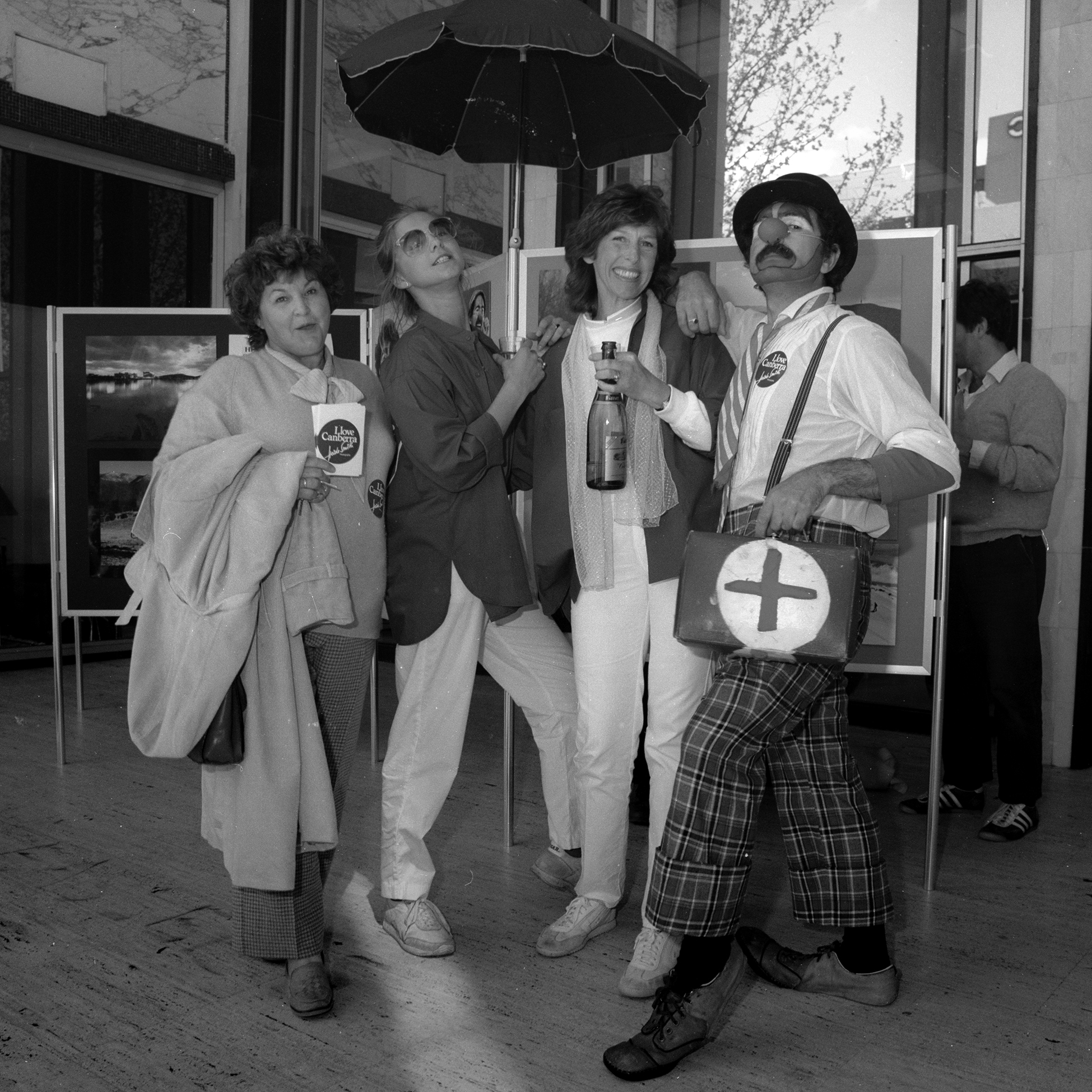
Ingrid, Irene, Lyn and clown, 1983 © Heide Smith

Other wonderful images in the book include a fun selfie shot with Heide’s team at a seminar or workshop in Hong Kong, and one of a cow in a shop in Varanasi (a scene I’ve experienced myself in India).

Heide and her team in Hong Kong © Heide Smith

A shop in Varanasi in 2009, Holy Cow! © Heide Smith

Finally, I must mention the last of the artist’s images in the book. It is one of her excellent coastal landscapes that she continues to capture where she and the book’s author now live.

Stormy Weather Tuross Head 2021 © Heide Smith

Following that, the penultimate chapter, Hidden Treasures, is about various vintage prints discovered long after they were made. And the final chapter has no photographs. Rather it is words from a few of many reviews of Heide’s photographs and books over the years of her career. They wonderfully illustrate the way individual people, newspapers and magazines, and industry groups have responded to this artist’s remarkable career. Professor Manning Clark, an Australian historian and the author of the best-known general history of Australia wrote “this book is a delight to the eye.” So is this book.


A shorter version of this review has been published in Canberra City News here. The version published here is also available on the author's blog here.


Monday, June 30, 2025

A South Coast Selection

Visual Art Exhibition Review | Brian Rope

A South Coast Selection | Heide Smith

Basil Sellers Exhibition Centre (BAS), Moruya | 28 June - 26 July 2025

Heide Smith (then Soltsien) trained, then worked, as a photographer in her native Germany. After meeting and marrying Brian Smith, a British Army officer stationed in Germany, she continued working as a photographer – initially in Britain and Europe then, following migration, in Australia. She worked in Canberra from 1978 to 1998, then on the NSW South Coast. This photo artist’s own website quotes her as saying she believes that “Once a photographer, always a CAMERA WOMAN.”

I’m not sure when I first met this renowned photographer, but I still have my jotted notes of her helpful comments whilst judging the entries (including mine) at a Canberra Photographic Society competition in July 1986. “If the lighting is very contrasty, slightly overexpose then underdevelop with good agitation” and “For portraits, light up the shorter side of the face.” Of course, to follow her first piece of advice in those words, we need to be shooting film and processing it in a darkroom.

From 1984 to 1996, Smith was the official photographer for the National Press Club in Canberra. Working from an office in the Club’s building during four of those years, I attended various events and observed her photographing their high-profile speakers, including politicians, ambassadors, artists and actors. People such as writer and journalist Phillip Adams, the head of the International Atomic Energy Agency Hans Blix, US President George Bush Senior, philosopher and political activist Noam Chomsky, actor Audrey Hepburn, and His Holiness the Dalai Lama.

Smith is best known for her meaningful portraits and documentary-style photography, capturing the authentic essence of people and places. Her most iconic works include a culturally significant series documenting the Tiwi people of Northern Australia, and extraordinary images of Cambodia as a country in transition. And an extensive visual chronicle of Canberra, including her 1991 portraits of Canberra Raiders as a fundraising venture for the then financially struggling Rugby League club.

Throughout her career, this artist has published eleven books, held numerous exhibitions, and received prestigious accolades, including an Honorary Fellowship and a Fellowship from the Australian Institute of Professional Photography. Many Canberrans, myself included, purchased copies of her five books about Canberra. The final one A Portrait of Canberra and Canberrans 1979-2012 was published to celebrate Canberra’s Centenary, is one of only two of her books still available for sale in her bookshop. The other available for purchase is Portrait of a People – the Tiwi of Northern Australia.

A black square with red text

AI-generated content may be incorrect.
Screenshot taken from https://heidesmith.com/canberra-collection/

Her new exhibition, A South Coast Selection, showing at the Basil Sellers Exhibition Centre in Moruya, highlights Smith’s deep relationship with the south coast of New South Wales (Australia) where she has lived since the late 1990s. Her images allow visitors to absorb the area's unspoiled beauty, uniqueness, and sense of community. Every one of them displays her characteristically warm and clear style, whether it be a personal portrait or an expressive landscape.

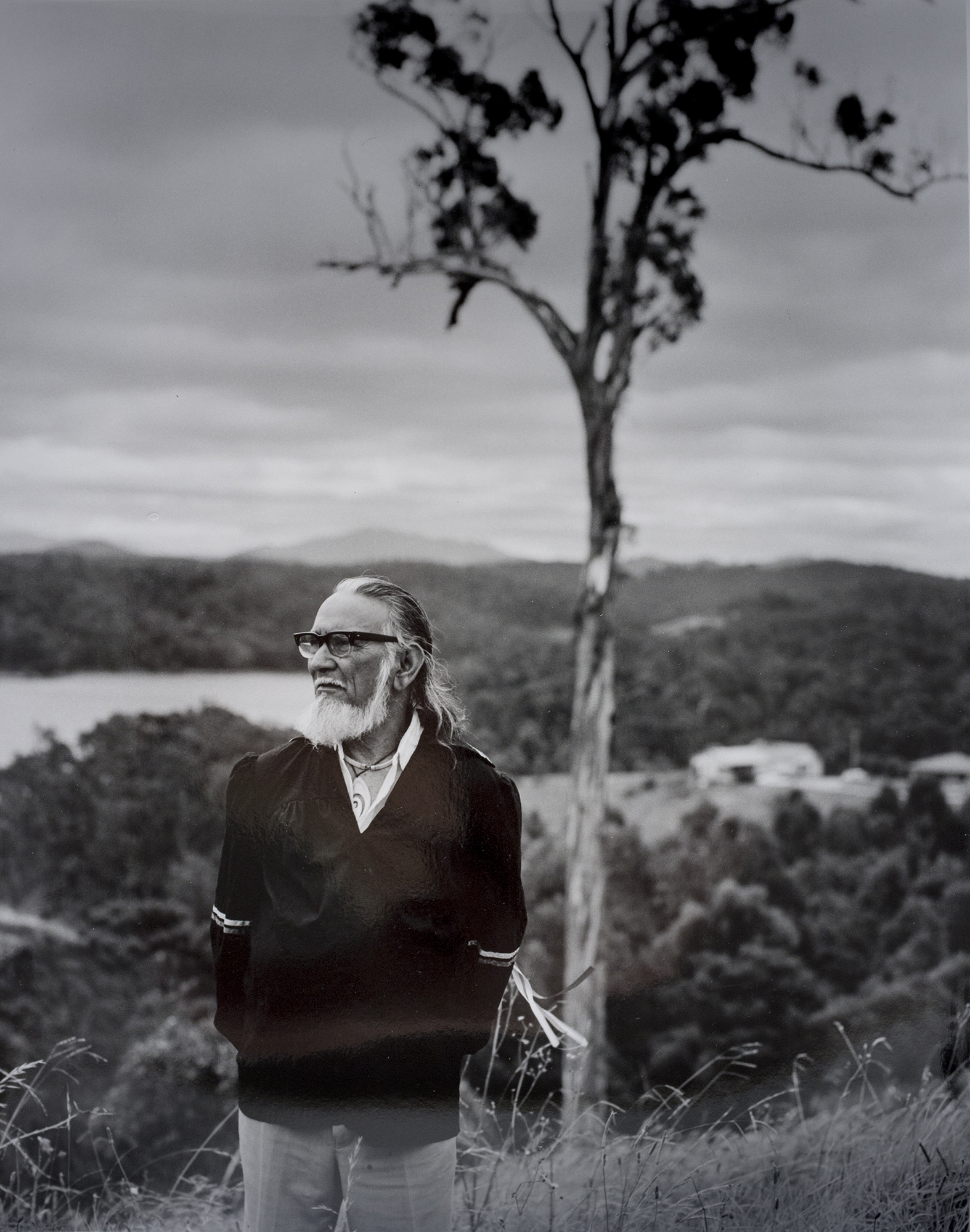
It is more than a showcase of images - it’s a celebration of place, people, and the timeless ability of photography to tell stories of importance. Stories of the coastline itself, but also of the ranges and forests which provide its backdrop. Places such as the much-loved Gulaga, sacred mountain for the Yuin people, being severely damaged by bushfire. Tranquil afternoon reflections amongst forest and mangroves at Hobbs Point. Fabulous pelicans on Coila Beach. A stunningly red sunset on Lake Wapengo. And glorious mist amongst the forest at Belimbla. Then there are stories of some most interesting people such as the late architect and photographer Bruce Loder, and Guboo Ted Thomas - land rights activist and a tribal Elder of the Yuin nation who grew up on the Wallaga Lake Reserve near Narooma.

Gulaga Burning, 2009 © Heide Smith


Belimbla, 2004 © Heide Smith

Lift Off at Tuross Coila Beach, 2018 © Heide Smith

Wapengo Red, 1986 © Heide Smith

Bruce Loder, 2004 © Heide Smith

Ted Guboo Thomas, 1986 © Heide Smith

There are 43 framed prints on display, all printed by Smith, plus a 27 minutes video introduction to the new book launched at the opening of the exhibition. FotoHeide A Photographer’s Tale, by husband Brian, is the story of Smith’s remarkable career. It will be the subject of a separate review.

This review is also available on the author's blog here and in The Printer here. A shorter version has been published on the Canberra City News website here.

Saturday, May 7, 2022

Lifetime Book 1. Coming of age

Photography Book Review | Brian Rope

Lifetime Book 1. Coming of age | Greg Dickins

There have been various photo-books published about Canberra. Heide Smith published five of them about the city and its people between 1983 and 2012. Col Ellis published one in 2014 - providing tips and tricks for aspiring photographers, as well as creating a memento for expatriates and visitors. And I provided all the images for a 1990 book introducing Canberra to thousands of visitors shown around by local tourism company Hire-A-Guide.

However, I doubt that three independent photo-books about the city have previously been launched simultaneously. But now we have three which all examine Canberra as a place of social, cultural and political significance. Each explores the personal relationships of their photographers to the city. Each also looks at the national capital’s wider, public meaning.

One of them, Life-Time Book 1. Coming of age, is the first in a planned series of five photo-books by Greg Dickins. It catalogues his life in Canberra between 1967 and 1973, focussing on his experiences of childhood, school, university student revelry and family intimacy -  against the backdrop of anti-Vietnam War protests and rallies to establish an Aboriginal embassy. His planned later books will cover the years to 1987, after he left Canberra.

Dickins has spent his working life as a journalist and media consultant but has always had a passion for photography. He picked up a 35mm SLR camera as a teenager in the late 1960s - that time of great social, political and cultural change. Since then he has maintained a permanent darkroom, working mostly in black & white.

As a record of Canberra the way it looked and felt fifty years ago, this volume reveals something of the extent to which the city has evolved and changed through time. In his introduction, Dickins identifies his first dilemma as author of a book of photographs – “What do I have to say?” His response was that he needed to narrate a story linking the pictures and explaining their inclusion. So, he shows us what he saw and hopes we will see his take on what his images mean - or meant at the time.

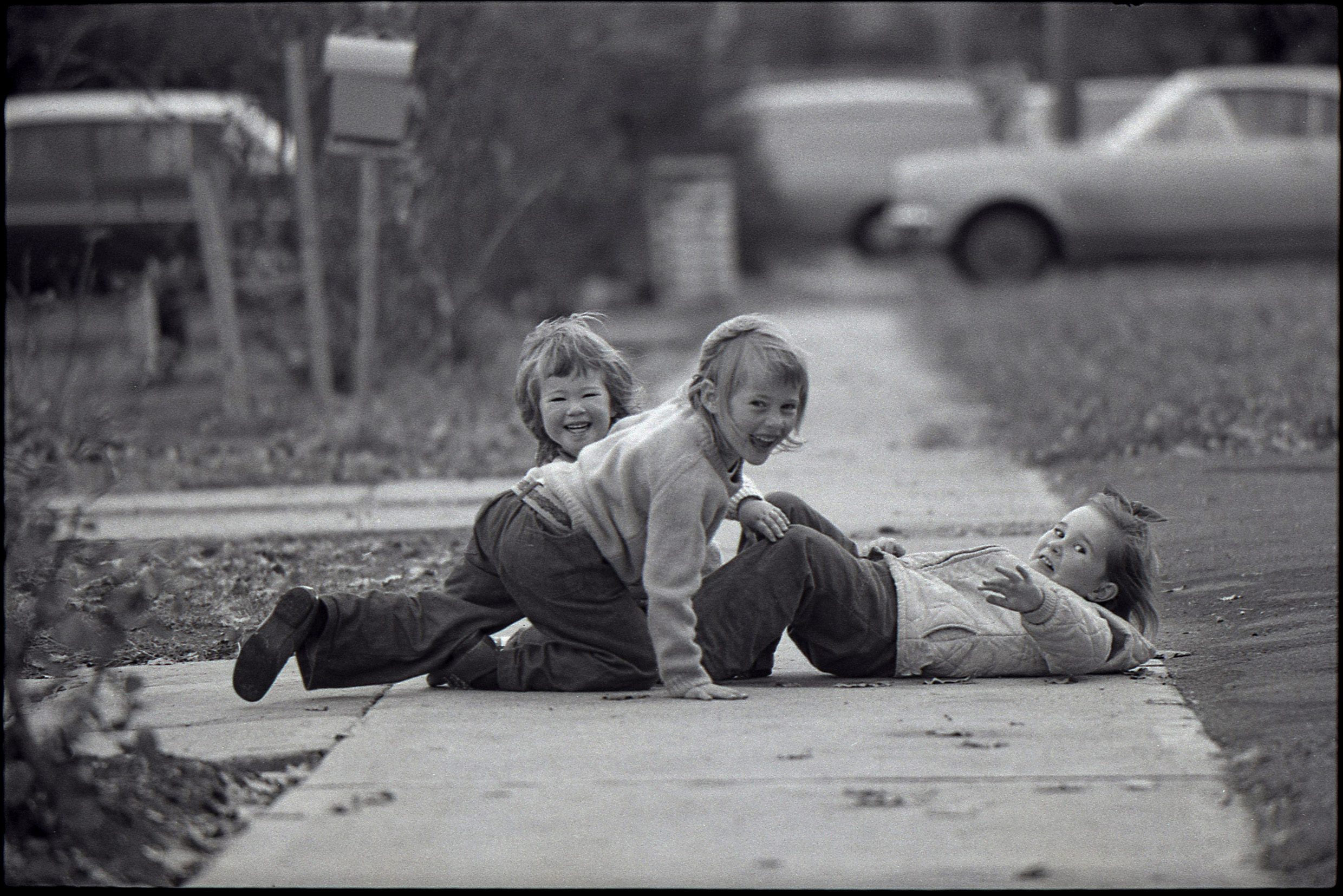
So, how well has the author achieved his purpose? The childhood section includes some delightful images of youngsters doing the types of things all children do – playing with balloons - and something home-made, rolling about together on the ground, and painting at kindergarten.


Jane, Tricia & friend, June 1973 - Greg Dickins

They are also shown gesturing, laughing, and even looking like Winston Churchill. Some adults also make appearances with the children. These photos clearly represent what childhood meant for the majority of kids in Canberra at that period.

Dickins then moves on to school years. He shows us school-age children playing in the Cotter River, waiting for the school bus, in marching girl outfits, together on a sandy beach, and enjoying Canberra Day.


Di, Paul, Kyle & Judy, Casuarina Sands, November 1967 - Greg Dickins

Perhaps of greatest interest are the strong images of schoolchildren participating in an anti-Vietnam War march and rally in September 1970. Are their counterparts protesting today aware their counterparts did the same?

Next the book explores university student years – speakers’ corner (who remembers that?), rugby, drama (including a nude poetess and a production of Marat Sade), the first on-campus condom vending machine, Bush Week activities and conscription notice burning. Plus a 1972 march to establish the Aboriginal Embassy and, again, an anti-Vietnam War march and rally. A number of well-known people appear, including two political leaders. There are some great historical shots here.


March to establish the Aboriginal Embassy, July 1972 - Greg Dickins

The final three images about family neatly close off what Dickins wanted to say. He has successfully narrated his story.

The book can be purchased at Photo Access or online at https://au.blurb.com/b/11093552-life-time-book-1-coming-of-age-large-12x12.

This review is also on the author's blog here. Another version was published in the Canberra Times on 7/5/22 here as part of a combined review of this and the other two book launched at the same time.
Monday, November 29, 2021

RECOVERY

Photography | Brian Rope

RECOVERY | Various Artists

ANBG Visitors Centre Gallery | 25 November – 12 December

Recovery is the eighth annual photographic exhibition by the Friends of the Australian National Botanic Gardens Photographic Group.

This year there are four categories of images. Firstly, there are plant portraits of a single plant, or group of primarily the same species. Then there are wildlife images (in the Gardens, but also outside due to access restrictions this year). Next there are creative compositions of banksia plants in recognition of Joseph Banks’ visit to Australia and the new banksia garden. And, to complete the show, images of rare, threatened or endangered plants. In total there are forty-eight prints by twenty artists, all framed in a light-coloured timber and, so, the overall exhibition looks cohesive.

The exhibition successfully displays in print aspects of our beautiful natural environment through the camera lens - and on screen with revolving images of plants, birds and animals in the ANBG.

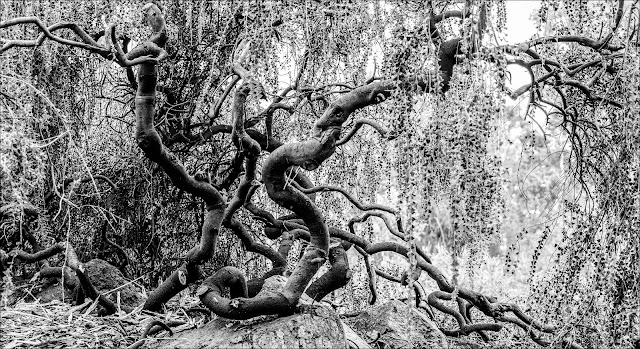
There are just three monochrome prints on display, all by the same author - Ulli Brunnschweiler. They stand out amongst the colour works, not just because they are black and white but also because they are quite lovely works each showing plants (plural). In particular, Acacia pravissima, hung at the top of the three works here is just delightful. Commonly known as the Ovens or Tumut wattle, this is an acacia with which we are all familiar. But generally, we see it in yellow and green.


Ulli Brunnschweiler - Acacia pravissima

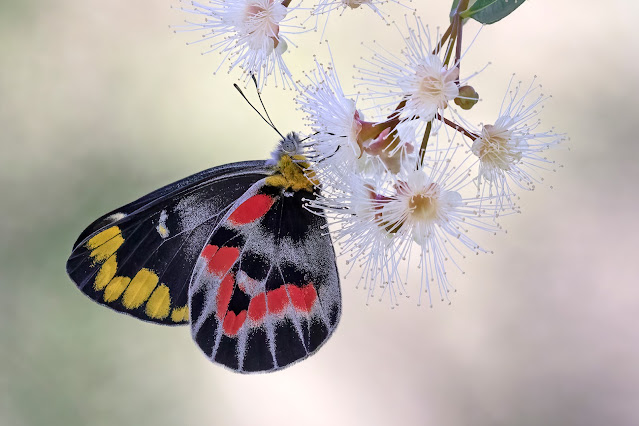
Amongst the colour works the standouts for me include David Bassett’s Feeding Gang-Gang and Imperial Jezabel. This Queanbeyan author’s nature imagery – indeed all his varied artworks - are consistently excellent and these are no exception.


David Bassett - Imperial Jezabel

Local professional and photography teacher Irene Lorbergs has contributed several fine prints - Honeyeater and Macrocarpa, Bee and Flower, and Banksia. The latter is suggestive of a delicious tasting cupcake.


Irene Lorbergs - Banskia

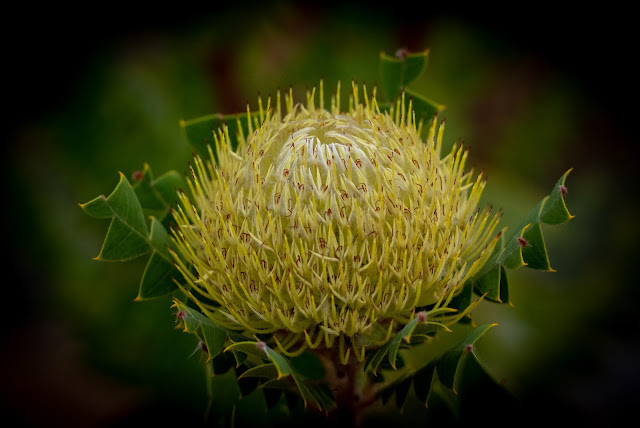
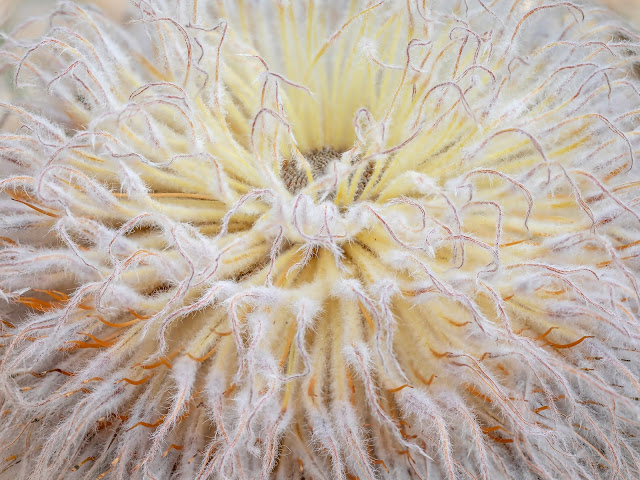
Pam Rooney’s winning Woolly Banksia image superbly displays what can only be described as delicate tracery.


Pam Rooney - Woolly Banksia

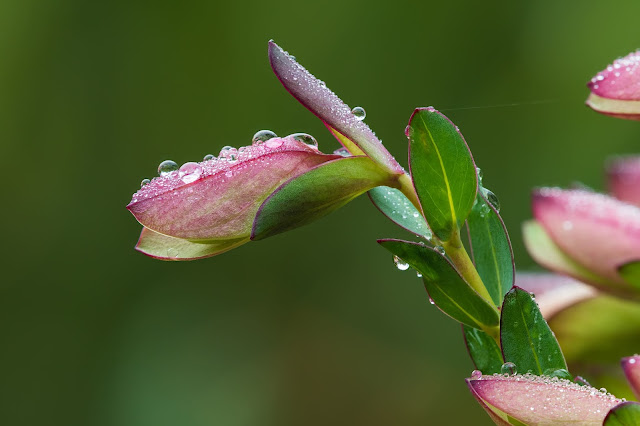
Bill Hall’s vulnerable Thick-lip Spider Orchid shows great detail and makes excellent use of complementary colours. Steve Playford’s Bejeweled Qualup Bell does the same with virtually identical colours.


Bill Hall - Thick-lip Spider Orchid


Steve Playford - Bejeweled Qualap Bell

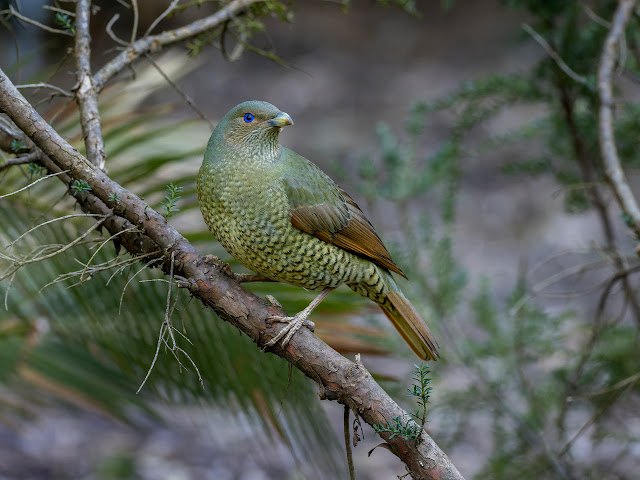
Graham Gall’s Juvenile Male Satin Bowerbird shows the bird’s soft, mostly green and brown, colours amongst similar greens and browns of the foliage. The rich blue of the bird’s eye is striking and commands attention.


Graham Gall - Juvenile Male Satin Bowerbird

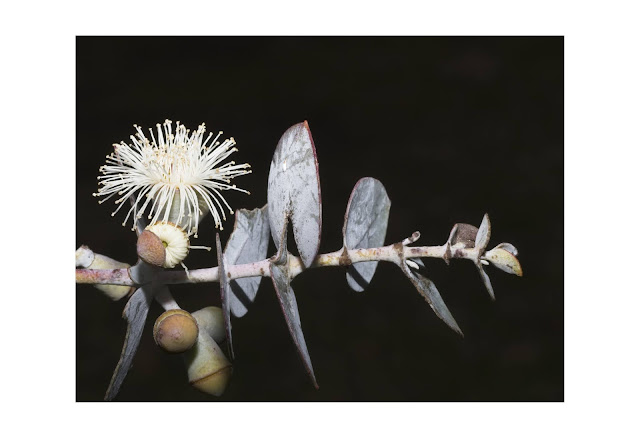
Jim Gould’s Baby Blue Flowers is a visually pleasing selection of a small piece of a silver-leaved mountain gum, clearly showing viewers how its flowers bud in groups of three; white flowers and cup-shaped to cylindrical fruit.

Jim Gould - Baby Blue Flowers

All the prints are worthy of close examination, and I encourage readers who can do so to visit and see for themselves.

Both framed works and unframed prints are for sale. Unique gifts of cards, calendars, photo bags and more are also on display and available for purchase. A percentage of sales go to the Friends for projects in the Gardens.

Visitors can also check out the 2022 Calendar that is available in the bookshop; all images produced by the Photographic Group members.

The exhibition supports and raises awareness of the aims and values of the ANBG and highlights the Gardens’ wide-ranging diversity of flora and fauna through the medium of photography. The participating members of the Photographic Group should be pleased and proud of their contributions.

Any reader who would like more information on the Photographic Group should email photo@friends.org.au. The Group encourages potential speakers and new members.

This review is also on the author's own blog here.