Sunday, January 24, 2021

Kenny - on stage


Kenny adapted for stage by Steve Rodgers from the movie Kenny (2006) by Clayton and Shane Jacobson.  Ensemble Theatre, Sydney, January 15-27, 2021.

Reviewed by Frank McKone
January 23

Solo Performer – Ben Wood as Kenny Smythe

Director – Mark Kilmurry    Assistant Director – Warwick Doddrell

Designers:
Simone Romaniuk – Set & Costume
Damien Cooper – Lighting
Nate Edmondson – Composer & Sound
Mic Gruchy – Video

Photos by Prudence Upton

I arrived early, knowing everyone had to QR Covid check-in.  With time to spare, keeping my distance, I took a turn outside.  A pleasant cool sea breeze – Ensemble was once a boatshed – and a surprising announcement.  Welcome to IPSC, the International Portable Sanitation Convention.  Woops!  Isn’t Kenny on after all?

Ben Wood  as Kenny
Ensemble Theatre
Photo: Prudence Upton

Even more surprising when I find after the show that SPLASHdown Corporate Bathroom Rentals is real, and are given special thanks for their expert assistance. 
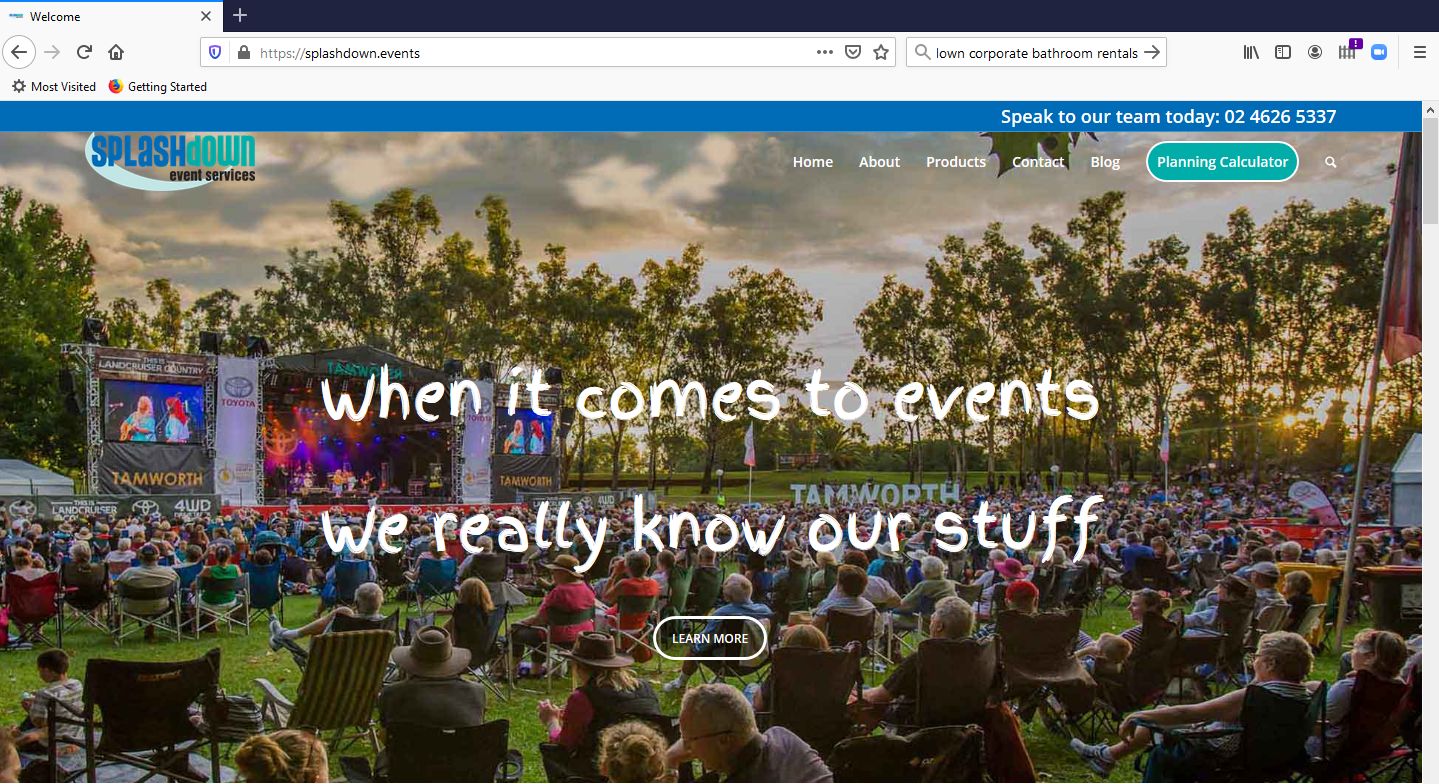
I guess that was for providing the portable toilet that Kenny persuaded an audience member, Paul, to put his arm down.  He had to retrieve the big stuff first – a bottle of wine as a reward for his bravery – until he found the wedding ring, just like the one Kenny had had to retrieve in his story of the woman who lost hers down the toot – and then couldn’t touch it, even though he sterilised it, until he wrapped it in toilet paper, leaving without thanking him because she couldn’t stand his smell.

We were, of course, all attending the IPS Convention.  Kenny was certainly the most entertaining keynote speaker I’ve ever come across.  In fact he came across as among the most humane and sincere.  

I have never seen the movie, I think fortunately.  In this adaptation, where Kenny tells us all about his experiences, and even his personal and family responses, in professionally providing and servicing portable toilets to large gatherings around the world – rather than our being voyeurs watching a movie – it seemed to me that Ben Wood was the real deal.  

At the end of this comedy with serious implications, I felt as much respect for the plumbers on whom we all rely – and for all those other frontline workers we have all become so suddenly aware of through this pandemic – as I felt for the actor.  Wood’s representation of all the layers of Kenny’s emotions, second by second, as he works directly with us as participants, was quite extraordinary.  When he showed us the slide of the women toilet cleaners – the Untouchables, of course – in India, I felt as everyone did around me, for their awful plight, with a sense of guilt for our easy lives.  Then, I realised, that Sulabh International, to whom Kenny asked us to consider donating, is real.

Sulabh International “is an India-based social service organization that works to promote human rights, environmental sanitation, non-conventional sources of energy, waste management and social reforms through education. The organization counts 50,000 volunteers.”  Suddenly Kenny and Ben Wood are one.  The fiction of theatre becomes real in the world.  [en.wikipedia.org/wiki/Sulabh_International]

I have noted before the work of Steve Rodgers in working directly with his audience in Duncan Macmillan’s Every Brilliant Thing at Belvoir (reviewed on this blog January 12, 2020) and I’m sure I see a link when Kenny gives out cards recording children’s responses to the question “What do you want to be when you grow up” for people in the audience to read out.  When it is revealed that none of them wanted to be a plumber, the point is made about dignity of the person and dignity in their work.

So this production of Kenny is both highly entertaining, as I’m sure the movie is, but even more engaging because of our personal interaction with Kenny’s very-Aussie character full of positive humour and because we become committed to humanitarian ideals like those of Sulabh International.

When I say “not to be missed”, I really mean it.  And am I glad to be back in a live theatre!

Ben Wood as Kenny
Ensemble Theatre
Photo: Prudence Upton


Saturday, January 23, 2021

Australian Dreams: Picturing our Built World


Visual Arts | Brian Rope

Various Artists | Australian Dreams: Picturing our Built World

Exhibition Gallery, National Library of Australia | Until 31 January 2021

Australian Dreams: Picturing our Built World shows how visual artists have documented and interpreted Australia’s buildings for over 200 years. The works are exclusively from the National Library’s extensive collections and include many of our best artists; those whose names and images are known by all art lovers, some less familiar.

Entering the gallery, I was immediately immersed in a stunning photo wall of 48 images, selected from the vast 25,292 collected for the Regional cities and major towns project, which documents the architecture of hundreds of Australian towns. There is a dark moody image of the closed railway station on the Kulwin line in Wycheproof. And there’s an image of Toowoomba’s closed Camera Obscura – how many remember sitting inside as the cylinder wall rotated noisily and you saw significant buildings below in the ancient crater where the city is situated?

Inside the gallery, there are many more wonderful photos, prints, drawings and paintings. Captions are not needed for famous buildings, such as Canberra’s Shine Dome and Parliament House but, for most of us, are necessary for a Surry Hills street, a deserted farmhouse on the outskirts of Maitland during the major flood of 1955, a home by Lynchford railway tracks, a scarred tree in the front yard of a suburban Canberra house, and a miner's hut in Lithgow Valley.


A miner's hut, Lithgow Valley, New South Wales, ca. 1885 © Charles Kerry

There are other delights in display cabinets - contemporary photo books documenting Oxford Street, Masters stores, and ordinary homes. How I longed to pick them up and turn their pages! There is a slide show from Wes Stacey’s archive - homesteads, timber buildings, and the architecture of historic towns and settlements.

Visitors to the exhibition explore the colonial era, when European artists produced paintings, prints and photographs of streetscapes and major public buildings in the new cities and towns, and on frontier properties. Conrad Martens’ striking watercolour of Craigend in Sydney is a feature.

Then we see the first decades of the twentieth century, when artists such as photographer Harold Cazneaux and wood engraver Lionel Lindsay created romantic images of old Sydney, the bush and grand colonial buildings. These images were influenced by the revival of etching in printmaking and a more impressionistic approach to photography.


Going home, Doohat Lane, North Sydney, New South Wales, 1910 © Harold Cazneaux

Later, modernism began to dominate - whether the subjects were post-war architecture or familiar old streets. We see compositions utilising strong contrasts, sharp forms and lines. Olive Cotton’s Fire Escape clearly displays her techniques as expressed in a 1938 magazine interview: “The lighting, the relation of the various objects to the shape of the picture, and many other factors can be changed by the individual, and this is where discernment and personality come into the picture.”


Fire Escape c.1935 © Olive Cotton (1911–2003)

The final images in the exhibition demonstrate how many of these artists found something compelling in buildings where ordinary lives played out, in various states of use, disuse, demolition and destruction. They also created images communicating why buildings are worth seeing and saving.

William Yang, a third generation Australian Chinese, has developed an international reputation as a photographer and performer. His art is about the telling of stories, often writing words on the surfaces of his prints, as in his image of Canberra’s School of Art after a hailstorm in 2007.


Hail #5, School of Art, 2007. From the series - Breathing the Rarefied Air of Canberra
© William Yang

Other great images that appealed to me were Maggie Diaz’s Higgins Boys, Charles Bayliss’s Sydney Technical College Building Exterior, Wolfgang Sievers’ Olympic Swimming Pool, and John Bertram Eaton’s Steps in a Courtyard. Go see for yourself and think about what other buildings are worth going to see again or should be saved for future generations.


Sydney Technical College Building Exterior, 1889, 2 in Photographs of Premises Occupied by the Board of Technical Education of New South Wales, 1889 © Charles Bayliss (1850-1897)


This review was first published by the Canberra Times of 23/1/21 here. It is also on the author's own blog here.

Friday, January 22, 2021

Raise a Glass and Ruffle Some Feathers


Raise a Glass and Ruffle Some Feathers by Shortis & Simpson.  At Contentious Character Winery, Wamboin – near Queanbeyan, just in New South Wales over the border from Canberra, Australia’s Washington DC. January 21-23, 2021.

Reviewed by Frank McKone
January 21

The night begins with quality bubbly, hors d’oeuvres and delicious mains, accompanied by wines with unusual names of a contentious character, celebrated craftily in a song beginning Murder a Merlot, ending with Shades of Grape.  

Literally fully prepared for an S&S traditional satirical musical commentary, on this occasion covering the annus horribilis 2020, there was no hesitation about calling John and Moya back for a finger-wagging warning encore.  Drinks before dinner, drinks during dinner, and drinks after dinner, they sang, mean it will be a rednosed reindeer driving our sleigh tonight.

I made sure to drive home across the state border on a route where I knew the police were not checking if I had come from a hot-spot – a Covid-19 hot-spot, that it is – after an injection of Regeron, hydroxichloroquine and disinfectant like the boastful Donald Trump they sang about.  Actually a very smooth Pinot Grigio.  

Just fitting 'hydroxichloroquine' into the rhythm of a cheerful upbeat song shows John’s music and lyrics composing skill, the humour backed throughout the show by Moya’s quite amazing range of voice quality, and pitch varying from the deepest bass to tiny screech, in all-sorts of characters from Paul Robeson to children’s story-teller.

Shortis & Simpson have the light touch of an entertainment as members of our local community, with emotionally touching moments in their songs such as Smoke Gets In Your Vines for the winemakers and A Glimmer of Hope for native animals.  The summer bushfires a year ago cannot be forgotten.  But neither can the ongoing Covid-19 lockdowns in the sad song of the only chance once a week, putting out the garbage bins, for any excitement for their family and friends in Melbourne, in Another Tuesday Night in Brunswick.

Politics always gets a knowing laugh – about temporary acting-Prime Minister Michael Bloody McCormack (all sing together!), Mr Scomo giving the children an early mark, and the changing of just the word ‘one’ bringing us all together in the National Anthem.  Then there’s a deeper irony as John had prepared himself for the likelihood of more dramatic violence at the real Washington DC at 3am our time on the morning of the show.  The fading away of Donald Trump and the peaceful inauguration of President Biden called for a quiet contemplative poem, read with sincerity by Moya and followed by a beautiful Zoom choir toasting 2021.

Here I can only briefly touch on the variety presented in some 24 items in the two Acts, with sweets in between, of Raise a Glass and Ruffle Some Feathers.  Two more performances at Contentious Character Winery are already fully booked, but I would hope that ruffling feathers will continue, and raising a glass is a good way to do it.


Monday, January 18, 2021

Shakespeare in a Divided America


Design by Keenan
 

Shakespeare in a Divided America by James Shapiro.  Faber & Faber 2020.

Reviewed by Frank McKone
Monday January18, 2021

James Shapiro, Professor of English and Comparative Literature at Columbia University, has written the ultimate STEAM book.  Of course, Science, Technology, Engineering and Mathematics have their place as they should in this story of why the United States of America remain divided.  But the Arts – Shakespeare’s art, surprisingly – has the central role, as surely we all would want to claim for it.

“Be careful what you wish for, lest it come true!” as Aesop is said to have written in his Fables,  some two and a half thousand years ago.  On Wednesday this week, American time, as King Lear’s presidential career ends, in favour perhaps of Brutus, Shapiro’s study of Shakespeare in America explains what it means when we say every child must experience the arts throughout their education.

Shakespeare in a Divided America is essential reading, in my view, for all citizens and especially for those we choose to elect to our parliaments.  It is both a structurally dramatic work of art, exciting and surprising, while its academic research is telling.  Like Shakespeare himself – telling often what we might not like to know.

My characterisation of the outgoing president as King Lear is not in Shapiro’s book, published on 12 March 2020.  It will be interesting to see if Trump realises that so many who voted for him are Edmunds, Gonerils and Regans. Will he feel sad for the loss of those Fools who tried to tell him “Thou should’st not have been old till thou hadst been wise”.  And will we feel sad that he was never able to understand, receive and offer genuine love until too late?  Still wanting to believe Cordelia lives, as he dies politically, will Trump – as Shakespeare’s Lear perhaps seems to in his final madness –  realise that his obsessive self-centredness is the cause of her death and his failure?  

Shapiro’s story begins “… it was the election of Donald Trump in 2016 that convinced me to write about Shakespeare in a divided America….I wasn’t the only one turning to Shakespeare to make sense of the moment….On the eve of the election, Stephen Greenblatt published a powerful op-ed in the New York Times likening Trump to a Shakespearean tyrant….And a month after Trump was elected, Oscar Eustis, the artistic director of the Public Theater, decided to respond to this seismic event by directing a production of Julius Caesar the following summer at the Delacourte Theater…in Central Park.”

Since the open air theatre was built in 1962, “spectators – by now, more than 5 million – have flocked to see Free Shakespeare in the Park.  Fifty thousand more would see this timely Julius Caesar….That production and reactions to it, powerfully shaped my understanding of much of what follows in these pages….”

And my understanding of American culture, and the many roles played by Shakespeare in it, has been powerfully re-shaped by what followed.  The chapter titles, each centred on a date of significant change, must stir anyone’s thinking and raise our concerns about social harmony and conflict – past, present and future:

1833: Miscegenation
1845: Manifest Destiny
1849: Class Warfare
1865: Assassination
1916: Immigration
1948: Marriage

concluding with
2017: Left / Right

Australia’s story, of course, runs in parallel with America’s since their War of Independence of 1776.  That took place between Capt James Cook’s fateful arrival on Tasmania’s shore in 1770 and the redirection of Britain’s convicts from America to Australia with the appointment of Arthur Phillip as the first governor of New South Wales on 12 October 1786 – and his invasion with the First Fleet in 1789.

The close cultural connections between America and Australia, which we still perhaps take too much for granted, jump out of these pages, even though Shapiro writes entirely from the American viewpoint.  For example, being an immigrant here myself, directly from Britain, I have learned from “1916: Immigration” key points of new understanding about my Australian experience.  

In particular there is the interpretation of the nature of Caliban, from Shakespeare’s The Tempest, by Joseph Quincy Adams among many others:  “…in the person of Caliban, Shakespeare represented the treacherous nature of the natives, as reported by the colonists”, which supposes that Shakespeare knew of the new colony of Virginia. Caliban’s island was taken to be an island off the American east coast. Fake news of 1 November 1611, when The Tempest was first performed?  Maybe or maybe not: the colonists first landed there in 1607, but there’s no evidence that Shakespeare was aware of or interested in this.  

But, Shapiro notes, after compulsory education  for the young was instituted (beginning in 1852), and the study of Shakespeare’s plays was made a requirement, Adams could gratefully say in 1932, in his inaugural lecture opening the Folger Shakespeare Library, this was: “Fortunately about the time that the forces of immigration became a menace to the preservation of our long-established English civilization.”  

Restricting immigration via a literacy requirement came in 1917 and, writes Shapiro, the “anti-immigration forces achieved their ultimate goal: the institution of racially driven quotas in 1921, and even more restrictive ones in 1924, that would be the law of the land until overturned in 1965.”  A White America/Australia policy which took us until 1973 to overturn.  All the result of a glorified  racist dead-white male Shakespeare showing us the sub-human example of Caliban, never to be admitted into “our long-established English civilization”.  

So keep your wits about you when you wish for everyone to be educated in the arts.  James Shapiro has a surprise in every chapter, with amazing background details (I loved especially the story of the writing and many re-writings of Kiss Me, Kate) and concluding with what happened when Brutus, full of concern about preserving democracy but terribly anxious about using violence to do so, stabbed a Caesar who looked like Donald Trump in 2017.

As I would say of any top-class drama: not to be missed.

James Shapiro
Photo: Mary Cregan


Friday, January 8, 2021

THE MERRY WIDOW - Opera Australia

Julie Lea Goodwin with male ensemble

Directed and choreographed by Graeme Murphy – Conducted by Brian Castles-Onions 
Set Designed by Michael Scott-Mitchell – Costumes designed by Jennifer Irwin 
Lighting designed by Damien Cooper – Sound designed by Tony David Cray 
Joan Sutherland Theatre – Sydney Opera House until 16th January 2021. 

Opening night Performance, 5th January 2021, reviewed by Bill Stephens

Julie Lea Goodwin (Hanna Glavari) with male ensemble 


“The Merry Widow” was the perfect choice for Opera Australia’s return to the Sydney Opera House after an absence of 10 months because of Covid-19 pandemic restrictions. 

Attending the performance however was a slightly unsettling surreal experience with the faces of the audience unrecognisable behind masks, social distancing, and no bars operating during the intervals. Not that the carefully monitored restrictions dampened the enthusiasm of the audience, which enthusiastically cheered and applauded the performers at every opportunity.

Graeme Murphy’s sumptuous production was first seen in Sydney in 2018 with Danielle De Niese as the widow, Hanna Glavari and Alexander Lewis as Danilo. 

Julie Lea Goodwin (Hanna Glavari) - Alexander Lewis (Danilo)


This 2021 revival has been carefully restaged by revival director, Shane Placentino with Julie Lea Goodwin, who played the widow at the matinees in the 2018 season, and with whom Lewis was so successfully teamed for the Opera on Sydney Harbour production of “West Side Story”, stepping into the role of Hanna Glavari. They are a thrilling combination.

Julie Lea Goodwin gives a genuine star performance as Hanna Glavari. Confident, elegant and beautiful, with a crystalline soprano, she was every inch the beautiful widow worthy of the adoration of the bevy of males surrounding her. 

Matching her every step of the way, Alexander Lewis, with his rich tenor voice, manly swagger and confident sex appeal, was funny, moving and compelling as the lover whose ego had been bruised by their previous encounter. 

Both are superb singers, accomplished actors, and most importantly for this production, excellent dancers. It was fascinating to watch them mine Justin Fleming’s witty English translation for subtle nuances to bring unexpected depth to their characterisations as two former lovers who suddenly find themselves in a position to rekindle their relationship.

There’s a particularly memorable moment when Danilo hides in shadows of the garden pavilion to listen to Hanna sing “Vilia” knowing that she is really singing for him. His presence, although subtle, provides context for a song which is often just a set-piece for Hanna.

Julie Lea Goodwin in "Vilia" with ensemble


Murphy’s staging for this scene is particularly masterful in a beautiful setting inspired by Monet’s water lily paintings. As the song ascends to its climax, he has Hanna seated on a giant water-lily frond gently lifted skyward by three male dancers. The result is pure magic.

His stagings of the duets and ensemble numbers are also inventive, and his choreography for the large ensemble of excellent dancers often surprises with its originality. Indeed his first act finale waltz drew cheers from the first night audience.

The Grisettes


It’s a pity therefore, during a dance by the grisettes in the third act, a disappointing lapse in taste has the girls drop to all fours to display their red knickers in a move so vulgar and demeaning that one can only feel embarrassment for the dancers required to execute it.

Richard Anderson - David Whitney - Tom Hamilton -  Brad Cooper
 - Alexander Lewis - Luke Gabbedy - Alexander Hargreaves.


An impressive supporting cast of Opera Australia heavyweights including David Whitney (Baron Mirko Zeta), Richard Anderson (Alexis Kromov), Tom Hamilton (Konrad Pritschich), Dominica Matthews (Praskovia), Jane Ede (Sylviane) Luke Gabbedy, (Viscount Nicolas Cascada) and Brad Cooper (Raul de St.Brioche) all returning in the roles they created in 2018, revelled in their over-the-top operetta characterisations, while Benjamin Rasheed (Njegus) almost stopped the show with his outrageous antics in “Quite Parisian”.

Stacey Alleaume (Valencienne) - Virgilio Marino (Camille de Rosillon)


Stacey Alleaume was again a delightfully flirtatious Valencienne, but took a little time to adjust to her new Camille de Rosillon, Virgilio Marino, who despite his fine tenor voice seemed miscast as the ardent lover. But of course, as beautiful as this production is, it is Franz Lehar’s gloriously tuneful score that keeps audiences coming back to “The Merry Widow”.

Conductor Brian Castles-Onion clearly delights in its riches. He confidently guides his orchestra and cast from the overture, which he takes at an exhilarating clip, through the dreamy duets, the lush waltzes and stirring national dances, all superbly played by the Opera Australia Orchestra, leaving the singers room for romantic flourishes while never allowing the evening to flag, providing the perfect ambience for Murphy’s gorgeous production to work its magic.

                                             All photos by Prudence Upton

This review also published in Australian Arts Review. www.artsreview.com.au

Sunday, December 27, 2020

The Space Between

Photography | Brian Rope

Jakub Beseda | The Space Between

Cox Gallery, 1/19 Eastlake Pde, Kingston | Until 29 January 2021

Jakub Beseda discovered photography during high school years. Like so many others, he experienced that magical moment in a wet darkroom -  developing and printing his first photograph.

Studying photomedia at university, focussing on capturing the built environment, led to architecture and exploring how people interact with those environments. Beseda uses photography to document how we perceive and interact with the designed spaces around us.

I have previously enjoyed some of Beseda’s imagery on Instagram. It was great to see his prints. Images printed start speaking to us, invite us to be a part of them and, at times, let us hold or touch them.

Providing background to his exhibition, Beseda quotes the famous American freelance photojournalist Steve McCurry: “Some of the great pictures happen along the journey and not necessarily at your destination”.

When people travel, or when they are journeying near home, using photography to explore particular places is a worthy approach. It allows the artist to provide viewers, themselves included, with a sense of what those places mean. A place can be a physical one, or an imaginary one evoked by experience and emotion. It can be the detail of a single location, or an extensive exploration of an entire street, city or rural property. Our images of one place might stir another’s memories of a different place - or invite others into our own memories.

Good contemporary images, such as those in this exhibition, suggest rather than describe. They allow us to use our imagination. Returning to the place where he was born, after an absence of thirty years, Beseda wanted to reconnect and explore his roots. The places have changed, the people have grown. His images invite us into his memories.


In Between 02 © Jakub Beseda

Using his camera as a tool to arrest the fractures of time and explore the intersections of natural and built environments, Beseda discovered things. He has interpreted places seen again many years after leaving Europe; places he would have been unable to visit in earlier years.


In Between 06 © Jakub Beseda

He wanted to join the dots of his past to his place now; and discover the dots of his future. That is, to connect moments and events that have shaped his past life and will shape his future – not necessarily static, some significant and others mundane. He doesn’t think he has been successful discovering the dots of his future – not surprising as most of us cannot prophesy. However, he has been successful in his explorations with his camera, having discovered and learned – both personally and artistically.


In Between 07 © Jakub Beseda

All eleven excellent prints on display are worthy of individual contemplation. They were taken from moving cars, buses or trains; so many include the familiar blur often seen. I saw these blurs as metaphors - for the spaces between his previous and now lives. As for many of us, his memories may have become a mix of reality and fantasy – a blurred space between the past and now.


In Between 08 © Jakub Beseda

The prints in the exhibition have a strong horizontal linearity about them, seemingly drawing lines between the dots of his childhood and now. There are spaces between the artist’s camera and the captured scenes. Some images might remind us of places we have passed through; near where he was or somewhere else altogether.


In Between 10 © Jakub Beseda

The images aren’t, intrinsically, architectural, landscape, documentary or travel photos – although different viewers may see them as such. For me they fall neatly into the Contemporary photography genre, lending themselves more to intentional creative expression.

The Space Between is presented in association with Design Canberra, and all profits from sales will be donated to the Black Dog Institute.

This review was published in The Canberra Times on 27 December 2020 here, and on the author's own blog here.

Wednesday, December 23, 2020

ON COURSE ON FILM


QL2 Dance

Streaming online

https://www.ql2.org.au/on-course-on-film 

until 16 January 2021

Reviewed by Len Power 22 December 2020


Now in its 14th year, QL2 Dance’s ‘On Course’ project is a great opportunity to observe young dance artists in development.  QL2 alumni who are currently in full time study at universities around Australia and New Zealand usually come together in Canberra at this time to choreograph, collaborate and perform new short works.

However, this year due to Covid 19 and the challenge of closed borders and changing restrictions, ‘On Course’ has been presented as ‘On Course On Film’, a festival of dance films made in Perth, Wellington NZ, Melbourne and Canberra by tertiary dance students.

They have created 12 short dance films.  For those who could not return to Canberra in time they have danced themselves or choreographed friends in their courses.  Others have created their films here and were able to work with senior Quantum Leapers.

Dance on film adds a different dimension to live dance on stage and requires a mastery of film technique and editing to be fully successful.  Because of this, and with having no choice but to film the work this year, the results are understandably uneven but would still have been a good learning experience for the choreographers.

‘Fond Illusion’ by Caspar Ilschner presented some fine, energetic, controlled dancing by the choreographer himself in the atmospheric setting of an empty car park.  The startling mirror images at the beginning were clever and inventive.  It was conceptually clear but the over-use of camera tricks as it progressed threatened to unbalance the work.

Fond Illusion
 

‘What Day Is It?’ was choreographed by Jett Chudleigh and focussed on the  disorientating effect of the repetition of a daily routine in the midst of lockdown, losing track of time, stuck in seemingly never-ending loops.  Again, a clear concept was presented well in dance and on film. The use of low level camera angles enhanced the work.

What Day Is It?


‘The Step Of Two’, choreographed by Christopher Wade with Liam Berg, also started with a clear concept.  It explored the classical structure of a ballet pas de deux through the lens of an all-male contemporary work, rather than a classical piece.  The filming techniques were used sparingly and enhanced the choreography.  It was danced very well by Christopher Wade, Danny Riley, Magnus Meagher and Rory Warne.  The choice of music and excellent lighting added a striking atmosphere to the work.

The Step Of Two


Nothing beats the immediacy of a live presentation on stage in a darkened theatre with an audience but this initiative ensured the annual ‘On Course’ project could take place this year.  It was great to see that QL2, the choreographers and the dancers were up to the challenge with ‘On Course On Film’.

Len Power’s reviews are also broadcast on the Artsound FM 92.7 ‘In the Foyer’ program on Mondays and Wednesdays at 3.30pm.

‘Theatre of Power’, a regular podcast on Canberra’s performing arts scene with Len Power, can be heard on Spotify, ITunes and other selected platforms or at https://player.whooshkaa.com/shows/theatre-of-power.